


Cyprus has seen foreign money before — Russian oligarchs, British retirees, Gulf investors, the usual cast. But what’s happening now in the south of the island is something different. It’s not a few villas or a resort. It’s not scattered purchases. It’s entire villages being bought out, gutted, rebuilt, and effectively repurposed. Troulloi, an abandoned village in the Limassol district, has become the poster child for this new wave of Israeli-linked acquisition. According to Cypriot and Turkish reporting, Israeli companies have bought large portions of the village, demolished structures, and begun development projects that no one in the community was consulted on. Locals even say they’ve been blocked from entering the village church — a detail that tells you exactly how much respect the new owners have for the people who actually live there.
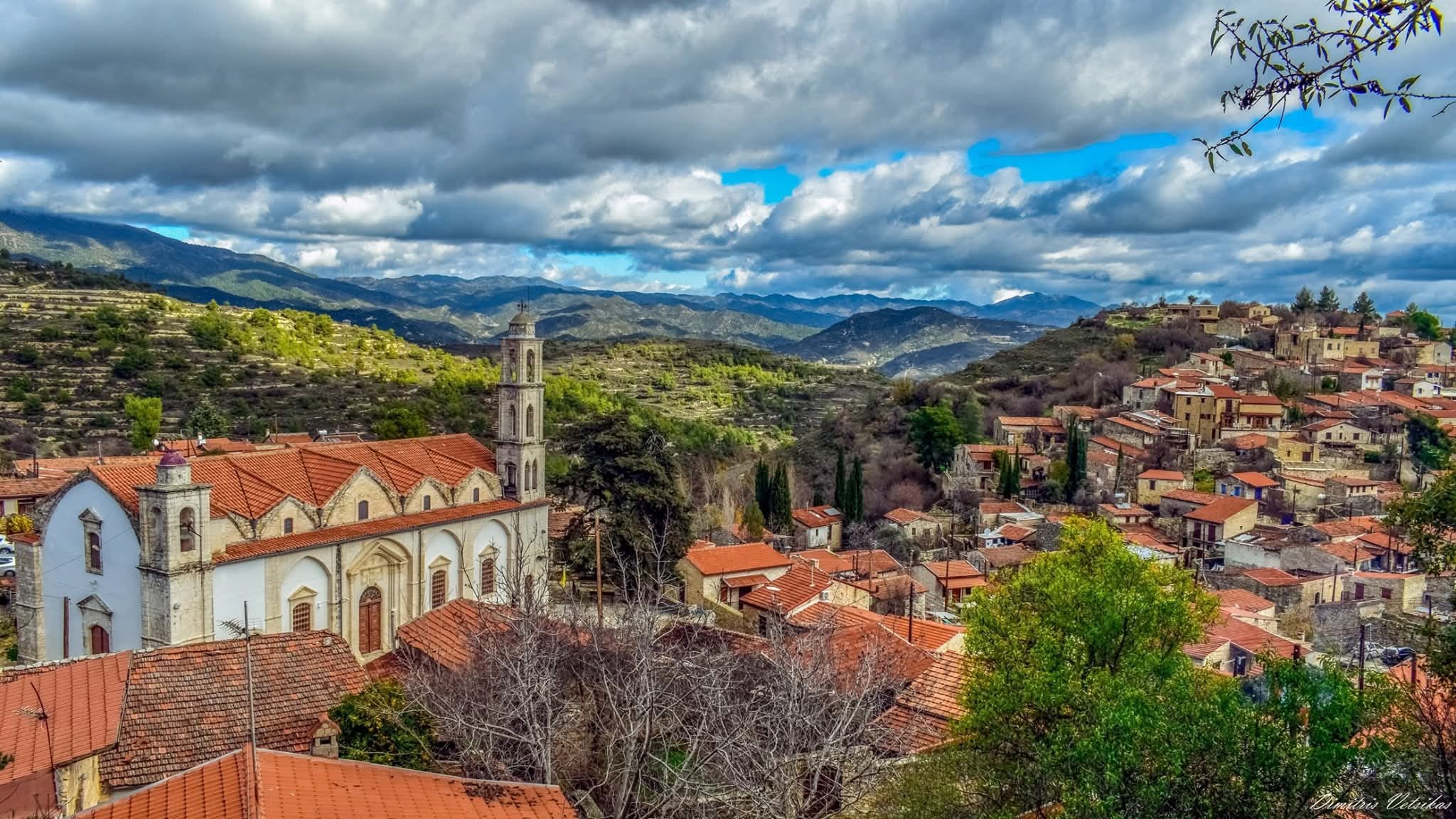
This isn’t just a real estate story. It’s a shift in who controls land, who controls space, and who gets to decide what Cyprus looks like in ten years. Former MP George Perdikis has been one of the few Cypriot politicians willing to say the quiet part out loud: the public deserves transparency. How much land has been bought? Who owns it? What are the long-term plans? Because when one foreign bloc starts buying up entire districts, it stops being “investment” and starts looking like a slow-motion annexation — the kind that doesn’t require soldiers, just lawyers and developers.
And while Cyprus debates how to handle this, Turkey is watching the whole thing with binoculars. Ankara has been warning for years that the Israel–Greece–Cyprus partnership is tightening into a strategic triangle aimed at isolating Turkey in the Eastern Mediterranean. Now, with Israeli-linked companies buying villages and Israeli forces reportedly gaining access to Cypriot infrastructure like Mari Port and Paphos Air Base, Turkey feels vindicated. Former Turkish ambassador Uluç Özülker called it “an unfortunate step,” which is diplomatic code for “we see exactly what you’re doing.” Turkish analysts go further, arguing that Cyprus is following Greece’s historical pattern — slowly transforming into a forward operating base for Western and Israeli interests.
The military angle is not subtle. Cyprus and Israel have deepened security cooperation to the point where joint exercises, intelligence sharing, and military access agreements are routine. Israeli pilots train in Cypriot airspace. Israeli naval units use Cypriot ports. And Cypriot ministries are now issuing directives at Israel’s request, including instructions on combating antisemitism — a topic that somehow jumped to the top of the agenda right as Israeli investors were buying up half the coastline. Convenient timing.
But the heart of the issue is still land. Land is not neutral. Land is power. When foreign investors buy up entire villages, they’re not just acquiring property — they’re reshaping demographics, rewriting local economies, and shifting political leverage. Once you own enough land in a region, you don’t need to lobby the government. You are the government. You set the terms. You dictate who gets to live there, who gets pushed out, and what the future looks like.
And this isn’t happening in a vacuum. Israeli investors have been on a global shopping spree for years. In Greece, they’ve bought up large tracts of land in Crete, Rhodes, and the Peloponnese, often near strategic coastlines or energy corridors. In Latin America, Israeli-linked companies have embedded themselves in agriculture, mining, surveillance, and private security — from Patagonia to the Caribbean. In Africa, Israeli agribusiness and mining interests have snapped up farmland, water rights, and resource concessions at a pace that locals describe as “relentless.” Different continents, same pattern: buy land, build influence, and let the host country call it “development” until the balance of power quietly shifts.
Cyprus is simply the latest chapter — and one of the most blatant. A small island, a strategic location, a government eager for foreign capital, and a neighbor (Turkey) already on edge. Add in hundreds of Israel-linked companies operating in the south, plus military cooperation, plus land acquisition on a village-wide scale, and the picture becomes hard to ignore. This isn’t random. This isn’t accidental. This is a coordinated expansion of influence dressed up as real estate.
Which brings us back to that famous demographic statistic — the one repeated in every report, every study, every demographic breakdown. We’re told that Jews make up about 0.2% of the world’s population. Maybe that’s true on paper. But for a group that supposedly represents a tiny sliver of humanity, they sure manage to show up everywhere, buying land, reshaping regions, and leaving footprints that look a lot bigger than 0.2%. At some point, you have to wonder whether the numbers are wrong, or whether the story is.
Anti-semitic behaviour is wrong, but Zionist takeovers are also wrong. I was stunned to see what's happened to two towns in New Jersey in USA. What a crazy world we live in!!
You can never let them in. Since as soon as you do they establish a situation of fear where no one person can stick out his neck to stop their abuses.
They will destroy everything good and make all things ugly.
Then if you wait long enough the children will begin to go missing.