


We are highlighting key insights, arguments and factual observations in this geopolitical analysis of the situation by Radhika Desai, Geopolitical Economist and Professor Sayed Mohammad Marandi, Tehran University, presented at the Valdai International Discussion Club annual conference in Moscow. The analysis assesses the unfolding war between Iran, the U.S., and Israel, its effect on the global economy, regional affairs, the politics of the U.S. and the oncoming multipolar world order.
Key Takeaways
Strategic Military Stalemate and US Defeat:
Despite over 7 months of siege, bombing raids, and economic and social sanctions targeting the Iranian population, Iran has successfully resisted subjugation militarily. Iran demands full implementation of previously signed Memorandum of Understanding (MOU) terms and has transitioned internally to a long-term wartime economy.
Political Turmoil and Isolation of the US:
The war has dealt a severe blow to the credibility of the leadership in Washington. President Donald Trump’s ratings have plummeted to an all-time low, and the erratic conduct of his administration has isolated the U.S. from its traditional allies in Western Europe, East Asia, and North America (for example, there is a visible rise in anti-Americanism in Canada).
Destabilisation of Gulf Proxies and “The End of Dubai”:
American military installations surrounding Iran have been destroyed or rendered useless. The economic model of the Persian Gulf monarchies—based on energy exports, security guarantees from the U.S., and investments from Western capitals—is permanently dysfunctional now.
internal
The capital that previously sustained the U.S. dollar in the form of purchases of Treasury bonds and other assets by Western Europe, East, and Gulf countries is being redirected to rebuilding domestic infrastructure, defence, and economies, threatening the impending collapse of the U.S. dollar system.
Irreversible Delegitimisation of the Israeli Regime:
Internal divisions, relentless military aggression in Gaza, and international revulsion at Israel’s human rights violations have severely delegitimised its rulers, putting the country on a path to an extended systemic crisis akin to apartheid South Africa.
Elevation of Iranian Standing in the Global Majority: The strategic, technological (missiles and drones), and societal resilience shown by Iran in 40 days of fighting has enhanced its image among Russians, Chinese, and the Global South, dismantling decades of Western propaganda.
1. Current Military & Strategic Status of the Iran War
The State of Conflict and Iranian Strategy
Duration and Escalation: The war has been going on for over 7 months, characterised by severe economic siege, sanctions, and direct US air strikes.
US Objectives vs. Iranian Resistance: Western legacy media often overlooks the human cost of US bombing and siege tactics on Iranian women and children. Despite these tactics, Iran has sustained military steadfastness and prevented the US from achieving its war objectives.
Diplomatic Position: Negotiations remain deadlocked. Iran has refused to accept new demands from the US and insists on the implementation of the signed MOU. There is a tactical stalemate, but violence can erupt at any time.
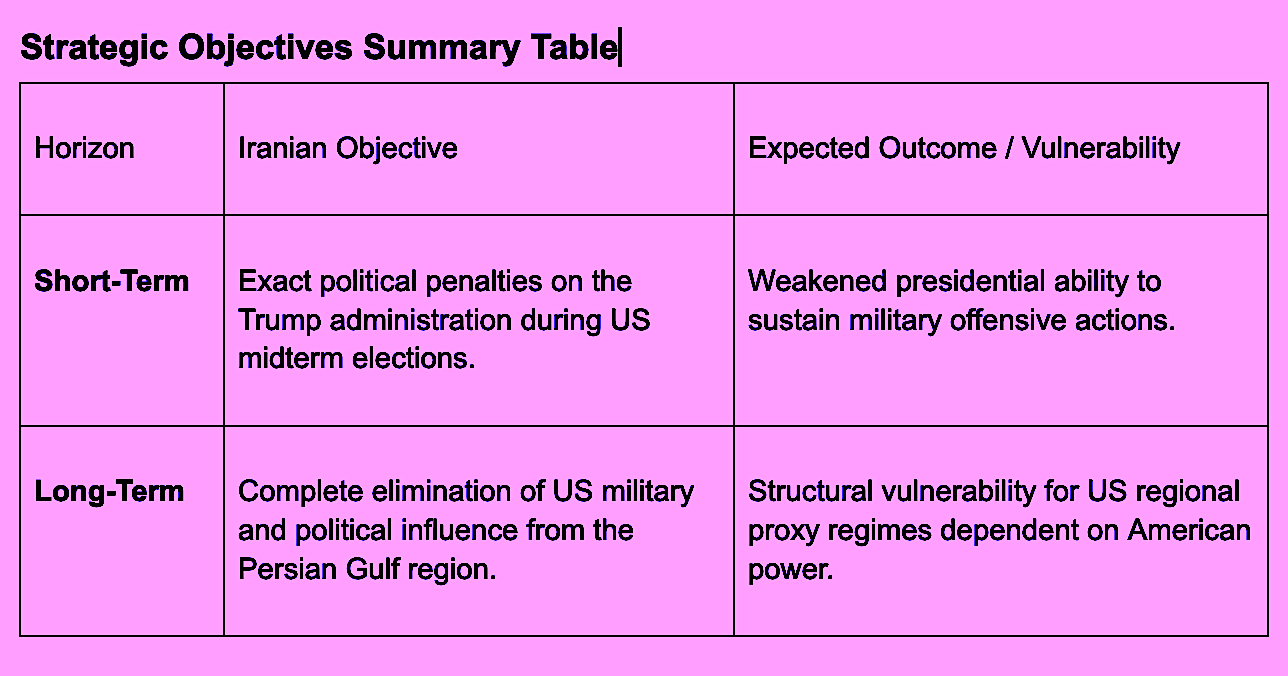
Strategic Objectives Summary Table
2. US Domestic Vulnerabilities and Fractured Western Alliances
Domestic Political Mayhem in the United States
Plummeting Approval Ratings: The failed strategy in Iran has driven President Trump’s approval ratings to record low levels for a sitting president.
Desperate Political Promises & Election Manipulation:
Promises of immediate post-election drops in oil prices.
Proposals offering $5,000 cash payments to citizens contingent on a midterm victory.
Preparations to challenge election outcomes if unfavourable, including considerations to deploy Immigration and Customs Enforcement (ICE) agents to polling stations.
State Functionality Deterioration: The US is operating without clear strategic war objectives, alternating erratically between threats of war and calls for negotiations.
“The United States... is already becoming almost like a non-functioning state in the sense that here is a state that is waging a war without any clear war objective.” — Radhika Desai
Strain on Global Western Allies
Canada: Latent anti-Americanism has reached a “fever pitch.” Bank of Canada Governor / political figure Mark Carney achieved a 70% approval rating largely by positioning himself as preserving Western institutions independent of Washington.
East Asia & Europe: Arms, defense systems, and resources are being unilaterally diverted from allies in East Asia (e.g., South Korea and Japan) to support US operations in the Persian Gulf, creating severe friction within the Western alliance block.
Historical Context of American Imperial Overreach
The 50-Year Decline: Current US instability reflects a cumulative 50-year trend tied to neoliberal policies and costly, endless military interventions in Iraq and Afghanistan.
Resistance to Economic Hegemony: As conceptualised in William Appleman Williams’ The Tragedy of American Diplomacy, the foundational principle of US foreign policy has been forcing global markets open to US business. Iran’s firm assertion of economic sovereignty represents an explicit, successful refusal of this imperial model.
3. Regional Repercussions in the Middle East & Persian Gulf
Destruction of US Regional Architecture
Base Invalidation: US military installations surrounding Iran have been destroyed or heavily damaged. Even if rebuilt, these facilities no longer provide safe staging grounds for US regional hegemony.
Forced Military Withdrawals: Relative weakness has forced the US to initiate troop withdrawals from Syria (abandoning support for local Kurdish groups) and Iraq.
Threat to Persian Gulf Regimes and the “Dubai Model”
Economic Vulnerability of Proxies: US allies in the Gulf (Saudi Arabia, Kuwait, Bahrain, UAE) are absolute monarchies entirely dependent on oil/gas revenues and external security guarantees.
Systemic Strangling: US efforts to strangle Iran through siege warfare are inadvertently destroying the economic viability of its own regional proxies.
Permanent Transformation (”Dubai is Never Going to Be Dubai Again”):
Gulf state business models—built on luxury services, real estate, and financial flows—have been fundamentally disrupted.
If US strikes target Iranian infrastructure, Iranian retaliation against assisting Gulf nations will halt energy exports, prompt mass population flight, and collapse these regimes.
Decisive Delegitimisation of the Israeli Regime
Internal Fragmentation: Israeli society is deeply divided. Prime Minister Benjamin Netanyahu’s actions are driven by personal political survival—initiating conflict to delay elections and invoke a “rally-around-the-flag” effect.
Global Standing and Stigmatisation: Netanyahu’s actions have severely delegitimised the regime globally, including across Europe, North America, Russia, China, and the Global South.
Historical Parallel to Apartheid South Africa:
Continued military violence (e.g., the killing of five Palestinians on a bus in Gaza) permanently solidifies global animosity.
The regime is categorised as a “dying regime” whose ultimate structural collapse may occur rapidly, echoing the sudden fall of South African apartheid.
4. Financial Crisis & Threat to the US Dollar System
The Mechanics of Dollar System Decay
The international dominance of the US dollar relies heavily on the constant absorption of global capital into dollar-denominated assets to balance high US domestic budget deficits (the Triffin Dilemma).
Risk of Global Economic Depression
Capital Flight and Liquidation: Gulf states may be forced to sell off US stocks, bonds, and real estate assets to fund domestic reconstruction and maintain basic operations.
Macroeconomic Contagion: A full-scale expansion of the hot war in the Persian Gulf would instantly freeze energy markets, leading directly to a global Great Depression.
5. Domestic Conditions and Societal Transformation in Iran
Economic Realities and Broad Industrial Base
Demographics: Iran supports a population of over 90 million people, alongside millions of Afghan refugees.
Inflation and Siege Resilience: While inflation is high and economic pressure is significant, daily life across Tehran remains fully functional (e.g., operating public transit, full shops and restaurants, and functioning municipal services).
Industrial Self-Sufficiency: Decades of US sanctions forced Iran to build a broad domestic industrial base. While not focused on mass consumer exports like China or South Korea, it produces sufficient goods for internal consumption and provides a resilient foundation for the domestic defence industry.
Public Unity and Societal Shifts
Public Opinion Polling: Recent polling confirms strong national unity, steadfast opposition to US demands, and high support for the armed forces and senior leadership.
Presidency of Pezeshkian: President Pezeshkian’s lower approval ratings are attributed to his term beginning with severe external shocks (e.g., the assassination of the visiting Hamas leader in Tehran during his inauguration), forcing an immediate pivot to a wartime posture.
Youth & Diaspora Realignment: The conflict has fostered a deep sense of national identity and anti-imperial pride among Iranian university students and international diaspora communities.
Refutation of Western Narratives
Demolition of Propaganda: Western depictions framing the Islamic Republic as equivalent to extremist groups (e.g., ISIS, Al-Qaeda, Takfiri Wahhabism) have been thoroughly discredited globally.
Massive Public Funerals: Unprecedented turnout—measured in millions of participants in cities like Tehran and Mashhad during religious and leadership funerals—demonstrates deep organic societal support that cannot be dismissed as a simple “rally-around-the-flag” phenomenon.
6. The Multipolar Alignment: Russia, China, and the Global South
Evolution of Russian and Chinese Positions
Historical Compliance (10–15 Years Ago): Previously, Russia and China were relatively weaker and deferred to US pressure by allowing UN Security Council sanctions against Iran, attempting only to dilute their language.
Strategic Re-evaluation: Following the 12-day conflict and 40 days of sustained, high-intensity fighting, both Moscow and Beijing realised that Iran would not collapse like Syria or Venezuela.
Recognition of Capabilities: Russia and China now demonstrate elevated respect for Iran, driven by its independent military technologies (advanced drone and missile systems) and societal stability.
Insights from the Valdai Conference
Shift in Conference Dynamics: Over the past decade, the Valdai Discussion Club has transformed from an Atlanticist-dominated forum into an explicit platform for the Global Majority.
Global South Support: Delegations across Asia, Africa, and Latin America increasingly support Iran, viewing its resistance as a defence of national sovereignty against Western imperialism.
Prominent Iranian Intellectual Presence: Iranian analysis at the conference was represented by key scholars and diplomats, including Prof. Sayed Mohammad Marandi, Dr Khatibzadeh, Dr Seyedan, Dr Barzegar, and the President of the Iranian Foreign Ministry University.
We are a fully subscriber supported publication. We feature citizen journalists unapologetically. Help us grow and fuel honest, citizen journalism by becoming a paid member.


