


The United States didn’t just escalate. It crossed into a territory that most governments have avoided for decades. It hit a desalination plant on Qeshm Island in Iran. Not a weapons depot. Not a command center. A facility that produced drinking water for around thirty villages.
When that plant went dark, those communities lost their lifeline. Iran’s foreign minister warned that the strike would have consequences. He also said something that should alarm every government in the region: the United States had normalized a target that was once unthinkable.
Iran responded by hitting a desalination facility in Bahrain. Bahrain confirmed the attack. The message was simple. If water is fair game, then everyone is exposed.
This is not a symbolic exchange. This is a shift into a form of warfare that hits the core of civilian survival.
A region built on fragile machines
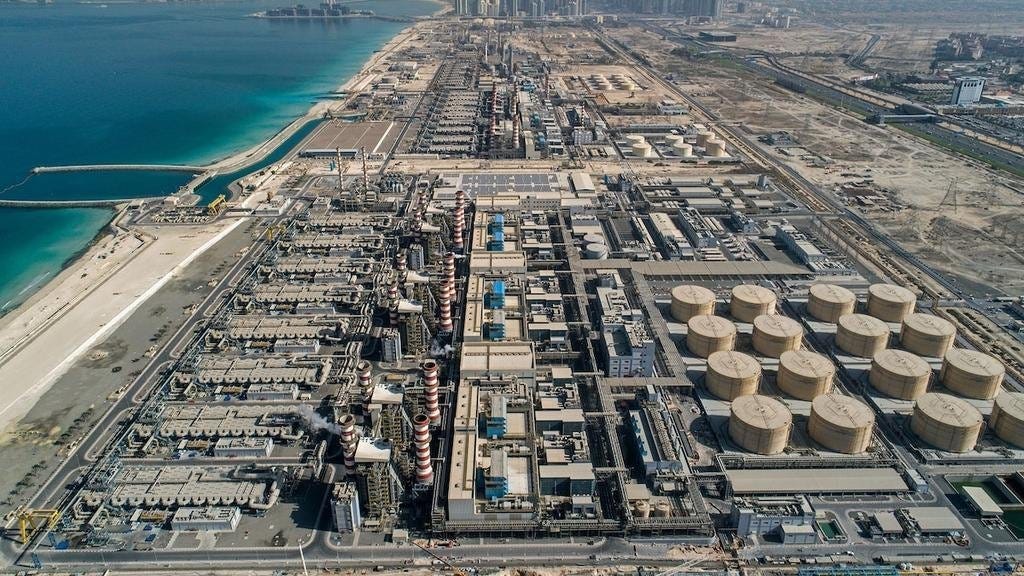
The Gulf survives because desalination plants run nonstop. These plants are not backup systems. They are the only systems.
Saudi Arabia depends heavily on desalination
The UAE depends on desalination for nearly all its water
Qatar, Kuwait, and Bahrain rely almost entirely on desalination
These plants sit along the coastline, visible and vulnerable. They were built for efficiency, not for conflict. A single strike can shut one down. A coordinated strike can destabilize an entire country.
The attack on Qeshm Island wasn’t just a military decision. It was a signal that the most essential civilian infrastructure in the Gulf is now part of the battlefield.
Predictive History: the moment the logic changes
Predictive History teaches that once a new weapon or tactic is used, it becomes part of the strategic landscape. You cannot put it back in the box.
Desalination plants are the Gulf’s beating heart. They turn seawater into survival. They keep hospitals functioning, cool power plants, support agriculture, and sustain daily life. If they stop, everything collapses.
This is why the strike matters. It wasn’t just an attack. It was a demonstration of vulnerability. And once a vulnerability is demonstrated, it becomes a target.
Professor Jiang predicted that this war would result in the destruction of desalination plants across Middle Eastern countries.
The collapse timeline no one wants to imagine
If a desalination plant goes offline, the breakdown is immediate.
Day one: panic buying.
Day two: hospitals ration water.
Day three: schools and offices shut down.
Day four: unrest begins.
These are wealthy states, but wealth cannot replace water that isn’t being produced. You cannot import enough water to keep a city alive. You cannot truck it in at the scale required. The Gulf’s entire modern existence depends on a chain of plants that must run without interruption.
Once those plants are targeted, the region becomes unstable by default.

Sidebar: Water has been a weapon before
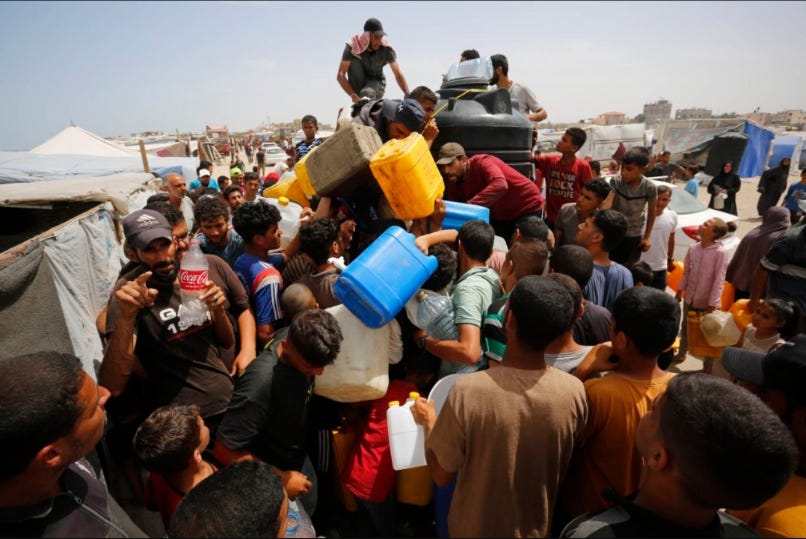
Water has been used as leverage and punishment long before this conflict. Israel has repeatedly targeted water infrastructure in Gaza and the West Bank. Wells have been destroyed. Pipelines have been damaged. Communities have been left without clean water for long stretches of time.
These actions show how quickly a population becomes vulnerable when water is restricted. They also show how effective water is as a tool of pressure.
Beyond the Middle East, foreign companies and governments have bought water rights in the United States and other countries. Water is becoming a strategic asset. It is more valuable than oil because it cannot be replaced. It is more valuable than gold because it is necessary for life.
Water is the real global currency. If you want to control a population, you control its water. If you want to weaken a country, you target its water systems.
A global problem waiting to detonate
The Gulf is central to global energy markets and trade routes. If its water systems are disrupted, the effects will not stay in the region.
Energy exports could slow or stop. Shipping routes could be disrupted. Food imports could become unstable. Prices would rise worldwide. Countries already struggling with food insecurity would face even greater pressure.
A water crisis in the Gulf would not be a regional disaster. It would be a global shock.
The line that never existed
Some analysts say desalination plants should be treated like hospitals and schools. They say these are red lines that must never be crossed.
But here is the truth:
Those lines have never been real for the United States or Israel.
Hospitals in Gaza have been hit. Schools have been struck. Water wells have been destroyed. Civilian infrastructure has been targeted repeatedly. The recent strike on Minab Elementary School is only one example. And now the same pattern is unfolding in Iran, where civilian sites are being bombed under the justification of military necessity.
Other countries have treated these boundaries as real. The United States and Israel have not. They have crossed them again and again, and the world has watched it happen.
This is why the Gulf is now in danger. When powerful states ignore the rules, the rules collapse. When they target civilian infrastructure, others eventually follow. And once water becomes an acceptable target, the entire global system becomes unstable.
If this line is not redrawn and enforced, the next phase of global conflict will not be about oil or territory. It will be about who can keep their water flowing when someone decides to turn it off.
United States of Israhell took Gaza’s water for years now. They would take the air if they could. 👺👺
Well Iran you know exactly what to target in Israel to get the citizens to deliver Netanyahu to the ICC and rid the world of this piece of shit. Lock him up with only seawater for existence while questioning him about his knowledge of WHO is on the Epstein list and their participation in what activities.