


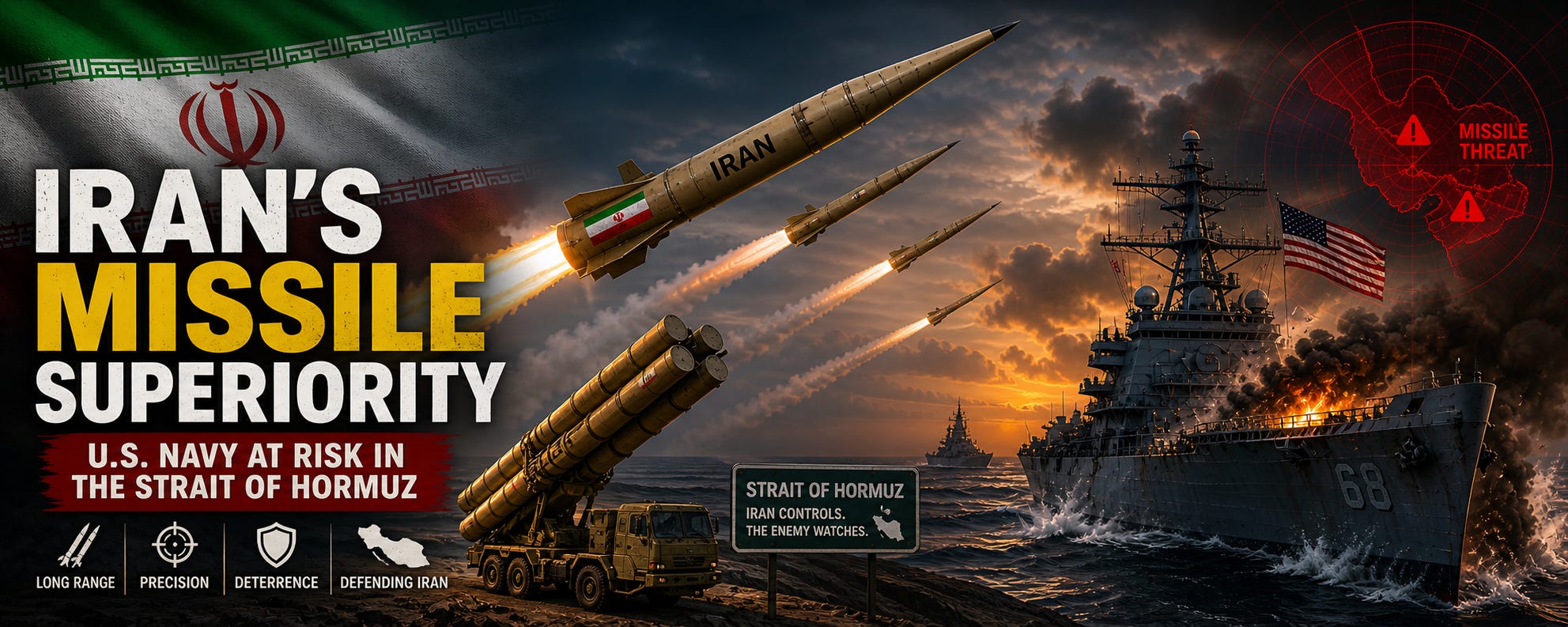
John Mearsheimer’s latest analysis delivers a sobering verdict: the United States has already “lost” its war with Iran. This is not a tactical critique but a sweeping indictment of American grand strategy—a portrait of hubris colliding with reality, and of a superpower unravelling under the weight of its own illusions.
Iran’s Endurance and the Nuclear Signal
The starting point is Mojtaba Khamenei’s audio statement, hinting at nuclear deterrence. For Mearsheimer, this is not mere bluster. It is a signal that Iran may seek to formalise what it has long implied: the capacity to defend itself through nuclear means. The West has underestimated Iran’s resilience for decades. From the Iran-Iraq War to years of sanctions, cyberattacks, and assassinations, Tehran has absorbed punishment without collapse. The idea that Iran can be coerced into submission ignores this historical record. It is a nation built to endure.
The Mirage of Military Options
Mearsheimer dismantles the U.S. playbook with surgical precision.
Air Strikes: “Shock and awe” campaigns have already failed to alter Iranian behaviour. Bombing campaigns may devastate infrastructure, but cannot erase political will.
Ground Forces: Seizing the Strait of Hormuz would require troop levels far beyond current capacity. Worse, U.S. ships would become “sitting ducks” for Iranian drones and missiles.
Iran Seizes US Ships / AP Dubai Special Operations: Raids to seize enriched uranium are meaningless when Iran’s nuclear expertise and centrifuge networks remain intact. Knowledge cannot be bombed out of existence. In addition, Pakistan has promised Iran to give them nuclear weapons in case of a nuclear seize.
Each option is revealed as a fantasy. The military toolkit is empty, and Washington’s insistence on wielding it only deepens the futility.
Economic Shockwaves Across Continents
This war’s consequences extend far beyond the battlefield.
Asia: Japan and South Korea ration fuel, their industrial engines sputtering under shortages. The war exposes the fragility of global supply chains.
Europe: Inflation surges, recession looms, and transatlantic relations sour. Allies question whether Washington’s gamble is worth the economic pain.
Middle East: U.S. bases, once guarantors of security, now serve as magnets for Iranian retaliation. America’s alliance structure in the Gulf collapses under the weight of its own contradictions.
This is not just a regional conflict—it is a global economic disaster, poisoning relations and destabilising markets.
Strategic Windfalls for Rivals
Russia and China emerge as unintended winners. Moscow profits from inflated oil prices and the diversion of U.S. munitions away from Ukraine. Beijing, though suffering short-term economic pain, gains strategically as Washington is forced to pivot back to the Middle East, weakening its posture in Asia. The irony is stark: a war meant to contain Iran strengthens America’s rivals instead.
Historical Parallels: Vietnam, Iraq, Afghanistan
Mearsheimer’s analysis resonates with history. Vietnam was lost not on the battlefield but in the mismatch between American ambition and reality. Iraq revealed the limits of “shock and awe,” producing chaos instead of compliance. Afghanistan ended with a humiliating withdrawal, a reminder that endurance often trumps firepower. Iran fits this pattern. Once again, Washington has overestimated its capacity to impose order and underestimated the resilience of its adversary.
The Bleak Endgame
With no viable military path, Washington clings to a naval blockade. It is a costly, unsustainable gesture—bleeding allies, wrecking economies, and eroding credibility. Mearsheimer predicts that mounting economic pressure will eventually force the U.S. to concede defeat and “cut a deal.” Such a concession would not be a pragmatic adjustment but a humiliation, destined to be remembered as one of America’s greatest foreign policy blunders.
The Lesson: Hubris Meets Reality
The war with Iran is not just unwinnable—it is a catastrophe of America’s own making. It exposes the bankruptcy of a foreign policy that confuses military might with strategic wisdom or diplomacy. This failure for what it is: a pipe dream turned disaster, a war that ends not in victory but in retreat. But can Donald Trump and his posy of genocidal maniacs manage a retreat at all?
Iran is home to one of the oldest civilizations dating back to 4000 BC. I doubt the (un)United States will ever win a war or conflict with any Middle East country. The (un)United states is a baby country —where every one from every country is expected to get along as if from the same lineage —the South hate the North, Red States hate Blue states, blacks vs white, asian vs American, Islam vs Christian, Irish vs Italian, white vs Latin, the East vs West, California or Florida, Palm Springs or Palm Beach.
You ask: Who will survive? Iran, or the never unitedstates?
What the author calls: Teheran has adsorbed "punishment", is Teharan has resisted the Criminality of the zio-usa epstein regime. And Washington capacity to impose "order" , is Wasington capacity to Terrorize.