


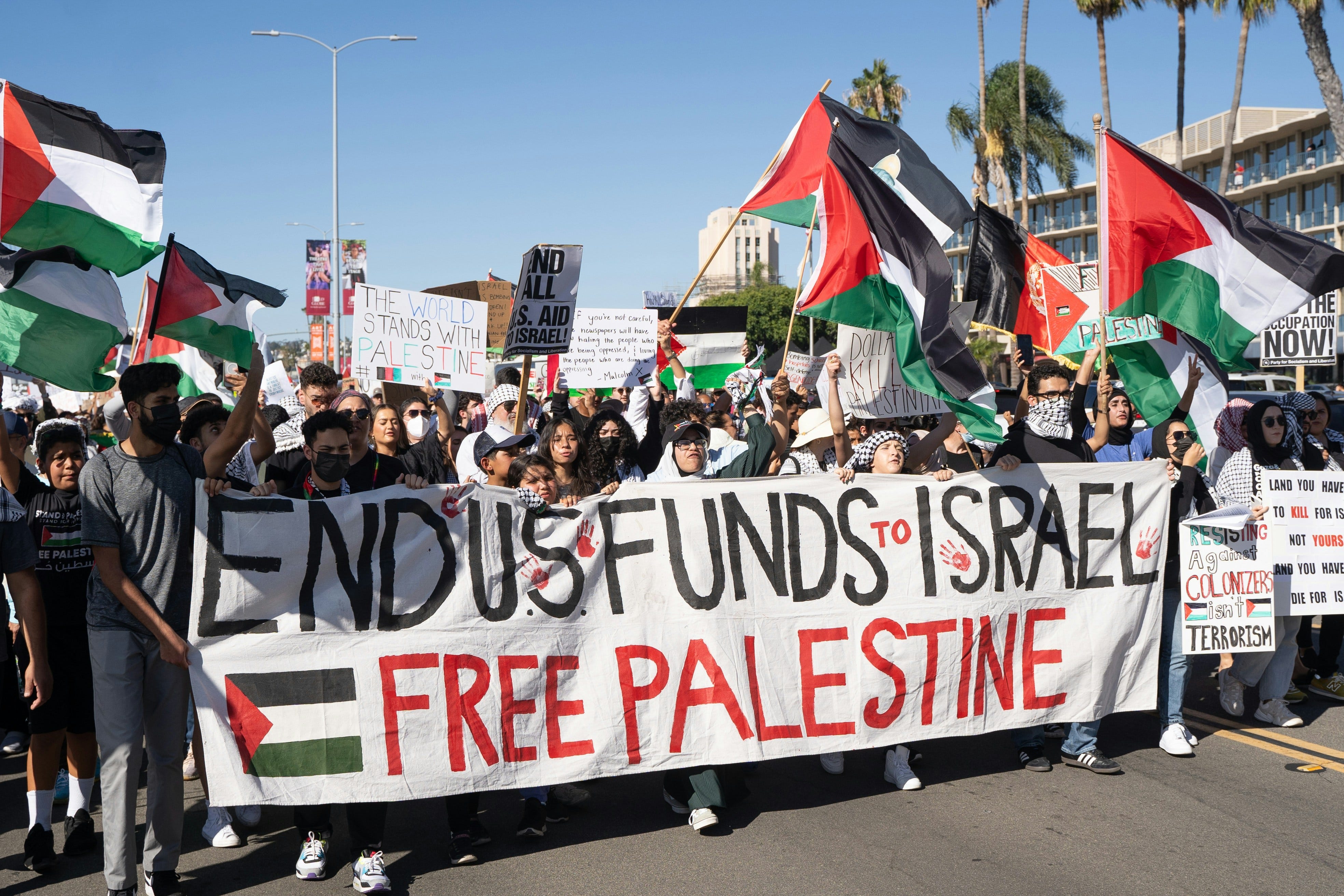
For two years, what to call Israel’s conduct in Gaza was treated in Western capitals as a matter of opinion. Courts, UN investigators, and a growing roster of governments have since made it a matter of record — one most of those same capitals still refuse to read aloud.
On 3 July 2026, as the war on Gaza passed its one-thousandth day, Israel’s security cabinet approved thirteen new settlements in the occupied West Bank — a plan its own architects said was designed to sever East Jerusalem from the Palestinian towns around it. Days later, Prime Minister Benjamin Netanyahu laid a foundation stone for an Israeli “heritage center” on the runway of the former Qalandia airport, once the only airport Palestinians had.
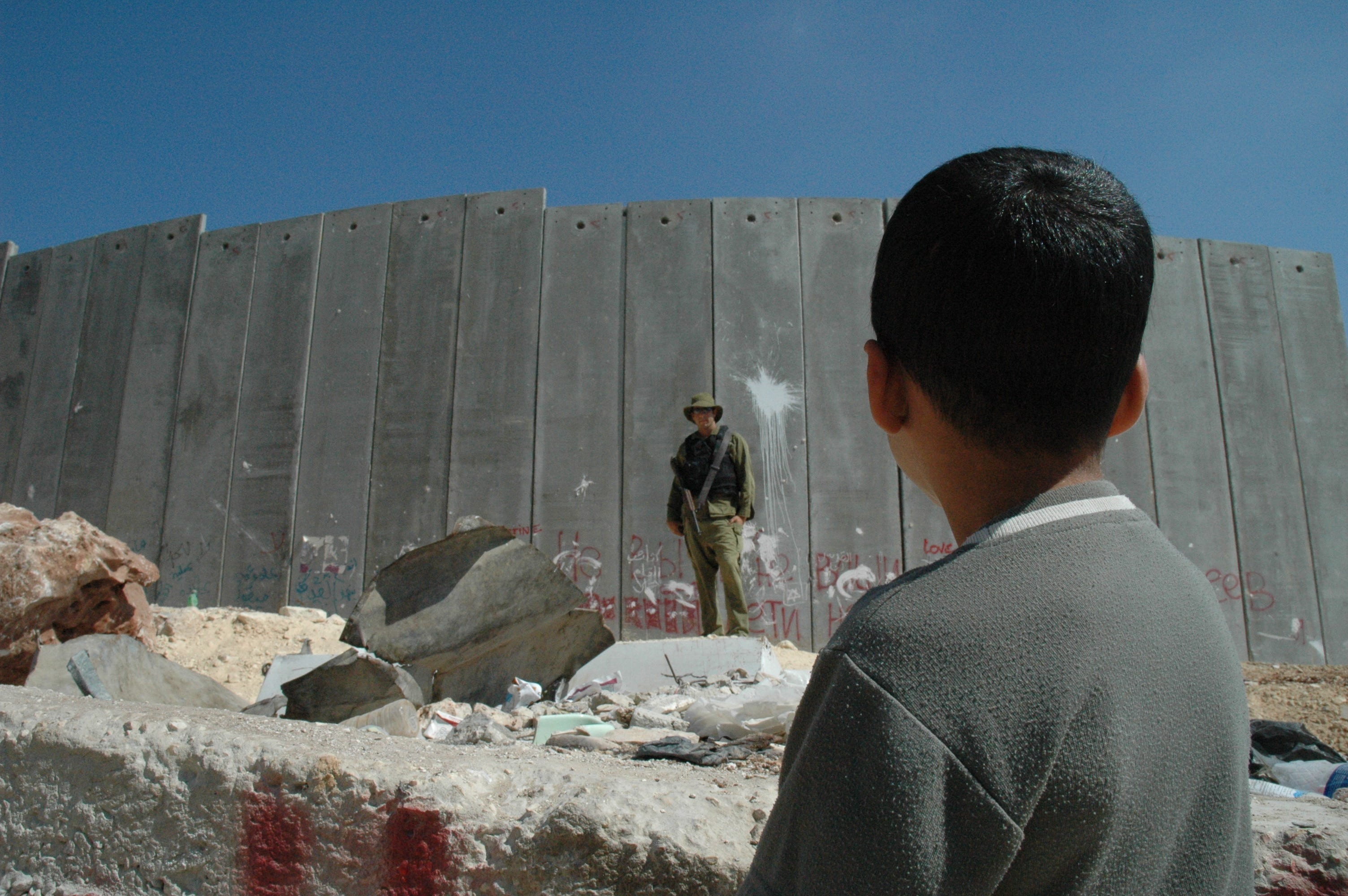
Those were small gestures beside the numbers — more than 73,000 Palestinians killed and over 90 percent of Gaza’s buildings destroyed — but they name a logic that the diplomacy around the war works hard to avoid naming.
A United Nations commission has concluded that Israel is committing genocide. The International Criminal Court has issued arrest warrants for its prime minister and former defense minister. And a settler map keeps expanding while the world debates vocabulary.
Stripped of euphemism, the record describes a settler-colonial project — the displacement and replacement of one people by another, justified by a claim of divine or historical right. Israel rejects the description; most Western governments decline to speak it. It is, nonetheless, the most accurate one available, and it has a familiar shape to anyone who knows how the American West was won.
Zionism, defined precisely
Precision is crucial because most bad-faith arguments about Palestine begins by blurring a definition. Zionism is a political movement, formalized in the late nineteenth century, dedicated to establishing and maintaining a Jewish nation-state in the land then called Palestine.
It is not Judaism, a religion and a people thousands of years older, and it is not a synonym for “the Jews,” who have been divided over the movement since its inception — some of its sharpest critics are themselves Jewish.¹
The distinction is not academic: conflating criticism of a state ideology with hatred of a people is the mechanism by which the ideology is placed beyond scrutiny.
Zionism’s founding premise was that centuries of persecution, culminating in the Holocaust, could be answered only by a Jewish state. The persecution was real and the fear it left is rational. The difficulty was that the land was not empty.
In 1948, with the founding of Israel, roughly 700,000 Palestinians were expelled or fled in the catastrophe they call the Nakba); most were never allowed to return.
The 1967 war brought a military occupation of the West Bank, East Jerusalem, and Gaza that has since outlasted most of the people living under it.
In July 2024 the International Court of Justice found Israel’s continued occupation unlawful and its policies consistent with apartheid, a conclusion long shared by Amnesty International, Human Rights Watch, and the Israeli rights group B’Tselem. Palestinians in Gaza have spent much of the last two decades under a blockade that critics have long described as an open-air concentration camp.
The Manifest Destiny parallel

.jpg?uselang=en#Licensing)
Historians of settler colonialism describe a recurring pattern they call the logic of elimination: a foreign population arrives, settles, and works to replace the people already present, sanctifying each step with a claim of providential or civilizational right.
The United States offers the textbook case. Manifest Destiny — the nineteenth-century doctrine that American settlers were divinely ordained to take the continent — turned conquest into duty.
Once God was said to want the land, the means of taking it, from broken treaties to massacres to the removal of Native children into boarding schools built to erase them, were reclassified from crime to destiny.
The parallel to Zionism is an analytical claim, not a legal finding, and it should be read as one. But the resemblance is structural. Both movements fuse religious conviction with a nationalism of the chosen; both secure the settler’s freedom and self-determination by denying the native the same; both, in the plainest terms, take a homeland from the people who had one. The maximalist vision of a “Greater Israel,” once confined to the fringe, now drives policy: the West Bank settlement expansion approved this July, and a “yellow line” inside Gaza that Israeli forces push deeper by the week, are the logic of elimination rendered as zoning.
It is also why the parallel is so rarely drawn in Washington.
American exceptionalism cannot survive an honest reckoning with the two crimes at the country’s foundation — the enslavement of Black people and the genocide of Native Americans — so the reckoning is refused, kept out of textbooks, filed under ancient history. The same reflex now shields Israel: to examine what a settler-colonial project requires is to indict the model as well as the imitation.
A theology with a lobby
Zionism’s political durability in the United States rests on an unlikely alliance. Alongside its Jewish nationalist base sits Christian Zionism, an evangelical strand that reads the return of Jews to Israel as biblical prophecy — a precondition for the Second Coming.
In that framework the Palestinian is not a neighbor but an obstacle to a cosmic timetable, and the theology carries real weight in Congress, where it helps underwrite the reflexive, bipartisan support that survives nearly any headline. The result is a policy consensus insulated from evidence: the more damning the record from Gaza, the more the argument shifts to the vocabulary used to describe it.
October 7, and the story built on top of it
On 7 October 2023, Hamas-led fighters attacked southern Israel, killing roughly 1,200 people and taking about 250 hostage. The killing of civilians that day was real, and Israel’s claim to a right of self-defense against a group sworn to its destruction is a serious one. But the version of October 7 that circulated in Western media — the version that attempted to unconscionably frame Gaza’s population as collectively deserving of what followed — has not survived scrutiny, and the reasons are documented.
The most influential atrocity story, The New York Times’ December 2023 investigation “Screams Without Words,” alleged that Hamas had systematically “weaponized” mass rape. It was challenged by The Intercept, contradicted by the families of its own central subjects, and, by October 2025, denounced by more than 300 Times contributors who demanded its retraction, citing its reliance on unnamed sources and unverifiable accounts and comparing it to the paper’s discredited Iraq-WMD reporting. The Times’ flagship podcast reportedly shelved an episode built on the story after it failed a fact-check. The viral “forty beheaded babies” claim of the war’s first days was never substantiated.
A second fact was buried more quietly: a share of the Israelis who died on 7 October were killed by Israel’s own military.
Drawing on military documents and soldiers’ testimony, the Israeli newspaper Haaretz established that the IDF invoked the “Hannibal Directive” that day — a protocol permitting overwhelming force to prevent soldiers being taken captive, even at the cost of their lives — issuing an order that “not a single vehicle can return to Gaza.”
The UN’s own Commission of Inquiry documented “strong indications” the directive was applied in several instances, harming Israelis alongside Palestinians. How many of the day’s dead fell to Israeli fire remains unknown; Israel conducted no autopsies.
What is clear is that the atrocity narrative was amplified and the friendly-fire record was not — an asymmetry that most likely tracks which side of this war the Western mainstream media instinctively believes.
What the record says


The legal findings that followed do not rest on that narrative.
They rest on the conduct of the war itself.
- In November 2024, the International Criminal Court issued arrest warrants for Netanyahu and former defense minister Yoav Gallant for the war crime of starvation as a method of warfare and the crimes against humanity of murder and persecution.
- In December 2024, [ Amnesty International concluded that Israel is committing genocide; Human Rights Watch reached a parallel finding on the deliberate deprivation of water.
- In September 2025, the UN’s Independent International Commission of Inquiry concluded that Israel has committed genocide in Gaza, finding four of the five acts defined by the 1948 Genocide Convention.
- In June 2026, the same commission found Israel had deliberately targeted Palestinian children as part of that genocide, documenting more than 20,000 killed — roughly 30 percent of the dead.
- South Africa’s case at the International Court of Justice, which in January 2024 found a plausible risk to Palestinians’ rights under the Genocide Convention, remains pending; a final judgment is not expected before 2028.²
The pivot of any genocide charge is intent, and here Israel’s own officials are the record’s most damaging witnesses. The commission cited, among much else, Gallant announcing a “complete siege” and describing the enemy as “human animals” to be treated “accordingly,” and President Isaac Herzog’s insistence, days into the war, that “it’s an entire nation out there that is responsible.” Those are not descriptions of a war against a militia.
The world names it “genocide” — but for the United States, Hungary, and Fiji — as Israel continues nearly alone
South Africa’s genocide case, treated as a lonely provocation when it was filed at the end of 2023, has since drawn one of the largest waves of third-party intervention in the court’s history — 22 states in all.
The overwhelming majority filed against Israel’s position: Bolivia, Colombia, Nicaragua, Libya, Mexico, Spain, Ireland, Belgium, Türkiye, Brazil, Chile, Cuba, the Maldives, the Comoros, Paraguay, the Netherlands, Iceland, and Namibia, among others.
Only three — the United States, Hungary, and Fiji — intervened to defend Israel, each urging the court to keep the bar for proving genocidal intent as high as possible.
The sharpest reversal came from Israel’s most reliable European patron. In March 2026, Germany — which had pledged to intervene on Israel’s behalf — withdrew and said it would no longer file in Israel’s defense, as it confronted its own ICJ case, brought by Nicaragua, over arming Israel. Namibia, a nation that survived Germany’s genocide of the Herero and Nama a century ago, had condemned Berlin for backing “the equivalent of a holocaust and genocide in Gaza.”
Outside the courtroom, the condemnations are blunter. Bolivia severed relations with Israel in November 2023; in 2024 Colombia’s president cut ties, calling Israel’s government “genocidal,” and Brazil’s president likened the campaign to the Holocaust, prompting Israel to declare him persona non grata; Chile and Belize recalled or suspended envoys. Even Saudi Arabia’s crown prince, mid-normalization, and Pope Francis reached for the word — the pontiff urging an investigation into whether Israel’s conduct met the definition of genocide. Beneath the governments sit hundreds of humanitarian and legal organizations that reached the same conclusion.
The enabler
None of it runs on Israeli power alone.
The war is sustained by a superpower’s supply line: the United States has maintained large-scale arms transfers and diplomatic cover throughout, the single indispensable enabler of a campaign the rest of the world is increasingly willing to call a genocide.
Amnesty International’s central demand to Israel’s allies was concrete — halt the arms transfers that make the conduct possible — and it has gone unmet.
But the consensus is cracking.
On 15 July 2026, the House rejected an amendment to strike $3.3 billion in military aid to Israel, 104–314 — but 103 Democrats voted for it, against 98 opposed and 10 voting present, the first time a majority of the party’s members who took a side backed cutting the aid, up from just 37 two years earlier.
The ceasefire that isn’t
The October 2025 ceasefire did not end the killing. More than 1,100 Palestinians have been killed in the nine months since the truce took effect, which Israel has violated on most days, and Israeli forces now control between 70 percent, by Netanyahu’s own account, and 80 percent of Gaza , refusing to withdraw and instead widening their zone of control. “Ceasefire,” one bereaved relative told Reuters, is “an illusion.”
Closing
The gap at the center of this story is not a gap in evidence.
A UN commission, the world’s leading human rights organizations, an international court, and a growing majority of the world’s governments have converged on the same conclusion, in the same language, drawn from Israel’s own conduct and its officials’ own words. The gap is between that record and the vocabulary its Western sponsors are willing to use — a refusal that is itself a policy, and one measured in lives. A hundred years ago the American version of this logic finished its work before the word for it was permitted; the question now, with the record already written and the weapons still shipping, is whether the naming will come in time to change the ending.
This reporting is part of an ongoing project at Shadows of Empire, where I cover the machinery of imperial power — how it justifies conquest and launders atrocity into policy; my work also runs at Manufacturing Dissent. A free or paid subscription at either keeps the reporting coming. If you’d like to support the sourcing behind pieces like this directly, you can buy me a coffee. If you feel this information is important, please — pass it on.
Thank you for your support.
— Dede Bell
Excellent work, I came to the same conclusion on almost all of this quite some time ago. Especially with connecting America's founding on the genocide of native Americans. Sadly as I'm sure you have found very few in America want to reason with the fact that Israel, and America are one in the same.
Israel is just the current version of America's past, before it became its current rendition allegedly built on freedom, democracy and human rights. all of those I believe are horseshit. America is in my opinion the most oppressive, and the biggest danger to human beings all around the world. even more so of its own citizens. excellent excellent work.
Further to the above.
If you want a powerful indictment of Empire based on ideas from Roxanne Dunbar-Ortiz and Rudolf Steiner here are two recent articles in which I suggest that the Gaza genocide is a logical endgame of the American Way of War.
My Lai, Democracy & The American Way of War
An Open Letter to the Elders of Native America
https://fearlessarts.substack.com/p/my-lai-democracy-and-the-american
Sorath, the Savage Atom and the White Man's Way of War
Open Letter to the Elders and Spirit of First Nation America. Part 2.
https://fearlessarts.substack.com/p/sorath-the-savage-atom-and-the-white