


This article is contributed by Abood A.
Support his work by subscribing.

When people talk about Gaza, they often focus on the bombings, hunger, and lack of water. But there is another crisis that receives far less attention, even though it shapes people’s lives every single day: the struggle to find a place to call home.
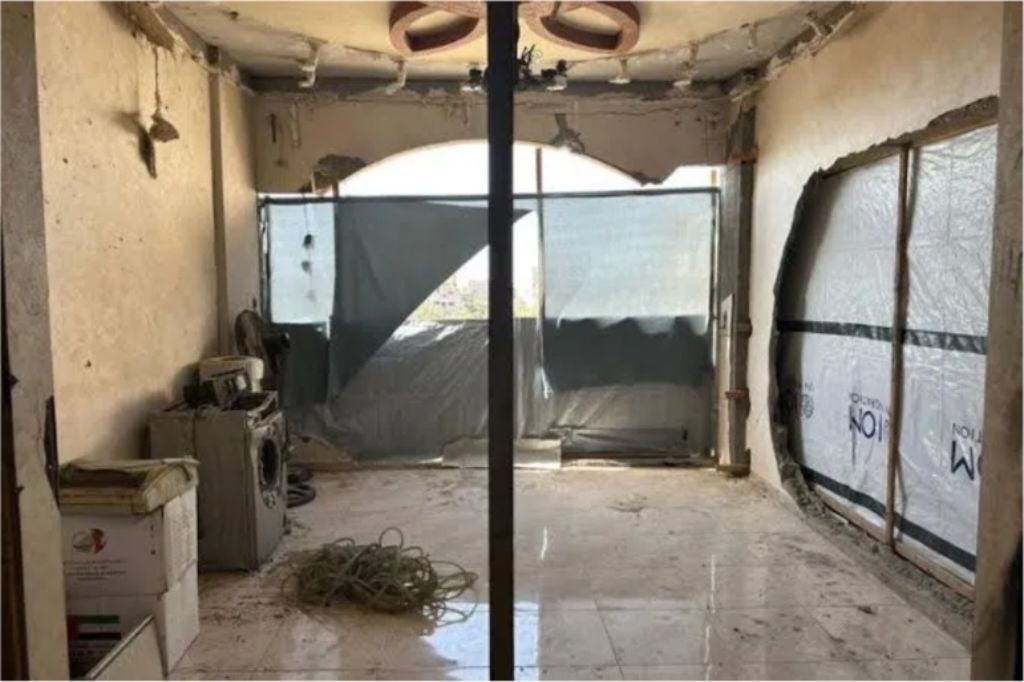
Today, I want to tell you about another side of life in Gaza—one that rarely makes headlines, even though it affects peyople every day and every night.
In most parts of the world, housing is considered a basic necessity. In Gaza, simply finding a place to sleep has become a battle in itself. The daily question is no longer, “How will we live?” but rather, “Where will we live?”
After the destruction of thousands of homes, hundreds of thousands of families were forced to start over from nothing, searching for any place that could protect them from the sun, the cold, and the rain—or at least give them a small sense of safety.
Some people are living in the streets, with no walls to protect them and no door to close at the end of the day.
Others live in displacement camps. These camps are free to enter, but “free” does not mean dignified or comfortable. The real cost is living an entire life inside a tent.
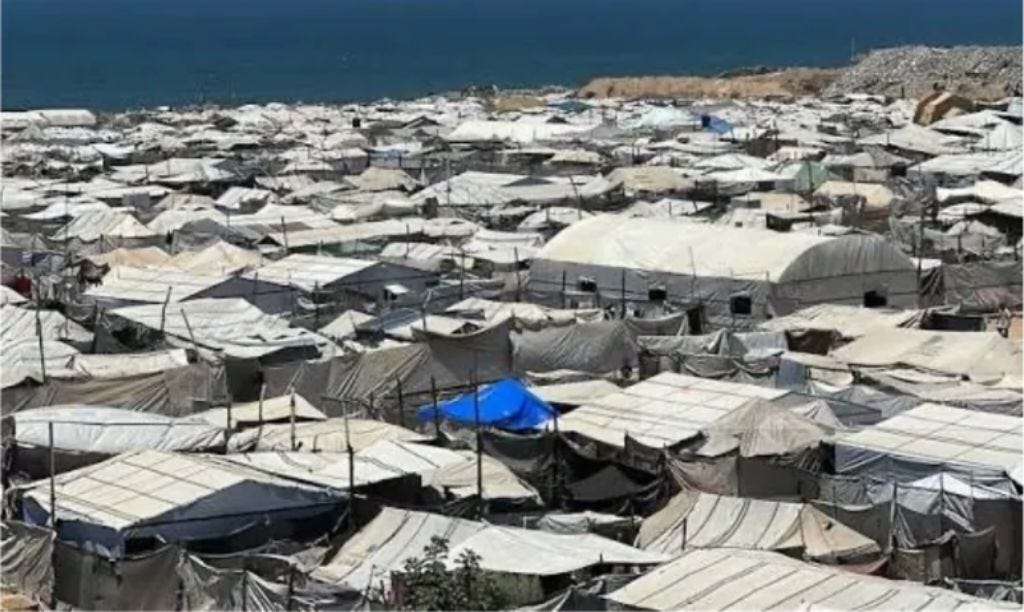
A tent is not a home.
It is a piece of fabric trying to withstand the scorching summer heat, the bitter winter cold, the wind, the rain, insects, and the complete absence of privacy. It has become a place that embodies waiting, exhaustion, and uncertainty, where families spend months without knowing when they will ever leave.
Some families choose to rent an empty plot of land so they can set up their own tent and have at least a small amount of privacy.
But even the ground beneath their feet has become a financial burden.
The cost of renting land ranges from 2 to 5 Israeli shekels per square meter each month.
A family needing about 150 square meters could end up paying approximately 525 shekels (around $175 USD) every month, based on an average rate of 3.5 shekels per square meter.
Paying that much money simply for an empty piece of land is difficult to imagine under normal circumstances, yet it has become reality in Gaza.
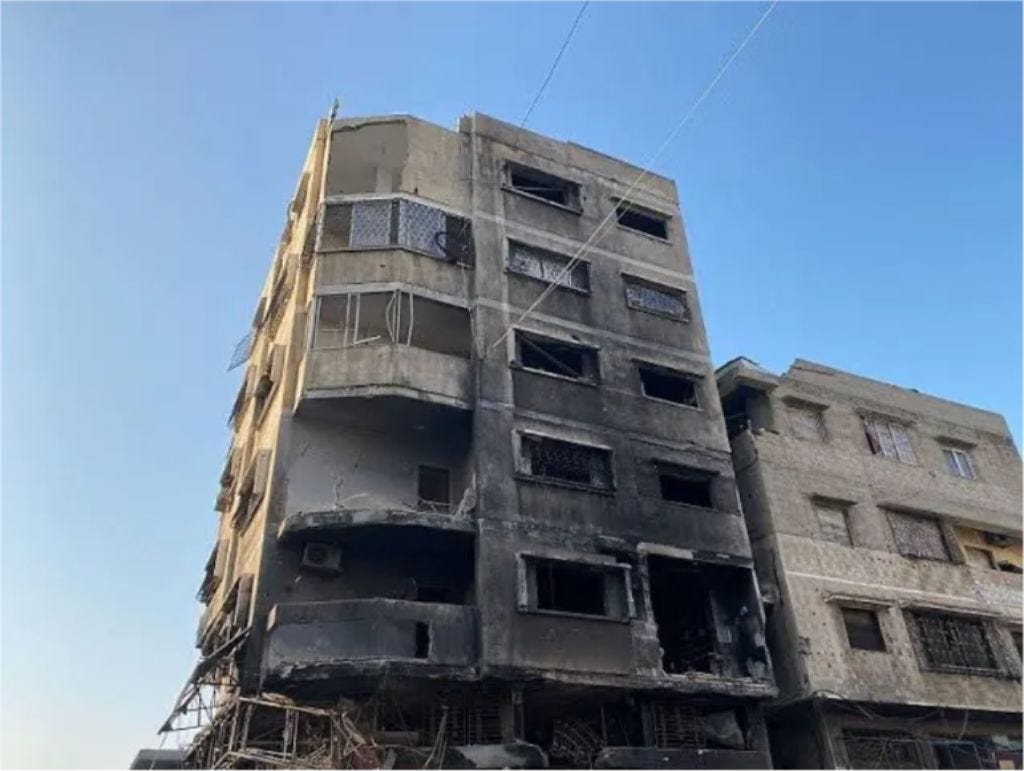
Others are forced to rent apartments—not because they are affordable or easy to find, but because they are trying to hold on to what remains of a normal life, because they still have some source of income, or because they desperately want to provide their children with something safer than a tent.
Today, apartment rents in Gaza range from $333 to $1,000 per month, depending on the location, size, and condition of the apartment.
These prices would be considered high almost anywhere. In Gaza, where countless people have lost their jobs and livelihoods, they are nearly impossible.
Others live inside warehouses that were once commercial buildings but have now become homes for displaced families, like the warehouse where my own family and I live.
The monthly rent for these warehouses ranges from $233 to $600, depending on their size and condition.
The warehouse where we live is relatively large and even has a loft, but at the end of the day, it is still a warehouse—not a home.
Before moving here, I spent much of the war living in the streets.
Everything changed because of an old friend of my father’s. I pray every day that my father returns to us safely.
He allowed me to rent this warehouse for $400 per month.
The rent used to be a little lower, but he told me someone else had offered to pay more.
Even so, I have held on to this place.
Not because it is comfortable, but because it protects my family from many of the hardships faced by those who do not even have a roof over their heads.
The hardest part is not paying rent.
The hardest part is paying rent because the home you once owned no longer exists.
Every family in Gaza once had a house filled with memories, photographs, dreams, and a sense of belonging.
Then one day, so many of those homes were reduced to rubble.
I wish my home were still standing, even if only a few walls remained.
I would return without hesitation, even if it were inside the yellow zone.
Because a home is not just concrete and bricks.
A home is where you feel that you belong.
My home was my paradise.
Many people believe Gaza’s suffering is limited to hunger and the lack of clean water.
The truth is far greater than that.
There is the struggle to find shelter, the burden of impossible rent, the loss of privacy, raising children inside tents, and the constant fear of losing even the temporary place you managed to find after losing everything else.
Behind every closed door in Gaza is a story.
Behind every tent is a family.
And behind every family paying rent today is a home they once had and never imagined they would lose.
If you truly want to understand Gaza, do not look only at the images of destruction.
Look at the people trying to rebuild a life among the ruins.
Look at the father searching every month for rent on a place he never needed before the war.
Look at the mother trying to turn a tent into a home.
Look at the child who no longer knows what it feels like to have a bedroom of their own.
This is Gaza today.
A place where simply finding a roof over your family’s head has become yet another battle for survival.
Seriously!! Israel takes rent for the refugees they have stolen the land from??
We live in such an echochamber sometimes. I'm so grateful for Substack for providing a platform where people like myself can stumble on articles like these. I'm so sorry for what you're going through. i wish I could reach through the screen and help you. I'm subscribing, that's what little I feel like I can do. <3