


Being a resistance fighter in Palestine has never been easy, but today it has become even more complicated and dangerous, especially in the Gaza Strip, where the danger is no longer limited to the person being targeted. It can extend to their family and everyone nearby.
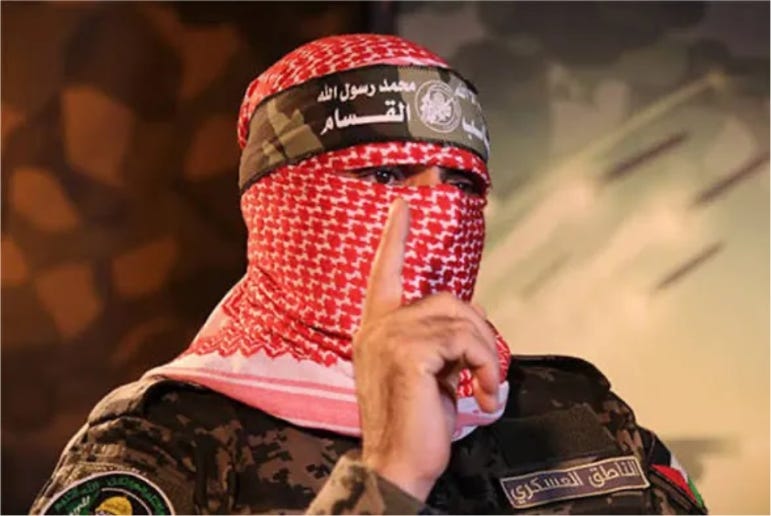
Resistance has long been a symbol of Palestine, and many have seen it as an expression of rejecting occupation and defending the land, dignity, and freedom. Those who joined the resistance knew they were putting themselves at risk and that their path might be filled with sacrifice. But what is happening today raises painful questions that go beyond the idea of resistance itself: What happens when one person’s presence somewhere becomes a reason to threaten the lives of an entire family? What about the children, women, and elderly people who have nothing to do with any military activity?
These questions are not an intellectual luxury, nor are they an attempt to justify one position or condemn another. They are questions forced upon us by the reality people in Gaza face every day.
When the targeting does not stop at one person
Let us speak honestly about the fear people in Gaza live with.
When someone is targeted in a public place or inside a home where their family is present, the question is not only: Who is the intended target? It is also: Why should others pay with their lives simply because they happen to be in the same place?
What about the child who does not understand what is happening around them? What about the mother trying to protect her children? What about the father who can do nothing but hold his family close in their final moments? And what about the elderly, who may no longer be able to flee or reach somewhere safe?
These people are not numbers in a news report or merely names mentioned in casualty figures. They are human beings with dreams, memories, and lives they were trying to preserve amid all this destruction.
Targeting one person does not give anyone the right to endanger civilians or treat their lives as losses that can simply be dismissed. Protecting civilians is not a favor granted by anyone; it is a humanitarian and legal obligation.
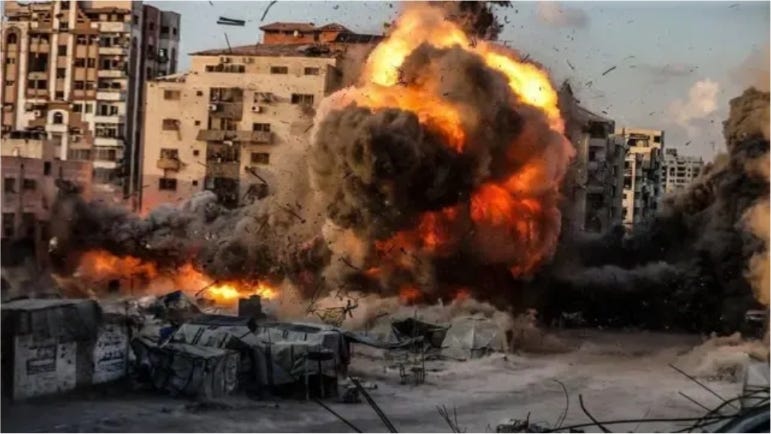
How can anyone speak of preventing genocide while people live under the weight of killing and destruction?
What provokes anger and pain is the contradiction between political statements about protecting civilians and preventing genocide, and the scenes unfolding on the ground: people being killed, families losing loved ones, and homes being destroyed.
How can you convince someone who has lost their children, wife, or parents that what happened was merely collateral damage? How can you ask a family that miraculously survived a bombing to believe they are safe when they do not know whether the home they sleep in will still be standing by morning?
Speaking about preventing genocide cannot be limited to words spoken in front of cameras. It must be reflected in people’s lives, in their ability to stay alive, and in the protection of children, women, and all civilians from killing, displacement, and deprivation of life’s basic necessities.
What is happening cannot be judged by statements alone. The real measure is the reality people experience, the actions committed against them, and the extent to which their fundamental rights are respected.
Killing innocent civilians, destroying their lives, and depriving them of any sense of safety cannot be justified by political slogans. Human life is not a minor detail in the calculations of war, and it must never be reduced to the phrase “collateral damage.”
The truth many people do not want to hear: The people of Gaza are afraid
I know many people may not want to hear these words. Perhaps they have grown accustomed to seeing Palestinians only as unbreakable people who never feel fear, who face everything with a smile or with words about patience and steadfastness.
But the truth is that the people of Gaza are afraid.
Yes, we are afraid.
We fear the bombing. We fear for our families. We worry when someone we love is late coming home. We are terrified when we hear a nearby explosion and do not know whether someone we know is among the victims. We are afraid when we go to sleep without knowing whether we will wake up in the morning. And we are afraid when we see children growing up surrounded by scenes they should never have to witness in their entire lives.
Does that make us less courageous? Does it mean we have lost our resilience? Must we hide our feelings to prove to the world that we deserve compassion?
Absolutely not.
Courage does not mean the absence of fear, and resilience does not mean that a person feels no pain. Palestinians should not have to become people without emotions for the world to recognize their strength.
We are human beings. We have hearts that grow weary, bodies that become exhausted, and souls that long for a single moment of peace. We want to live without having to justify our desire to stay alive.
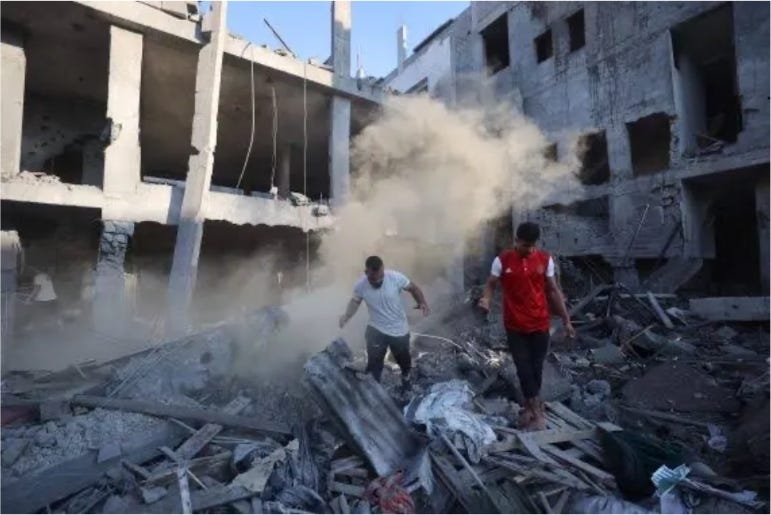
We should not have to die to prove that we love Palestine
There is a painful idea that sometimes seems to follow Palestinians wherever they go: as though we must always be prepared to die, and as though speaking about fear or wanting a normal life could be interpreted as weakness or abandonment of our cause.
But why must death be the only proof of love for one’s homeland?
We love Palestine. We love our land and our people, and we want to see our country free and safe. But we also want to study, work, build our futures, and live alongside our families. We want to plan for tomorrow without death hanging over every thought.
We want our children to go to school carrying their schoolbags, not memories of bombing and loss. We want young people to attend university and build their futures rather than spend their time figuring out how to survive another day. We want to work, laugh, meet our friends, and dream of simple things that may seem entirely ordinary to the rest of the world.
Has the desire for a normal life become an impossible dream?
Must Palestinians choose between loving their homeland and wanting to stay alive?
I reject this idea. Loving one’s homeland does not cancel out the right to life. Dignity does not mean abandoning our emotions, and resilience does not mean giving up on our dreams.
Gaza is not just a battlefield; it is home to people who want to live
When the world looks at Gaza, it sometimes sees images of bombing and destruction, hears news about military operations and political statements, and follows the numbers of those killed and injured. But behind all these headlines is an entire human life that does not always make it into the picture.
There is a student trying to continue their education despite the disruption of schooling. There is a mother wondering how she will provide food for her children. There is a father searching for shelter to protect his family from the cold and rain. There is a young person trying to hold on to their dreams despite having lost so much. And there is a family sitting together in a cramped space, trying to create a moment that feels a little like normal life.
These people are Gaza, too.
We are not merely victims, nor are we simply heroes in stories told by others. We are human beings in every sense of the word. We grow weak and find strength again. We feel fear and hope, grief and joy, and we try to hold on to whatever remains of our lives.
We want the world to see us as we are, not as it expects us to be. We want it to understand that resilience does not mean accepting pain forever, and our ability to endure does not give anyone the right to keep harming us.
Conclusion: We have the right to dream of a future in which we no longer fear tomorrow
I am not writing these words because I want the world to pity us, nor because I want to present an idealized image of our people. I am writing them because a truth must be spoken clearly: the people of Gaza do not want to die. They want to live.
We want to live with dignity, complete our education, work, watch our families grow before our eyes, and have the ability to plan our futures without fear following us at every step.
We want the day to come when a Palestinian child no longer has to understand the meaning of bombing before learning what safety feels like. We want the day to come when a mother no longer has to hold her children close while wondering whether this will be their last moment together. And we want the day to come when staying alive is no longer our only achievement.
People may disagree about political positions, and they may differ in how they define resistance and its methods. But the right of civilians to live should never be a matter of debate.
We are not required to prove our humanity to the world. Our humanity exists even when others choose to ignore it.
We are not superhuman, and we are not without fear. We are human beings who love life, and we deserve to live it.
This is not weakness, surrender, or abandonment of Palestine. It is our most basic right, and one of the most just: to live on our land with dignity and safety, and to have a future whose ending is not predetermined by the fear of death.
Is the people of Gaza asking too much when all they ask is the chance to live?
Note: Abood A is a young man that carries the weight of water distribution for Gaza’s Forgotten Families, showing up every single day for his community with no pay, no safety, and no guarantees. He’s a gifted writer, but lately he hasn’t had the time to write at all — he’s been out delivering water nonstop, making sure families have something to drink in a place where nothing is easy. His own family survives day‑to‑day on the support we’re able to gather for them. Please help sustain him. Please support him by donating directly through this link or by subscribing to him.