


The war is already reshaping the food system
The Gulf is unstable. The Red Sea is unstable. Ships are being diverted. Insurance is being pulled. The timing could not be worse. Farmers across the Northern Hemisphere are preparing fields right now. Fertilizer is not arriving on time. Some shipments are not arriving at all.
This is not a slow crisis. It is a direct hit on the materials that make modern agriculture possible.
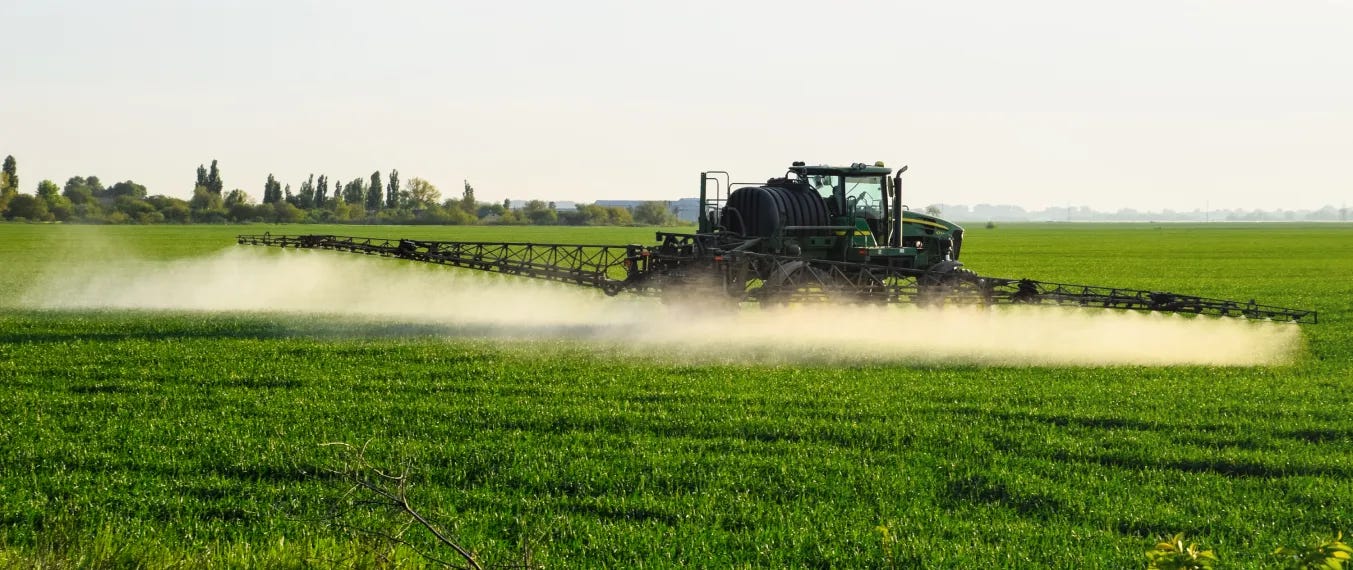
The choke points that keep the world fed are failing
Hormuz
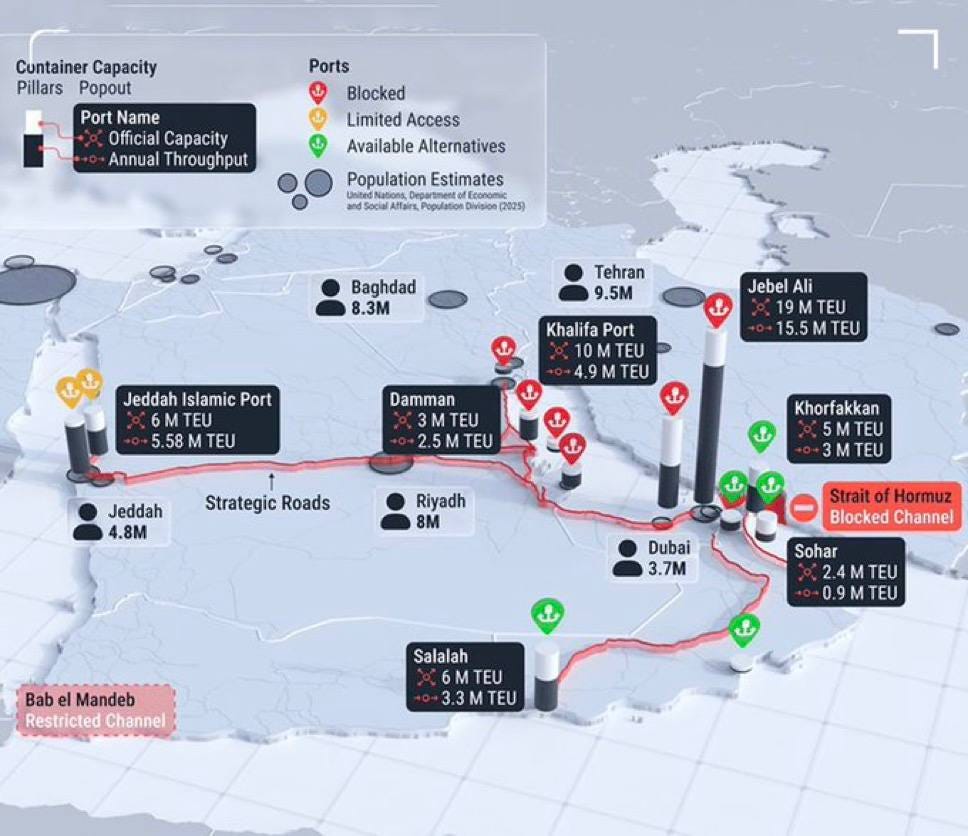
A large share of the world’s ammonia, urea and sulfur normally moves through the Strait of Hormuz. These are the core ingredients of global fertilizer production. When Hormuz becomes unsafe, fertilizer stops moving. Ships wait. Crews refuse to sail. Every day of delay becomes a smaller harvest later.
The Red Sea
The Red Sea was already under strain. Now it is a second bottleneck. Fertilizers from Russia, Belarus, Europe, Jordan, Egypt and Israel normally move through it toward Asia and Africa. Those shipments are now delayed or rerouted. Some may not move at all.
The Cape route
When both choke points fail, ships go around Africa. That adds weeks. Fertilizer that arrives after planting season is useless. A late shipment is the same as no shipment. You cannot fix a missed season.
Producers are being hit at the source
Iran
Iran is a major exporter of urea and ammonia. Those exports are now halted. Millions of tons removed from the market instantly.
Qatar and the Gulf
Qatar’s fertilizer complexes depend on stable shipping. Those lanes are now militarized. Production slows. Exports stall. The nitrogen backbone of global farming shakes.
Egypt and Jordan
Both countries rely on imported gas to run their fertilizer plants. Gas prices are rising. Shipping is unstable. Their production costs explode. Some plants may cut output. Some may shut down.
Every one of these disruptions lands on the global food supply.
Fertilizer is the foundation of modern farming
Modern agriculture does not work without fertilizer. Not at scale. Not for billions of people.
When fertilizer disappears, yields fall. Not slightly. Sharply.
Grain becomes scarce.
Animal feed becomes expensive.
Meat, dairy and eggs follow.
Food prices rise everywhere.
Poor countries get hit first.
Rich countries get hit next.
Fertilizer cannot be stockpiled easily. It is bulky and corrosive. Most countries keep only small reserves. The system depends on constant movement. That movement is breaking.
The countries closest to the edge
India
India depends heavily on Gulf urea and Qatari LNG. Both are now at risk. India faces a direct hit to its food security.
Brazil
Brazil’s farming sector runs on imported fertilizers. A large share comes from Oman and Qatar. If those flows slow or stop, global feed markets and food prices everywhere will feel it.
Turkey
Turkey relies on Iranian fertilizers and regional shipping routes. Both are compromised. Its farmers face rising costs and shrinking supply.
Africa and South Asia
Countries like South Africa, Ethiopia, Niger, Thailand and Bangladesh have no buffer. They import most of their fertilizer. They cannot absorb price spikes. These are the places where hunger will hit first.
The West is not insulated
There is a belief that Europe and North America can ride out global supply shocks. That belief is wrong. The West is tied into the same fertilizer system as everyone else.
United States
The United States imports nitrogen and potash from multiple regions. When global prices rise, American farmers pay more. Higher fertilizer costs mean higher food prices. Corn, soy and wheat become more expensive to grow. Livestock feed becomes more expensive. Grocery prices rise. Rural margins shrink. Some farmers reduce application rates. That means lower yields.
European Union
Europe relies heavily on imported natural gas to produce nitrogen fertilizers. When gas prices rise, fertilizer plants shut down. This already happened in previous energy crises. A new shock from the Gulf can trigger more shutdowns. Europe then becomes more dependent on imports at a time when global supply is shrinking.
United Kingdom
The UK has limited domestic fertilizer production. It relies on imports. When shipping routes fail and prices spike, the UK feels it quickly. Food inflation rises. Supply chains tighten. Retailers pass costs to consumers.
Canada
Canada produces potash but still relies on global nitrogen markets. If nitrogen prices rise, Canadian farmers pay more. That affects grain, canola and livestock feed. The impact spreads into global markets because Canada is a major exporter.
Australia and New Zealand
Both countries import most of their fertilizer. When global supply tightens, they face immediate price spikes. Their agricultural sectors are exposed.
The idea that the West can simply absorb this shock is false. The West is part of the same system. When fertilizer prices rise, food prices rise. When shipments slow, planting suffers. When planting suffers, harvests shrink.
Fertilizer prices in the American Midwest are already spiking
Farmers in the United States are beginning to feel the shock in real time. In Iowa, one farmer reports that fertilizer prices have jumped 77 percent in just 12 days since the conflict escalated. He links the spike to the instability around the Strait of Hormuz, noting that roughly 30 percent of global fertilizer supply normally moves through that corridor.
A price jump of that size in that short a period is unusual. It reflects how sensitive fertilizer markets are to disruptions in the Gulf. Even before physical shortages appear, the expectation of tighter supply can push prices sharply higher. For farmers who operate on thin margins, a sudden increase in nitrogen costs can force difficult choices: reduce application rates, delay purchases, or cut acreage.
Any of those choices can translate into lower yields months from now. When this happens across millions of acres, the impact spreads far beyond the Midwest. It affects grain markets, livestock feed costs and ultimately food prices across the United States.
This is not an accident
Governments know how dependent the world is on these waterways. They know that shutting Hormuz and the Red Sea will raise food prices everywhere. They know vulnerable nations will suffer first. Yet the war continues.
This is not a regional conflict. It is a direct hit on the global food chain.
The famine clock has started
Three things are happening at the same time:
Fertilizer supply is collapsing.
Shipping routes are breaking.
Planting season is starting.
If farmers do not get fertilizer now, yields fall months from now. Nothing can reverse that loss once the season is missed. This is how global food shortages begin. Not with empty shelves. With broken supply lines months earlier.
The warning is clear
The US and Israel strikes on Iran are already tearing through the fertilizer system that feeds billions. The damage is happening now. The consequences will hit later. When the harvest comes in short. When food prices jump. When governments realize too late what they set in motion.
The world is not prepared for what this means.
And the world’s fertilizer routes are being hit at the worst possible moment. Farmers in the Northern Hemisphere are entering planting season. They need fertilizer now. Not later. Not eventually. Now.
This is how a food crisis begins. Quietly. While everyone is still arguing about geopolitics.
The Cubans did it after the fall of the USSR when the Yankees tightened the embargo. Someone needs to be accountable. Iran has provided the offramp. The US needs to pay reparations, turn over the criminals, get out of West Asia for good. Time to face that music.
The wealthy regard this as trimming the surplus.