


Donald Trump’s Truth Social blast demanding Iran open the Strait of Hormuz or face strikes on its energy sector within forty‑eight hours wasn’t strength. It was the same old American delusion. The belief that Iran is a fragile state with a soft energy system that collapses under pressure. The belief that a few airstrikes can force a nation of ninety million to kneel.
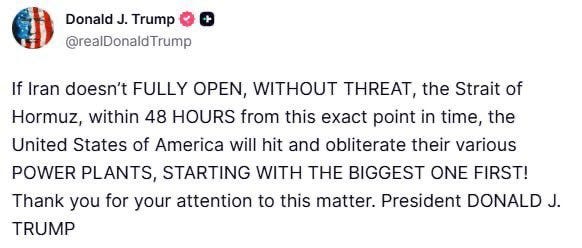
Iran heard the threat. And it answered with one of its own.
The IRGC’s Intelligence Organization issued a statement saying Iran has already forced the evacuation of U.S. bases, asserted dominance in the Strait, disrupted global energy flows, and inflicted economic damage on Israel’s tech sector. Then it said something Washington never takes seriously until it’s too late.
Iran is now thinking beyond the region.
It has a red target bank.
It claims it can hit technological and political sites outside the Middle East within forty‑eight hours.
This is not the language of a country afraid of American airpower. It is the language of a country that spent four decades preparing for exactly this moment.
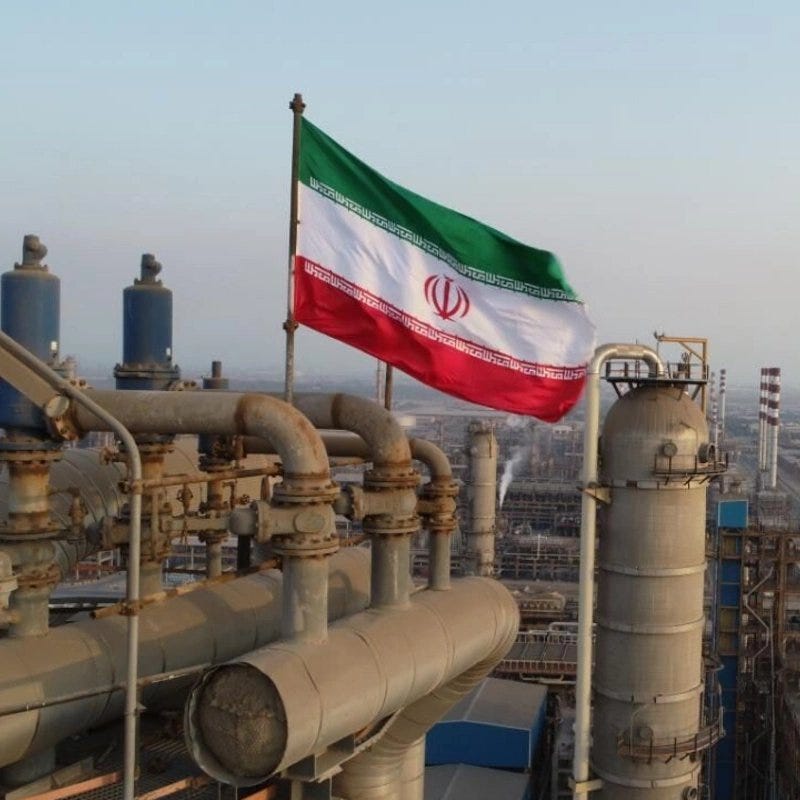
Iran’s energy system was built to survive a war with the United States
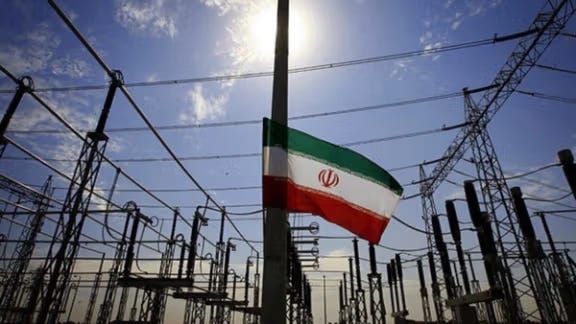
Iran’s power grid is not a single, centralized structure waiting to be knocked out. It is a massive, redundant network of 400 kV and 230 kV transmission lines that span every province. It has loops, backups, and rerouting capacity. You can damage it. You cannot collapse it.
The gas network is even harder to break. The IGAT trunklines run across the country like steel arteries, fed by compressor stations that keep the system alive even when individual components fail. South Pars, the largest gas field on earth, anchors the entire system. It cannot be “destroyed” in any meaningful sense.
This is not Iraq in 1991. This is not Libya in 2011. This is a hardened, battle‑ready energy system built under sanctions, sabotage, and the constant threat of war.
Iran’s retaliation doctrine makes Trump’s threat reckless
Iran has said for years that if its critical infrastructure is attacked, it will strike the critical infrastructure of its adversaries. Not symbolically. Not proportionally. Strategically.
That means:
Saudi oil fields
UAE export terminals
Qatari LNG facilities
Desalination plants that keep Gulf cities alive
Israeli gas rigs and power plants
Iran has already shown it can hit GCC energy assets. The Abqaiq attack in 2019 took half of Saudi oil production offline in a single morning. Israel’s offshore gas rigs sit in open water, within range of Iranian and Hezbollah missiles.
A strike on Iran’s energy sector would not stay inside Iran. It would detonate across the global economy.
The IRGC’s new warning changes the map
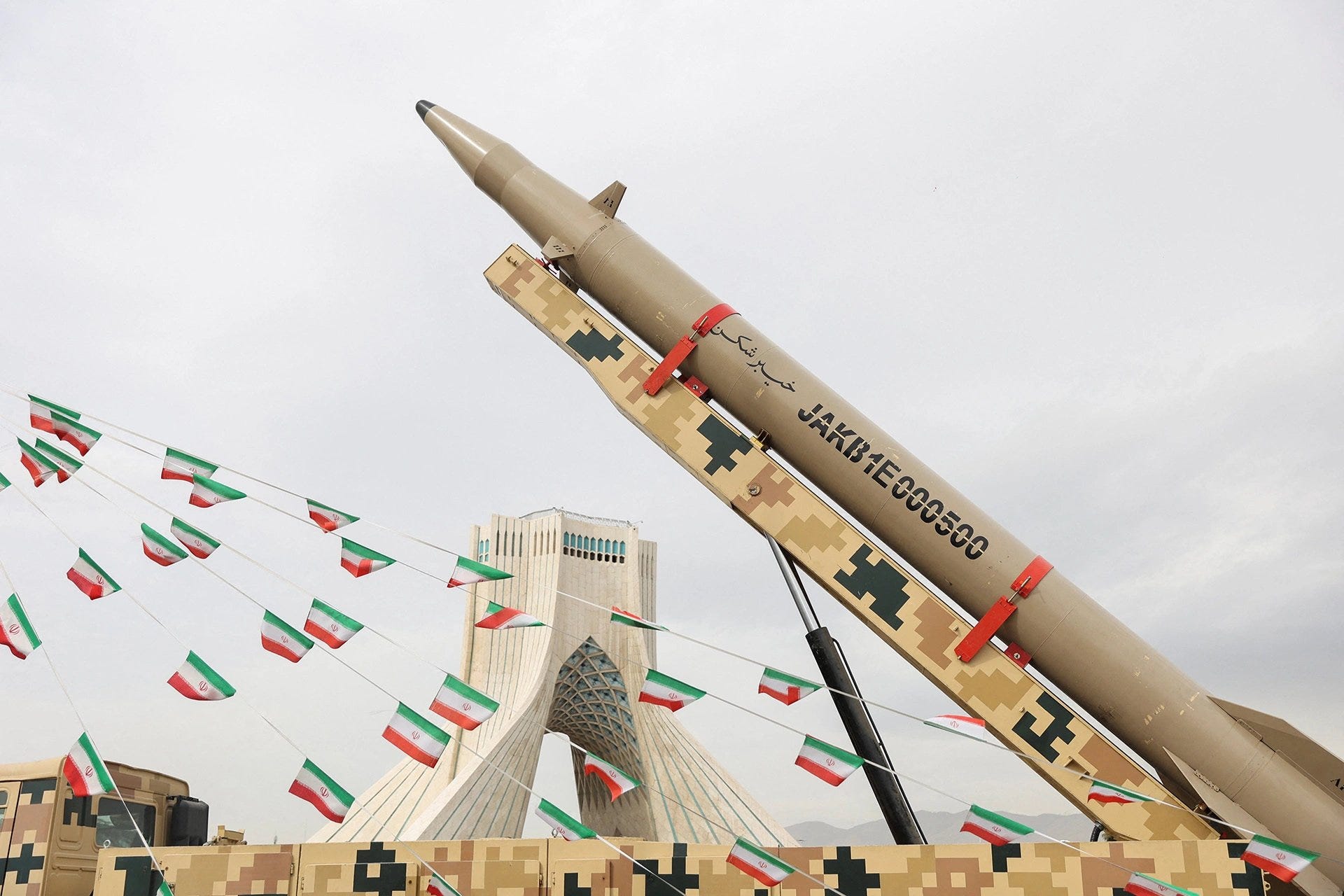
The IRGC’s statement wasn’t just bravado. It was a declaration that the battlefield is no longer confined to the Gulf. Iran claims it now has targets outside the region. Targets tied to the United States and Israel. Targets that matter.
This is the part Washington never understands. Iran does not think in terms of “regional containment.” Iran thinks in terms of global leverage. If its power plants are hit, it will not limit its response to the Middle East.
Trump’s ultimatum assumes Iran will take the hit and negotiate. The IRGC’s warning makes it clear Iran will escalate beyond anything the United States is prepared for.
A war that would not end quickly
If the United States attacks Iran’s energy infrastructure, it will not produce a clean victory. It will produce a long, grinding conflict with a country that has already prepared for the worst. Iran’s grid will take damage, but it will not collapse. Its gas network will be hit, but it will not stop. Its society will not break.
Iran built its energy system to survive exactly the scenario Trump threatened. And it built its military doctrine to ensure that anyone who tries will pay a price far beyond the region.
The bottom line
Washington still believes Iran is a problem that can be bombed into compliance. Iran is telling the world that era is over. Trump’s ultimatum and the IRGC’s response are not two sides of a negotiation. They are two incompatible worldviews colliding.
One side is bluffing with old assumptions.
The other side is preparing for a global fight.
And if the United States keeps misreading Iran’s power, it won’t just be wrong. It will be blindsided.
Someone take away Donald wifi.
Zelensky officially announces his entry into the war in West Asia, alongside America and the Gulf states, in the "defensive sphere".
POS Zionist buffoon!