


The UAE Was Sold As The Middle East’s Safe Haven. That Story Is Over.
For years the Emirates marketed themselves as the region’s neutral business hub. A place where money could move freely, where skyscrapers sparkled, and where politics stayed politely out of sight. That image has collapsed almost overnight. Iran has hit the UAE harder than any country except Israel, according to reporting from CNBC which described the Emirates as a state now caught in the middle of a regional war it helped enable.
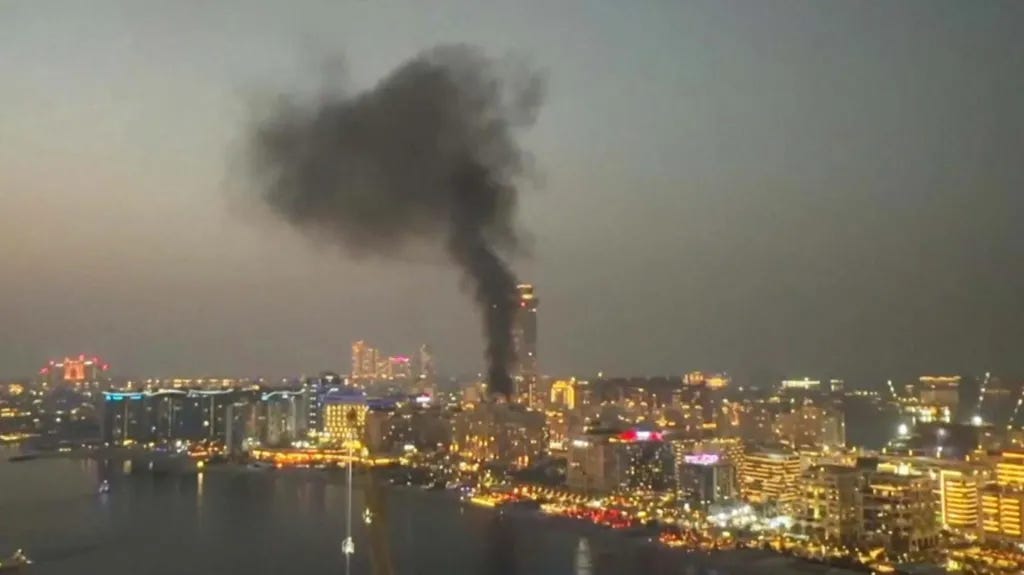
The strikes have not been symbolic. They have been sustained, destructive, and aimed at the very infrastructure that made Dubai and Abu Dhabi global magnets for investment. Flights at Dubai International Airport have been repeatedly suspended after drone incidents. Upscale neighborhoods have been left with shattered glass. The sound of incoming drones has become part of daily life. This is not the “safest place in the Middle East” anymore.
Why Iran Is Targeting The UAE
1. The UAE is the flagship of the Abraham Accords
The Emirates were the first Gulf state to openly normalize with Israel. That move was celebrated in Washington and Tel Aviv, but it placed a target squarely on Emirati soil. Iran sees the UAE as a forward operating partner for Israel and the United States. That alone would have made it a target.
2. The UAE hosts some of the most important US military and intelligence assets in the region
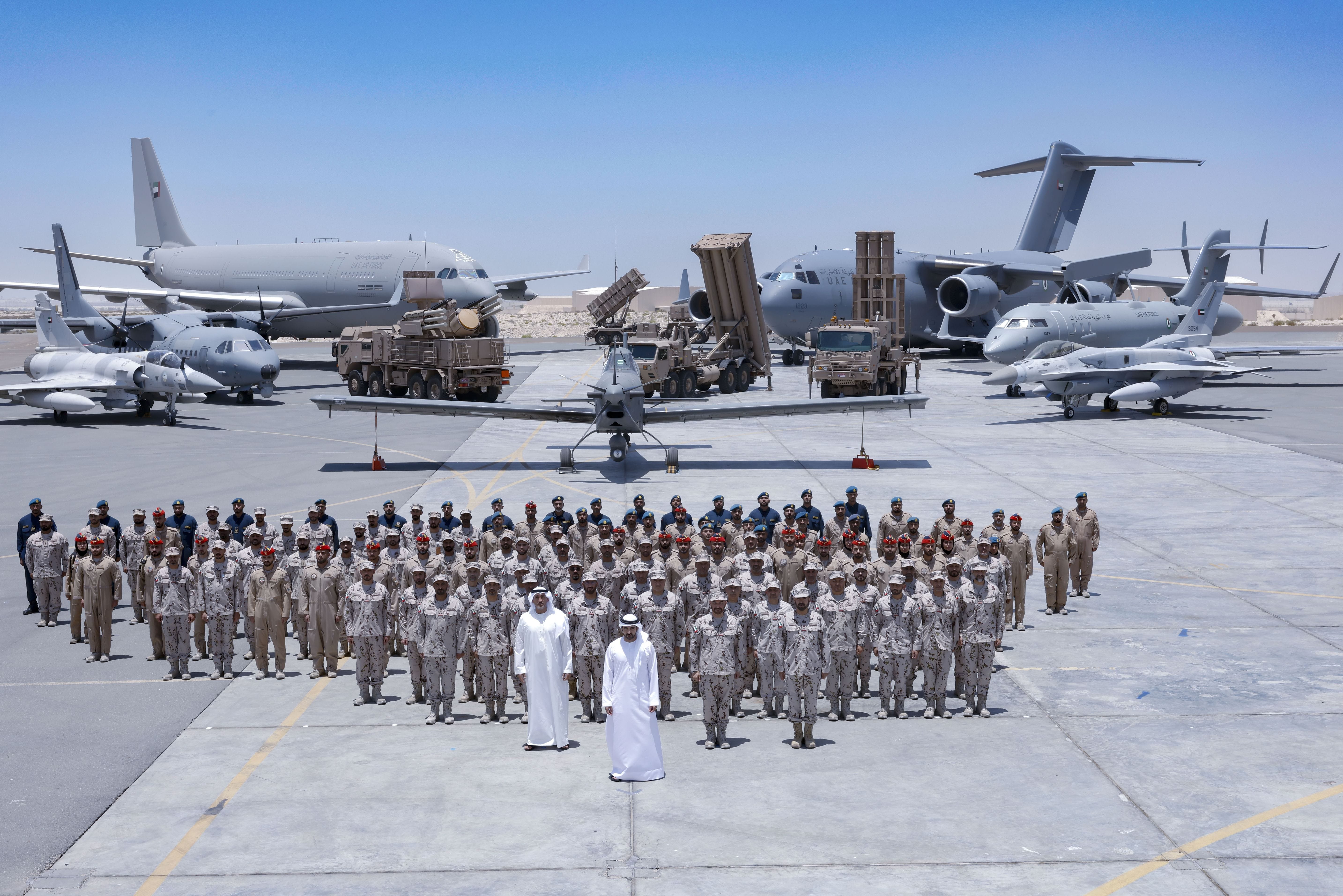
The Dhafra Air Base is not a symbolic outpost. It is one of the most important American hubs in the Gulf. It houses:
The 380th Air Expeditionary Wing
The 99th Expeditionary Reconnaissance Squadron
The 908th Expeditionary Refueling Squadron
The 968th Expeditionary Air Control Squadron
The 75th Expeditionary Fighter Squadron
Units of the 11th Air Defense Brigade
This base is central to US surveillance, refueling, air defense, and strike operations across the Middle East. Iran knows this. Hitting the UAE is a way to hit the United States without striking the US mainland.
3. The UAE allowed its territory to be used in strikes on Iran
American forces have launched operations from Emirati soil. US media has published footage showing missiles fired from Gulf territory. Israeli outlets have gone further by accusing the UAE of participating in attacks on Iranian infrastructure, including a desalination facility. Whether those accusations are true or not, the effect is the same. They paint the UAE as an active combatant.
Once that perception takes hold, Iran treats the UAE as a legitimate military target.
4. Iran wants to inflict maximum regional and global pain
CNBC reported that Iran is deliberately targeting the UAE because it is the Gulf’s bridge between East and West. It is the region’s logistics hub, its financial hub, and its tech hub. Iran even struck an Amazon data center in Dubai, disrupting cloud services. The message is clear. If the UAE wants to act like a Western outpost, it will be treated like one.
Iran Says the UAE Helped Create the Crisis
Iran has not been vague about why it is striking the UAE.
Tehran’s leadership has gone on record, repeatedly, and their accusations are far more serious than anything Western media has acknowledged.
Iran’s foreign minister says the UAE allowed U.S. attacks to be launched from its soil
On Iranian state television, the foreign minister stated that the United States used Emirati territory to launch strikes on both Iran and Saudi Arabia, and then blamed Tehran for the fallout.
He described these incidents as false‑flag operations, designed to drag the region deeper into conflict while painting Iran as the aggressor.
From Iran’s perspective, the UAE was not a bystander.
It was a platform.
Iran’s defense minister made the same accusation
Iran’s defense minister went further, saying that:
Some attacks on Saudi Arabia that were blamed on Iran
Were actually launched from UAE territory
With the intention of framing Iran and justifying U.S. escalation
These statements were broadcast on Iranian military channels and repeated across Iranian news agencies.
They form a core part of Iran’s official narrative.
Iran’s position is simple: the UAE is not neutral
Iranian media has been blunt:
The UAE hosts U.S. and Israeli military infrastructure
The UAE allows its territory to be used for operations against Iran
The UAE participates in intelligence sharing that targets Iran
The UAE cannot claim innocence while enabling hostile actions
From Tehran’s view, the Emirates made themselves a combatant long before the first missile hit Dubai.
Iran’s Strikes on the UAE Are Symbolically the Most Devastating
It’s not about the number of missiles.
It’s about what those missiles destroyed — the illusion.
The UAE spent decades constructing a global brand:
a place above the region’s wars, a sanctuary of stability, a glittering safe zone where money could hide from the chaos next door.
Iran didn’t need to level half the country to break that image.
It only needed to hit the right targets.
A few precision strikes on Dubai and Abu Dhabi did more damage to the UAE’s reputation than years of conflict did to other states. Investors panicked. Tourists fled. Billionaires moved their assets. The government resorted to censorship and arrests just to control the narrative.
The UAE wasn’t hit the most.
It was hit where it hurts the most.
Iran’s message was simple:
your safety was always a mirage — and we can shatter it whenever we choose.
That is why the UAE’s reaction has been so frantic.
Not because of the scale of the strikes, but because of what those strikes exposed.
The Scale Of The Strikes
According to the UAE’s own figures, Iran launched more than 300 ballistic missiles, more than 1,600 drones, and multiple cruise missiles at the Emirates in the first two weeks of the war. These attacks killed several people and injured more than one hundred.
This is not a symbolic pressure campaign. It is a sustained military assault.
The Economic Fallout Is Already Severe
Dubai and Abu Dhabi’s economies are built on confidence. They rely on the belief that the Emirates are stable, predictable, and insulated from the chaos of the region. That belief has evaporated.
Flights have been suspended at Dubai International Airport.
Foreign investors are reassessing their exposure.
Tech companies are questioning whether the UAE is still a safe place to host data centers.
Tourism has dropped sharply.
Luxury districts have been physically damaged.
ABC News described Dubai’s skyline filled with smoke, broken glass across wealthy neighborhoods, and travelers running for cover at the airport.
This is the opposite of the image the UAE has spent decades and billions of dollars cultivating.
The UAE Is Trying to Hide the Panic —But Everyone Can See It
The Emirati government has responded to the strikes with aggressive censorship. Dubai Police issued formal warnings stating that:
Sharing videos of explosions
Posting footage of drone interceptions
Circulating images of damage
Even forwarding clips inside private WhatsApp groups
...could result in arrest.
The message is unmistakable:
Do not show the world what is happening.
But the images are still coming out.
Residents film smoke rising behind towers.
Travelers record airport evacuations.
Footage of interceptions are on Telegram channels within minutes.
The censorship isn't containing the panic. It's confirming it.
People understand that if the situation were truly under control, the government wouldn't be threatening citizens for documenting the sky.
The UAE Is Paying The Price For Its Alliances
The Emirates wanted to be a global player. They wanted to be Washington’s closest Gulf partner and Israel’s most enthusiastic Arab ally. They wanted to host the region’s most important US military base while presenting themselves as neutral.
That balancing act is over.
The United States continues to insist that hosting American troops is central to Emirati security. Emirati officials publicly agree. But the reality on the ground tells a different story. The presence of US forces has not protected the UAE. It has made it a frontline target.
The UAE is discovering what many countries before it have learned. When you host a superpower’s military infrastructure, you inherit that superpower’s enemies.
The Facade Has Fallen
Dubai’s glittering skyline was always a kind of performance. A promise that money could buy insulation from geopolitics. That promise has collapsed. Iran has shown that the UAE is not untouchable. It is not neutral. It is not safe.
The Emirates are now learning that you cannot be the region’s luxury playground and the region’s military launchpad at the same time.
The world is watching the UAE in a way it never has before. Not as a model of stability, but as a warning.
Funny how they have a police officer speaking in Hindi to tell workers they will be deported if they share what it happening in Dubai.
Couldn’t happen to a better target- the UAE is a disgusting monstrosity. I unfortunately had to go through on a holiday 18 months ago. Initially I thought I’d get an immediate transfer then thought, no I’ll stay for 2 days and have a look around, challenging myself to know more before I continue to condemn the place. It’s a country built of absolute hypocrisy, from the slaves taken from poor surroundings countries having to work there for below basic wages to the fact that their “7” star hotels obviously get their “7th” star from being prepared to provide obnoxious elites with any depravity they wish to engage in. The “supposed” Muslim traditions are openly flouted by their own “Muslim” elites and those of neighbouring countries along side their Western tourists.
The last thing I did before leaving was pay to have a shower in the airport! I felt so dirty!