


Ports, Power, and the Politics of Vulnerability — Iran’s Strikes as Anti‑Imperialist Strategy
A cold, surgical message landed across the Gulf: the region’s power is not in aircraft carriers, press releases, or missile parades. It is in terminals, pipelines, insurance ledgers, and the thin threads of global trade. Iran’s strikes on Duqm, Jebel Ali, Mina Salman, Haifa, and Port Zayed and the dramatic closure of the Strait of Hormuz were not a tantrum. They were a lesson in how imperial power actually works and how easily it can be unravelled.
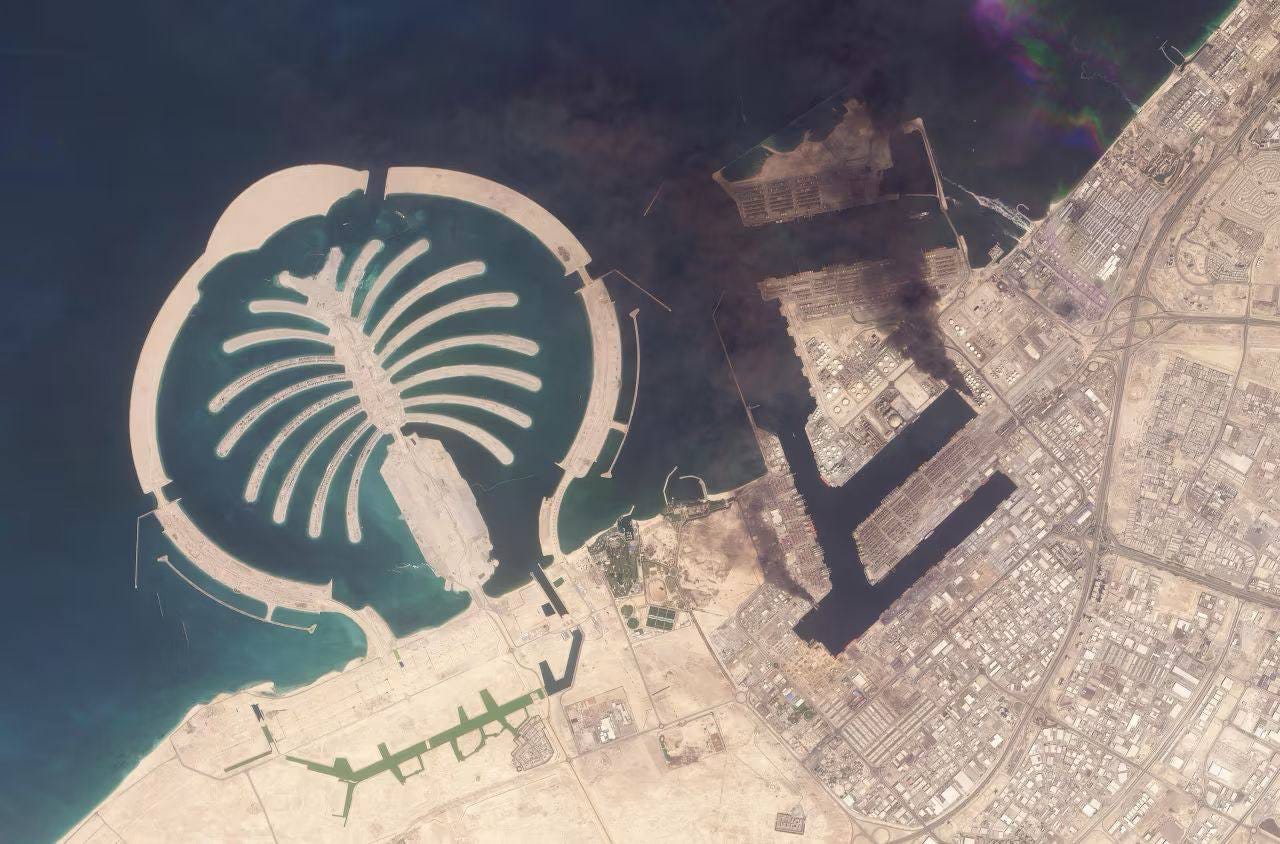
Targets and Intentions
Not spectacle. Pressure.
These were not symbolic strikes on empty bunkers. They were precise blows at the infrastructure that props up regional domination: ports that funnel wealth, bases that project force, and terminals that keep sanctions and supply chains humming. Duqm, Jebel Ali, Mina Salman, Haifa, and Port Zayed each sit at the junction of commerce and coercion. Tehran didn’t aim for theatre; it aimed for leverage.
Duqm: A supposed “alternative” to Hormuz, a diversification fantasy if the chokepoint remains under Tehran’s thumb.
Jebel Ali: Dubai’s economic oxygen; hit it and the illusion of invulnerability in global logistics cracks.
Mina Salman: Home to the Fifth Fleet’s posture of dominance; hit it, and the myth of American omnipotence looks brittle.
Haifa: Israel’s Mediterranean lifeline; hit it and the narrative of deterrence is exposed as performative.
Port Zayed: Abu Dhabi’s prestigious infrastructure; hit it, and the façade of stability burns like any other target.
The Strait of Hormuz as a Weapon of Deterrence
From threat to action.
For decades, the Strait has been the geopolitical bogeyman — the place where markets tremble and diplomats posture. Iran didn’t merely threaten Hormuz; it used it. Closing the Strait was not an escalation for spectacle; it was a demonstration of economic sovereignty and strategic depth. When the artery that feeds global oil markets is switched off, the whole edifice of Gulf wealth and Western leverage convulses.
Consequences ripple instantly: tankers stalled, insurance premiums spiking, projects frozen, and markets jittery. The port strikes were the warm‑up; Hormuz was the main act — a reminder that control of choke points is control of the global economy.
Informational video on what happens when the straight of Hormuz closes.
Imperial Power Built on Fragile Infrastructure
You can parade carriers; you can’t guard every berth.
The US, Israel, and Gulf monarchies have built regional dominance on the assumption that infrastructure equals security. That assumption is false. A drone swarm, a targeted strike, a few well‑placed missiles — none of these respects the glossy brochures about "resilience". The Fifth Fleet’s presence, missile batteries, and PR about deterrence do not immunise ports, pipelines, or insurance markets.
Imperialism depends on uninterrupted flows: of oil, of goods, of capital. Disrupt those flows, and the whole system’s legitimacy and leverage wobble. Iran’s campaign was a strategic humiliation: not because it destroyed everything, but because it revealed how little the imperial order can actually protect.
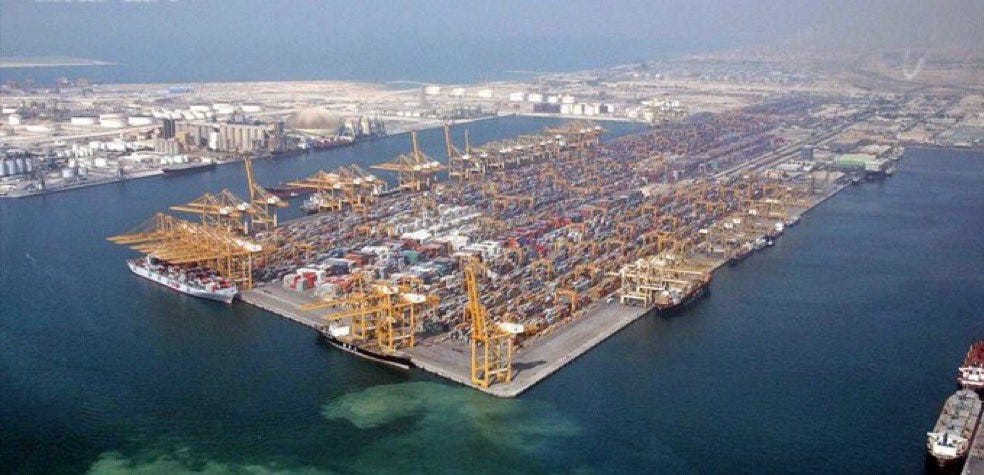
The Real Navy Is Civilian Infrastructure
Cranes, berths, tank farms, and ledgers are the new battleships.
This conflict reframes what counts as military power. The decisive assets are not only ships and jets but also terminals, storage tanks, drydocks, and the financial instruments that make trade possible. Insurance markets, shipping routes, and port operations are the soft underbelly of global power — and they are weaponisable.
Iran’s message: if you want to project power, be prepared to defend the civilian scaffolding that makes that projection possible. If you can’t, your threats are hollow, and your deterrence is a PR campaign.
Conclusion and Call to Perspective
This is not chaos. It is a strategy.
What unfolded in the Gulf is a strategic rebuttal to imperial arrogance. It exposes the lie that military bases and alliances alone secure a region. It shows how economic warfare and control of infrastructure can reorder power without the cinematic battles Washington and Tel Aviv fantasise about.
For those who oppose imperial domination, the lesson is clear: solidarity must be rooted in understanding how power is actually exercised — and how it can be contested. The ports burnt were not just commercial nodes; they were symbols of a global order that treats regions as extractable assets. Iran’s strikes were a reminder that when the machinery of empire is vulnerable, resistance can be surgical, strategic, and devastatingly effective.
Manufacturing dissent means naming the targets of empire — and refusing to be comforted by the myth that might equals invulnerability.
I love that phrasing “At the Junction of Commerce and Coercion”.
May I borrow it?
Hoping billionaires who stepped on regular hard working people to enrich themselves have their shares burning with it.