

The Other Ledger: Egypt's Drones, Russia's Red Sea Prize, and the Foreign Hands Behind Sudan's Army
--from our series Sudan's War and Its Enablers, Installment 3

The third installment in our series on Sudan’s war and its enablers. We’ve traced the RSF’s foreign patrons — the arms, the mercenaries, the gold. The army has its own, and some of the powers now brokering “peace” are arming the fight.

Turkish-made Bayraktar drones have become central to Sudan’s war, flown against the RSF from bases inside Egypt. (Illustrative image via Unsplash.)
Once you have documented the case against the United Arab Emirates and the RSF, it is tempting to reach for a simpler story — a villain and a victim. Sudan does not offer one. The Sudanese Armed Forces are the internationally recognized government’s military, but they are also, by the findings of the UN’s own investigators, a party to war crimes. And like the RSF, the army does not fight alone. American and European officials say the UAE supplies the RSF, while Saudi Arabia and Qatar back Sudan’s military, which has also obtained weapons from Turkey, Iran and Russia. If the RSF’s war is financed a thousand miles away in Dubai, the army’s war is increasingly flown in from Cairo, Ankara, Tehran, and Moscow. This is the other ledger.
Egypt steps off the sidelines
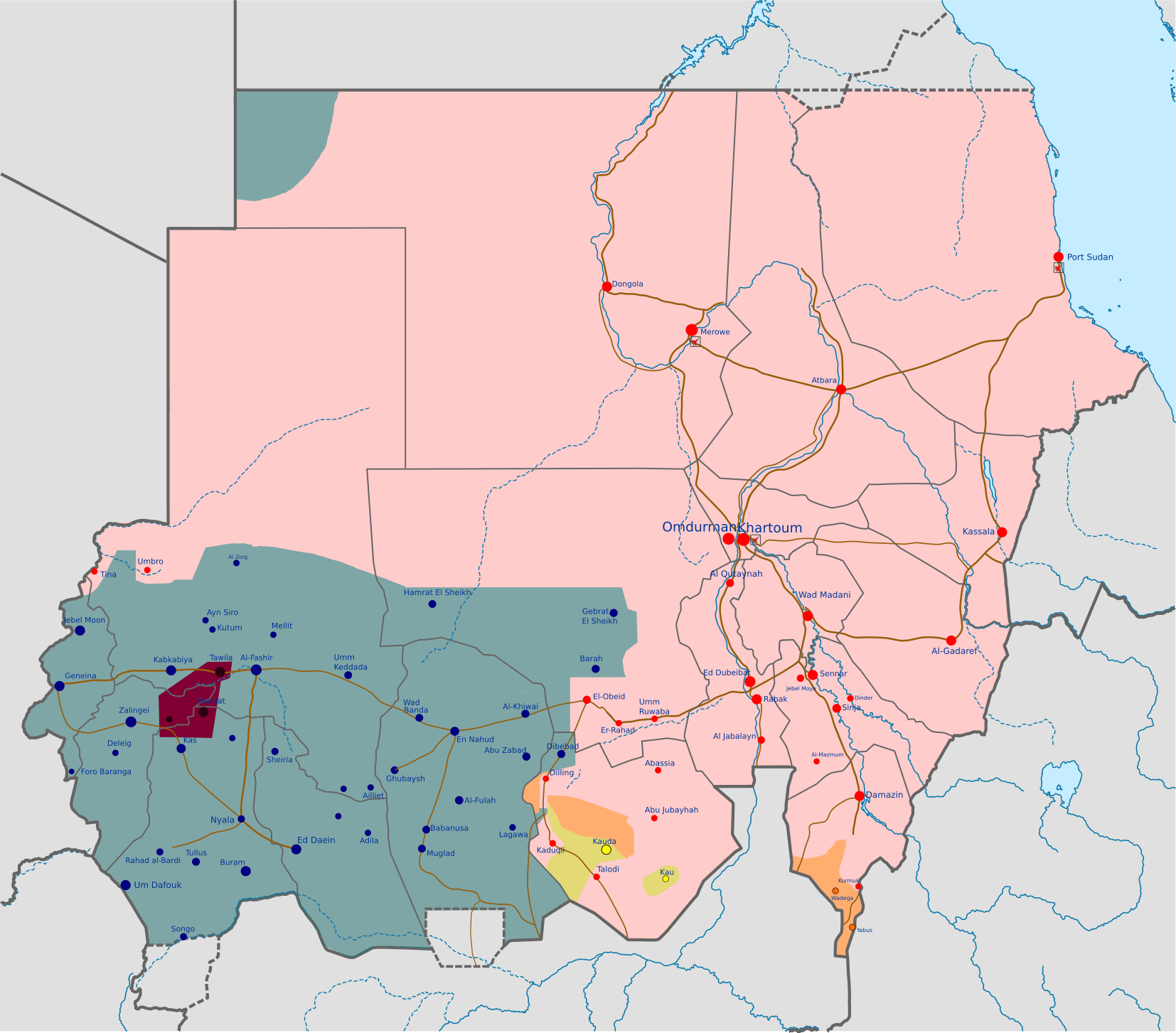
For most of the war, Egypt was a diplomatic patron at arm’s length. That changed after El Fasher. A New York Times investigation — using satellite images, flight records and interviews with officials — found that drones had operated for at least six months from a secretive airbase in Egypt’s western desert, striking the RSF inside Sudan. The site is East Oweinat, near the Sudanese border, where a civilian airport was converted into a covert base launching Turkish-made Bayraktar Akıncı drones transferred to Sudan via Egypt. The shift came after the RSF took El Fasher and Cairo grew fearful of a wider advance and refugee surge; President Abdel Fattah el-Sisi had called El Fasher a “red line.” It remains unclear whether Egyptian or Sudanese crews operate the drones, and both governments declined to comment. Turkey keeps its distance from the operation: its defense ministry said “Turkish Armed Forces do not have any activities in Sudan,” and a senior official said the drones were exported in line with international law.
Tehran’s drones
Iran supplied an early lifeline. After restoring diplomatic ties in October 2023, Iran began providing the SAF with Mohajer-6 and Ababil drones; the State Department-funded Conflict Observatory concluded “with near certainty” that transfers via flights to Port Sudan continued. Tehran’s aim is strategic — analysts say Iran armed the army in the hope of securing a Red Sea naval base in return. The trade is ongoing and, at times, prosecutable: in April 2026 an Iranian-born U.S. resident was arrested at Los Angeles airport for allegedly brokering a $70 million Mohajer-6 deal with Sudan’s defense ministry — even as the SAF now reportedly halts Iranian purchases to court Washington. The cost is counted in civilians: the UN said drone strikes by the warring parties killed roughly 1,000 civilians between January and May 2026.
Moscow’s about-face
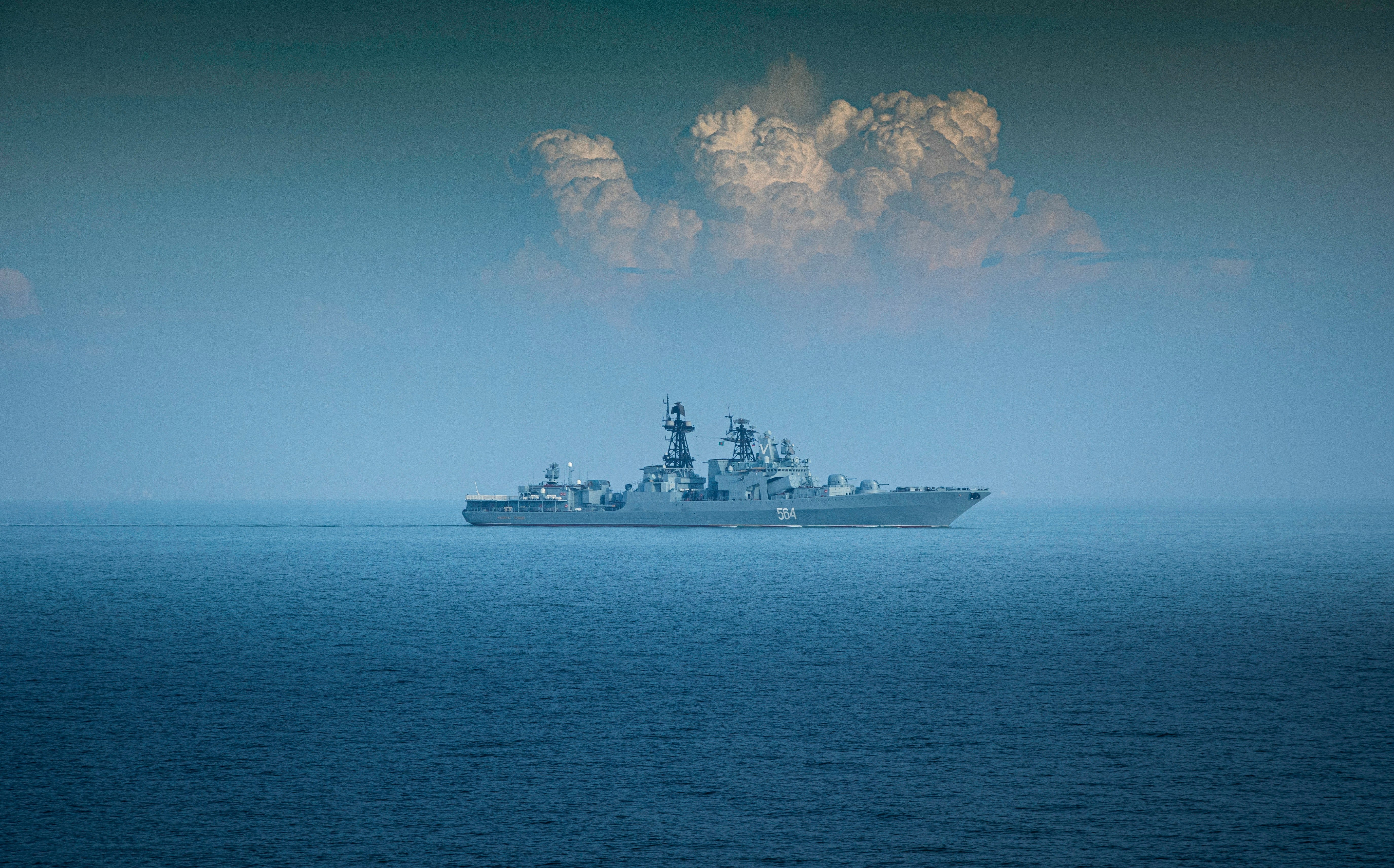
No patron’s role is more tangled, because Russia has backed both sides. Moscow first used the Wagner Group’s ties to the RSF, then switched to the army in spring 2024 in exchange for reviving a stalled Red Sea naval-base deal. Sudan has offered Russia a 25-year deal for a base at Port Sudan — up to 300 personnel and four warships, including nuclear-powered ones — plus mining concessions, in return for arms at preferential prices. The framework was signed in February 2025 but remains unratified. It deepens an old dependency — since 2003, Russia has supplied more than 80 percent of Sudan’s weapons — now run through the state-controlled “Africa Corps” that replaced Wagner, with the naval facility its prize, stalled for now by the war.
The Gulf, and the others
Qatar, Turkey and Saudi Arabia are among those now backing the army, though the depth varies. Saudi Arabia’s role is the murkiest: Riyadh has claimed a mediating role “with no evidence of providing military support,” while working to counter the UAE’s influence. China’s weapons turn up on both sides — Amnesty documented Chinese arms, re-exported by the UAE, captured in Khartoum and used in Darfur.
The picture is less a two-camp proxy war than a marketplace: a dozen governments selling or laundering the means of a war none of them has to fight.
The army’s own war on civilians
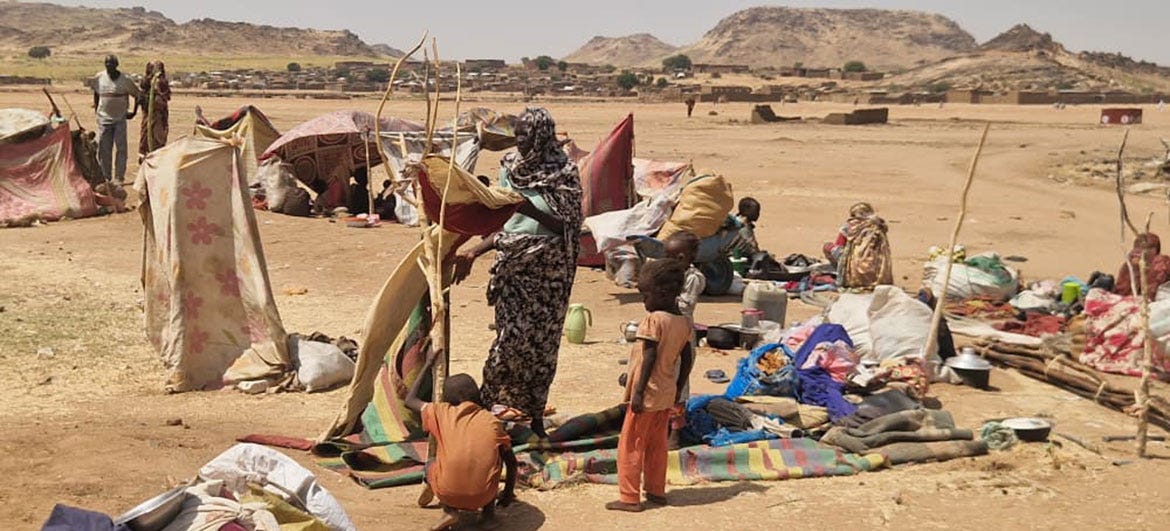
None of this makes the SAF the aggrieved party. The UN Fact-Finding Mission found both the SAF and the RSF responsible for large-scale attacks on civilians. The army’s signature is aerial: Human Rights Watch documented the SAF’s use of unguided air-dropped bombs in residential Nyala in early 2025 — apparent war crimes that killed and injured scores, part of a broader pattern of indiscriminate airstrikes, including on a market in southern Khartoum. A July 2026 investigation, The Reckoning Project’s “The Scars Above,” attributed most documented air and drone strikes across Darfur to the army. The SAF has also weaponized hunger — the U.S. Treasury cited its “routine and intentional denial of humanitarian access, using food deprivation as a war tactic” — and detention: HRW reported more than 25 women charged with RSF collaboration and facing possible death sentences. And the gravest allegation: in 2025 the U.S. determined the government had used chemical weapons in 2024, prompting sanctions, a finding France 24 and Human Rights Watch partly corroborated as chlorine — which Sudan denies and which remains before the international chemical-weapons watchdog.
Washington’s ledger
The United States has been more even-handed with the army than with the RSF’s patron — to a point. In January 2025 it sanctioned army chief Abdel Fattah al-Burhan, citing food-deprivation tactics, obstruction of aid, and his refusal to join ceasefire talks, and in 2026 designated the Sudanese Muslim Brotherhood a terrorist organization over its ties to the SAF. But the asymmetry is real: Washington determined the SAF committed war crimes in December 2023 and that the RSF committed genocide in January 2025 — the word reserved for the RSF has not reached the army. The sanctions on both commanders were meant, the outgoing secretary of state said, to signal that “neither man is fit to govern a future, peaceful Sudan.”
And yet the United States is, by far, the largest arms supplier to the governments sponsoring both sides of this war. In May 2025 it signed a record $142 billion arms deal with Saudi Arabia — the largest in U.S. history — and in November cleared the sale of F-35 fighters and nearly 300 tanks to the kingdom. It approved $1.32 billion in fresh sales to the UAE that same year and fast-tracked roughly $7 billion more in 2026 under emergency waivers that bypassed congressional review. And it gives Egypt $1.3 billion in military financing every year, as it has for nearly four decades. Saudi Arabia and Egypt back the army; the UAE backs the RSF. Washington arms all three — even as it is the one government to have branded the RSF’s campaign genocide.
And yet the United States is, by far, the largest arms supplier to the governments sponsoring both sides of this war.. . . In May 2025. . . $142 billion arms deal with Saudi Arabia. . . and in November cleared the sale of F-35 fighters and nearly 300 tanks to the kingdom. It approved $1.32 billion in fresh sales to the UAE that same year and fast-tracked roughly $7 billion more in 2026 under emergency waivers that bypassed congressional review. And it gives Egypt $1.3 billion in military financing every year, as it has for nearly four decades. Saudi Arabia and Egypt back the army; the UAE backs the RSF. Washington arms all three — even as it is the one government to have branded the RSF’s campaign genocide.
None of this is lost on Washington. U.S. lawmakers and Human Rights Watch have warned that arming the UAE can backfill the RSF — that even if American weapons never cross into Sudan, sales to Abu Dhabi free it to push older stockpiles to the front, and members of Congress have repeatedly tried, and failed, to block those sales for exactly that reason. The sales went through anyway.
The contradiction is not subtle. The United States has formally called the RSF’s campaign a genocide — yet it remains the chief arms supplier to the UAE, the RSF’s most important foreign sponsor. It has formally found the Sudanese army responsible for war crimes — yet it keeps arming Egypt and Saudi Arabia, the army’s principal backers. Washington has condemned the conduct of both sides, and it arms the outside powers that sponsor both sides. It does not put weapons into the hands of the RSF or the army directly — its own sanctions bar arms sales to Sudan — but it supplies the governments that do. And it keeps selling.
Closing
The other ledger does not exonerate the RSF’s backers — the evidence against the UAE stands. It shows that a war this durable cannot be sustained by one sponsor. Egypt flies the drones, Turkey builds them, Iran seeded the army’s air campaign, and Russia sells the guns while angling for a warm-water port — even as the Emirates funds the militia burning Darfur. And above them all sits the United States: the world’s largest arms dealer, supplier to Saudi Arabia, the UAE, and Egypt alike, still selling to the RSF’s chief patron even after branding the RSF’s campaign genocide. The Sudanese people are caught between two forces that both bomb markets and starve cities — armed by patrons who pay no price, who are armed in turn by the superpower calling for peace. Amnesty International has urged the UN Security Council to extend the Darfur arms embargo to the rest of Sudan and to hold every violator to account. That is the only accountability that fits the crime: aimed at every link in the chain, not one. Until the supplying stops — at the source, and at the source’s source — the dying will not.
Works Cited
“Egypt emerges as covert drone hub in Sudan war, New York Times reports.” Geeska. https://www.geeska.com/en/egypt-emerges-covert-drone-hub-sudan-war-new-york-times-reports
Walsh, Declan, et al. “A Secret Drone Base in Egypt Is at the Heart of Sudan’s War.” The New York Times, 1 February 2026. https://www.nytimes.com/2026/02/01/world/africa/egypt-sudan-drones.html
“Egypt carrying out air strikes on RSF in Sudan from secret base.” Middle East Eye. https://www.middleeasteye.net/news/egypt-carrying-out-air-strikes-rsf-sudan-secret-base
“Türkiye-made drones reportedly hit Sudan from secret base, Ankara denies claims.” Türkiye Today. https://www.turkiyetoday.com/world/nyt-turkish-drones-hit-sudan-fom-secret-base-ankara-denies-3213926
“International actors.” European Union Agency for Asylum (EUAA), 2025. https://www.euaa.europa.eu/coi/sudan/2025/security-situation/12-actors-conflict/122-international-actors
“Drones Over Sudan: Foreign Powers in Sudan’s Civil War.” Critical Threats Project. https://www.criticalthreats.org/analysis/drones-over-sudan-foreign-powers-in-sudans-civil-war
“Sudan Turns Away From Iranian Weapons in Hopes of Courting Washington.” Foundation for Defense of Democracies, 22 June 2026. https://www.fdd.org/analysis/2026/06/22/sudan-turns-away-from-iranian-weapons-in-hopes-of-courting-washington/
“UN Human Rights Council: ‘Drones and sexual violence worsening Sudan conflict.’” Radio Dabanga. https://www.dabangasudan.org/en/all-news/article/un-human-rights-council-drones-and-sexual-violence-worsening-sudan-conflict
“Sudan offers Russia Red Sea base for 25 years for military arms.” The New Arab (citing The Wall Street Journal). https://www.newarab.com/news/sudan-offers-russia-red-sea-base-25-years-military-arms
“Russia’s Naval Base in Port Sudan.” HORN International Institute for Strategic Studies. https://horninstitute.org/russias-naval-base-in-port-sudan-a-gateway-to-africa-and-the-indian-ocean/
“Russia’s Africa footprint is deeper than imagined.” GIS Reports. https://www.gisreportsonline.com/r/russias-africa-footprint/
“’A war of atrocities’: Sudan civilians deliberately targeted.” OHCHR, September 2025. https://www.ohchr.org/en/press-releases/2025/09/war-atrocities-sudan-civilians-deliberately-targeted-un-fact-finding-mission
“Sudan: Armed Forces Airstrikes in South Darfur.” Human Rights Watch, 4 June 2025. https://www.hrw.org/news/2025/06/04/sudan-armed-forces-airstrikes-south-darfur
“World Report 2026: Sudan.” Human Rights Watch. https://www.hrw.org/world-report/2026/country-chapters/sudan
“Report documents pattern of air and drone strikes on civilians across Darfur” (The Reckoning Project). Darfur24, 10 July 2026. https://darfur24.com/en/2026/07/10/report-documents-pattern-of-air-and-drone-strikes-on-civilians-across-darfur/
“Disturbing Reports of Sudan’s Military Using Chlorine Gas.” Human Rights Watch, 9 October 2025. https://www.hrw.org/news/2025/10/09/disturbing-reports-of-sudans-military-using-chlorine-gas
“US to sanction Sudan after finding chemical weapons used in civil war.” Al Jazeera, 23 May 2025. https://www.aljazeera.com/news/2025/5/23/us-sanctions-sudan-after-ruling-chemical-weapons-used-during-civil-war
“US demands immediate inspections of Sudan’s chemical weapons.” The National, 11 July 2026. https://www.thenationalnews.com/news/mena/2026/07/11/us-demands-immediate-inspections-of-sudans-chemical-weapons-and-warns-of-consequences/
“Sanctioning Sudanese Armed Forces Leader and Weapons Supplier.” U.S. Department of State, January 2025. https://2021-2025.state.gov/office-of-the-spokesperson/releases/2025/01/sanctioning-sudanese-armed-forces-leader-and-weapons-supplier/
“Genocide Determination in Sudan and Imposing Accountability Measures.” U.S. Department of State, 7 January 2025. https://2021-2025.state.gov/genocide-determination-in-sudan-and-imposing-accountability-measures/
“U.S. imposes sanctions on Sudan for chemical weapons use.” Genocide Watch. https://www.genocidewatch.com/single-post/u-s-imposes-sanctions-on-sudan-for-chemical-weapons-use
“Three years on, warring parties intensify war against civilians in Sudan.” Amnesty International, April 2026. https://www.amnesty.org/en/latest/news/2026/04/three-years-on-sudans-warring-parties-intensify-war-against-civilians/
“US and Saudi Arabia agree to $142bn weapons sale during Trump visit.” Al Jazeera, 13 May 2025. https://www.aljazeera.com/news/2025/5/13/us-and-saudi-arabia-agree-to-142bn-weapons-sale-during-trump-visit
“F-35, tank sales part of new US-Saudi Strategic Defense Agreement.” Breaking Defense, November 2025. https://breakingdefense.com/2025/11/f-35-tank-sales-part-of-new-us-saudi-strategic-defense-agreement/
“Biggest Arms Deal in History a Win for Trump.” Newsweek, 13 May 2025. https://www.newsweek.com/biggest-arms-deal-history-win-trump-middle-east-tour-2071491
“Trump invokes emergency powers with $23 billion in Gulf arms sales as Iran war wages on.” CNBC, 20 March 2026. https://www.cnbc.com/2026/03/20/us-arms-weapon-sales-middle-east-iran-israel-war.html
“Scrutiny of U.S. Military Aid to Egypt Needed.” Foreign Policy, 20 May 2026. https://foreignpolicy.com/2026/05/20/egypt-military-aid-congress/
“Why Lawmakers Want to Block Arms Sales to the UAE.” Just Security. https://www.justsecurity.org/113703/lawmakers-block-uae-arms-sales/
“US lawmakers slam UAE over Sudan war, urge halt to arms sales.” Sudan Tribune, 12 December 2025. https://sudantribune.com/article/308130
Footnotes
Two claims here are genuine matters of dispute, not settled fact. The chemical-weapons determination is the United States’; France 24 and Human Rights Watch have published open-source analysis pointing to chlorine, but Washington has not released its underlying evidence, Sudan denies it, and the OPCW process is unresolved. The Russian naval-base framework was signed in February 2025 but remains unratified and unbuilt, stalled by the war. ↩