The Last Colony Sabotaged
How powerful nations manipulate international law to enable the takeover of Africa’s last colony.

First, I get it. We feel that if we want to make any real difference, we need to focus on one issue at a time. Right now, that issue is Palestine.
I stand with Palestine and the Palestinian people with everything I have. I have for years and that will never stop.
But other injustices are unfolding, including in Western Sahara, where the Sahrawi people have spent more than fifty years fighting to reclaim their homeland. And what is happening there is directly connected to the same political powers and interests shaping Palestine’s future.
These struggles are not happening in isolation.
What happens to one has consequences for the other.
So I need you to pay attention. Please.
For those unfamiliar with Morocco’s occupation of Western Sahara and the Sahrawi struggle for independence, I’ve written about its history previously. I’ll share that article below, along with pieces from my visit to the Sahrawi refugee camps earlier this year.
Imperial backing of occupation in real time
The United Nations mission has ended. The occupation continues. The powers that claim to uphold international law are literally influencing the outcome of whether the people whose land this is can return to it.
Morocco is now trying to remove Western Sahara from the United Nations decolonisation agenda. Consider what that means. A country that has occupied most of another people’s homeland for more than half a century wants the UN to stop treating that homeland as a colony. It is doing this with US diplomatic backing and Israeli military partnership.
Sounding familiar?
On 31 October 2026, the UN mission in Western Sahara, MINURSO, ended after 35 years.
The United States tried to change the mission’s purpose. It wanted to replace the promised referendum on Sahrawi independence with negotiations based on Morocco’s plan to keep Western Sahara under Moroccan occupation. That draft won 11 votes in favour: the United States, France, the United Kingdom, Denmark, Greece, Panama, Bahrain, Colombia, Latvia, Liberia and the Democratic Republic of the Congo.
Read that again.
Eleven countries voted to erase the Sahrawi people’s chance at self-determination.
Russia vetoed it. Russia then proposed keeping the original mission in place. The United States voted against that, and eleven countries abstained on the Russian proposal. The result was that MINURSO was shut down.
After 35 years, the Sahrawi people were still denied their right to decolonisation, to reclaim their homeland and to decide their own future. Morocco remained in control of most of their land, with Washington’s backing.
Now the mission has ended, and Morocco wants the question of decolonisation taken off the table. Moroccan Foreign Minister Nasser Bourita has openly discussed removing Western Sahara from the UN General Assembly’s Fourth Committee, which deals with decolonisation. Morocco argues that the territory is part of the kingdom and that autonomy under Moroccan sovereignty is the realistic route to a political settlement. But Western Sahara’s sovereignty remains legally unresolved.
For decades, Morocco has strengthened its control over Western Sahara while the Sahrawi people have been denied the right to reclaim their land and decide their own future.
Colonialism did not end. It changed hands.
Western Sahara was a Spanish colony until 1975. When Spain withdrew, Morocco and Mauritania moved in to claim the territory. Neither country had the right to decide what happened to the Sahrawi people or their land.
In October 1975, the International Court of Justice examined Morocco’s historical claims to Western Sahara. The Court recognised certain historical ties between Morocco’s sultan and some Sahrawi tribes. It found no territorial sovereignty ties that could override the Sahrawi people’s right to determine their own future. In simple terms, Morocco had no legal right to take over Western Sahara.
Morocco went ahead anyway. In November 1975, Morocco organised the Green March and sent hundreds of thousands of civilians towards Western Sahara. Moroccan military forces also entered the territory. Morocco gradually established control over most of it. Then Morocco built the Berm, a 2,700 kilometre sand wall running the length of Western Sahara, the longest continuous barrier in the world after the Great Wall of China. Construction ran from 1980 to 1987. The wall is surrounded by the longest continuous minefield on earth, with an estimated seven million landmines and huge amounts of unexploded ordnance. It cut the territory in two, with Morocco controlling roughly 80 per cent of the land to the west and the Polisario Front (resistance) holding the rest to the east. I was there. I saw this wall for myself. This is settler colonialism as we are seeing it in the West Bank right now.
Mauritania gave up its territorial claim in 1979. Morocco did not.
The Polisario Front continued fighting for Sahrawi independence. Tens of thousands of Sahrawis fled across the border into Algeria, where refugee camps were established near Tindouf. Those camps are still there.
I visited those camps earlier this year, more than fifty years after the first Sahrawi families were forced into exile. Generations have been born and raised there. Many have never set foot in their own homeland. Their demand remains unchanged: an end to Moroccan occupation and the right to reclaim their land.
For more than 50 years, Sahrawis have lived as refugees while Morocco has occupied most of their homeland, developed its infrastructure and extracted its natural resources. Western governments have increasingly supported Morocco’s control over the territory instead of ending that occupation.
MINURSO: 35 years of promises and no independence
MINURSO’s record raises serious questions about whose interests the mission served.
For 35 years, the UN failed to deliver the referendum it had promised the Sahrawi people. Morocco continued strengthening its occupation. Morocco restricted MINURSO’s operations and opposed giving the mission powers to monitor human rights abuses. Independent journalists were routinely prevented from reporting in occupied Western Sahara.
Several sources told me that MINURSO personnel went after journalists in Polisario-controlled areas of Western Sahara. These were not simple cases of journalists being denied access or asked to leave. The sources described aggressive efforts to corner them that came close to physical violence. That raises a serious question: why were UN peacekeepers targeting journalists documenting conditions in the territory, and under whose authority were they acting?
UN records confirm that MINURSO repeatedly intervened against Polisario, rather than simply observing the conflict.
In 2018, MINURSO declared several Polisario military positions near Guerguerat to be violations of ceasefire arrangements and demanded their withdrawal.
In 2020, MINURSO intervened to clear Sahrawi protest roadblocks at the Guerguerat crossing, allowing traffic to resume through a route opposed by Polisario.
These interventions helped maintain arrangements that benefited Morocco, while MINURSO failed for 35 years to deliver the referendum it was established to organise.
The question is whether MINURSO was genuinely advancing Sahrawi decolonisation or helping maintain the conditions that allowed Morocco’s occupation to continue.
The 2020 deal between Washington, Morocco and Israel
On 10 December 2020, during Donald Trump’s first presidency, the United States formally recognised Moroccan sovereignty over Western Sahara. This was part of an agreement under which Morocco normalised relations with Israel. The United States recognised Morocco’s claim over Western Sahara. Morocco agreed to establish formal relations with Israel.
The Sahrawi people were excluded from that deal. They were never asked whether they wanted their homeland to become part of Morocco. Instead, three governments made a political bargain over land that was not theirs to give away.
That agreement was a major political gain for Morocco. It secured American recognition of its claim over Western Sahara, something Rabat had sought for decades. It also opened the way for closer military and security cooperation between Morocco and Israel.
In November 2021, Morocco and Israel signed a defence cooperation agreement. Their relationship expanded into military technology, intelligence, training and weapons procurement. In January 2026, the two countries signed another joint military work plan. On 9 November 2026, as MINURSO’s closure was under way, Moroccan and Israeli defence officials met again in Rabat to discuss further military and technological cooperation.
These are publicly documented agreements and meetings. The United States provides Morocco with diplomatic backing. Israel supplies military technology and strengthens its defence relationship with Morocco. Morocco continues consolidating its control over Western Sahara. These relationships serve different interests, but they all strengthen Morocco’s position.
The timing is important. The United States had already recognised Moroccan sovereignty over Western Sahara in December 2020. What happened in October 2026 was an attempt to turn that American position into the basis of United Nations policy. This was not a sudden change in Washington’s approach. It was the next step in a policy that had been developing for years.
How Washington tried to change MINURSO’s purpose
In October 2026, the United States introduced a draft resolution at the UN Security Council to gut MINURSO. The original American proposal would have stripped the word referendum from the mission’s name. It also proposed ending the existing peacekeeping mandate in April 2027 and replacing it with a political mission. That political mission would have had no role in organising a referendum. Its job would have been to sell Morocco’s autonomy plan as the only option.
The American draft sought to make Morocco’s intent to keep occupying Western Sahara, a land that does not belong to it, the only basis for negotiations. Morocco calls this an autonomy proposal. Under it, Western Sahara would remain under Moroccan sovereignty, with Sahrawis offered some degree of local self-government. That is not independence. It means Morocco keeps control of land that is not its own. The difference is fundamental.
The United States was literally using the law to steal the Sahrawi people’s future from them. But, we have seen this with Palestine. We have witnessed the blatant disregard and abuse of international law. This, like Palestine, is happening in real time.
MINURSO was set up to let Sahrawis vote on independence or integration with Morocco. Sahrawis have never been unclear about what they want. They have demanded independence from the start and have never wavered. Washington was now trying to reshape the mission around a proposal that would keep Western Sahara under Moroccan control, ignoring that clear and unwavering demand.
After other Security Council members objected, the United States revised its draft. References to self-determination were restored, and some of the proposed changes to MINURSO were removed. But Morocco’s autonomy proposal remained central to the negotiations. The practical consequence was that the United States was pushing the UN towards accepting Moroccan control as the starting point for a settlement, rather than allowing Sahrawis to choose freely between independence and integration.
This is how you destroy a people’s rights without ever saying you are doing it. The language of self-determination stays on the page. The choices on the ground shrink to one: Morocco’s.
The Sahrawis have continued to demand international law
When I was in the Sahrawi refugee camps, I met representatives of the Polisario Front and the Sahrawi Arab Democratic Republic. They wanted the United Nations to honour the commitments it had made. They supported a UN-led decolonisation process and insisted that the Sahrawi people should decide their own future. They were not asking for special treatment or new laws. They were asking the UN to implement the agreement made decades earlier.
Morocco has repeatedly tried to portray Polisario as a terrorist or destabilising organisation. Does this again sound familiar? Hamas? Hezbollah? IRGC? What the coloniser deems a hindrance is labelled. Claims linking Polisario to extremist groups have circulated for years, but claims are not proof. Polisario is not a UN-designated terrorist organisation. It is a national liberation movement that has participated in UN-led peace negotiations. Its actions remain subject to international humanitarian law. Armed resistance does not erase a people’s right to independence.
On 31 October, Polisario condemned the American draft resolution and said it reflected the positions of Washington and Morocco. It reaffirmed its willingness to keep working with the UN towards a lawful settlement. The contradiction is obvious. The Sahrawi leadership was still calling for the international process to be respected, while Washington was trying to change that process to favour Morocco.
Morocco uses the terrorist label to discredit the Sahrawi struggle and divert attention from its occupation. The pattern is the same one we see with Palestine. Those resisting occupation are called terrorists. The governments carrying out the occupation call themselves defenders of peace and international law.
Follow the money: why Western governments back Morocco
Why are the United States, France, Spain and Israel backing Morocco’s claim over Western Sahara? Not because Morocco has powerful friends. These countries have their own economic, military and political interests in keeping Rabat close. Western Sahara is part of that relationship.
Start with resources. Western Sahara has phosphate deposits, rich fishing waters, agricultural land, wind and solar potential, and a long Atlantic coastline important for trade and ports. Morocco’s state-owned phosphate company, OCP, runs the Bou Craa mine in occupied Western Sahara. Western Sahara Resource Watch estimates about 2.02 million tonnes of phosphate rock were exported from the territory in 2025, worth about US$376.5 million, mainly to India, Mexico and New Zealand.
European businesses have long had interests in fishing and agriculture there. In October 2024, the European Court of Justice ruled that EU-Morocco agreements covering Western Sahara’s fisheries and agriculture were concluded without the consent of the Sahrawi people. The ruling was clear. Western Sahara is legally distinct from Morocco. Agreements affecting its resources need its people’s consent. Many of those people live in refugee camps across the border in Algeria. The commercial interests continue anyway. Morocco is also building renewable energy projects, ports and transport infrastructure in the territory. Those investments make money and strengthen Morocco’s long-term control.
The United States wants a military and political ally. Morocco is one of Washington’s most important security partners in North Africa. The US designated Morocco a major non-NATO ally in 2004. The two cooperate on intelligence, counterterrorism, military training and defence procurement. Morocco hosts African Lion, a major US-led military exercise. That gives Washington a reliable partner in a region connecting the Atlantic, Mediterranean, Europe and the Sahel. Morocco is also a regional rival of Algeria, which backs Polisario and Sahrawi independence and keeps close defence ties with Russia. Washington wants Morocco dependable. Morocco has used that relationship to secure American backing for its claim.
The clearest example came in December 2020, when Trump recognised Moroccan sovereignty over Western Sahara as part of the deal on Morocco normalising relations with Israel. Washington gained another Arab state willing to recognise Israel. Morocco gained American recognition of its claim. The Sahrawis gained nothing.
Israel gains another military and regional partner. The two countries have built a defence partnership covering military technology, intelligence and weapons procurement. For Israeli defence companies, Morocco is a market. For Israel’s government, Morocco is another regional partner and a diplomatic presence in North Africa. Israel also shares Washington’s interest in limiting Iranian influence, and Morocco’s rivalry with Algeria makes that relationship more significant. Algeria backs Sahrawi independence, keeps defence ties with Russia and has long criticised Israeli policy towards Palestinians. Israel recognised Moroccan sovereignty over Western Sahara in July 2023. It has taken Morocco’s side on the sovereignty question, not just sold it weapons.
France has economic interests in Morocco and Western Sahara. France matters because it is a permanent member of the UN Security Council with long political and economic ties to Morocco. In July 2024, President Emmanuel Macron backed Morocco’s autonomy proposal and said Western Sahara’s future falls within Moroccan sovereignty. French companies have major interests in Morocco in energy, infrastructure, transport and industry. French reporting revealed businesses had been approached about investments in Western Sahara. France also has wider strategic reasons. As its influence has declined in parts of the Sahel, keeping Rabat close has become more important to Paris. Its support for Morocco over Western Sahara cannot be separated from those interests.
Spain wants Morocco’s cooperation on migration and trade. But Spain is the former colonial power in Western Sahara, and that status comes with legal obligations it has never discharged. Under the UN Charter, Spain remains the administering power of a non-self-governing territory. The General Assembly has never terminated that status. Spain’s own National Court confirmed it in 2014 and 2015. That makes Spain legally responsible for completing the decolonisation of Western Sahara and for ensuring the Sahrawi people can exercise their right to self-determination. It also means Spain cannot authorise any deal affecting Western Sahara’s natural resources without Sahrawi consent. Spain has ignored those obligations for fifty years. In March 2022, Prime Minister Pedro Sánchez backed Morocco’s autonomy proposal and called it the most serious and realistic basis for resolving the conflict. That followed a major diplomatic dispute. In 2021, thousands of migrants crossed into the Spanish enclave of Ceuta after Moroccan border controls were eased during the dispute. Morocco knows it holds this lever. Then came July 2026. Between 50,000 and 72,000 migrants crossed into Ceuta in a matter of days after Moroccan border controls in the area visibly eased. At least 67 people died. Analysts described the timing as a warning to Madrid, sent while Sánchez was under pressure over Western Sahara. By backing Rabat’s autonomy proposal, Madrid repaired relations with Morocco. It also buried the legal duty it still owes the Sahrawi people. The former colonial power was now backing a plan to keep its former colony under Moroccan sovereignty.
Fifty years of summer in exile
Across the border in Algeria, the Sahrawi refugees have just endured another summer in the camps around Tindouf. The camps were established in 1975. That means families have now lived through more than fifty years of exile, including fifty punishing desert summers. Temperatures in the Tindouf region can exceed 50 degrees Celsius.
The heat affects almost every part of daily life. Homes and tents become extremely hot. Water is scarce, and access to it depends heavily on supply systems and humanitarian support. Electricity and cooling are limited for many households if they function at all through the hot summer months. There is little rainfall, and sandstorms add to the difficulties.
But these camps are not simply places where people sit and wait for humanitarian assistance. They are communities. There are schools, clinics, markets, families, local organisations and political institutions. Sahrawis have established ways to educate their children, organise services and maintain community life despite decades of exile. People work, study, marry, raise families and make plans for the future. Life has continued because people have had no choice but to build lives where they are.
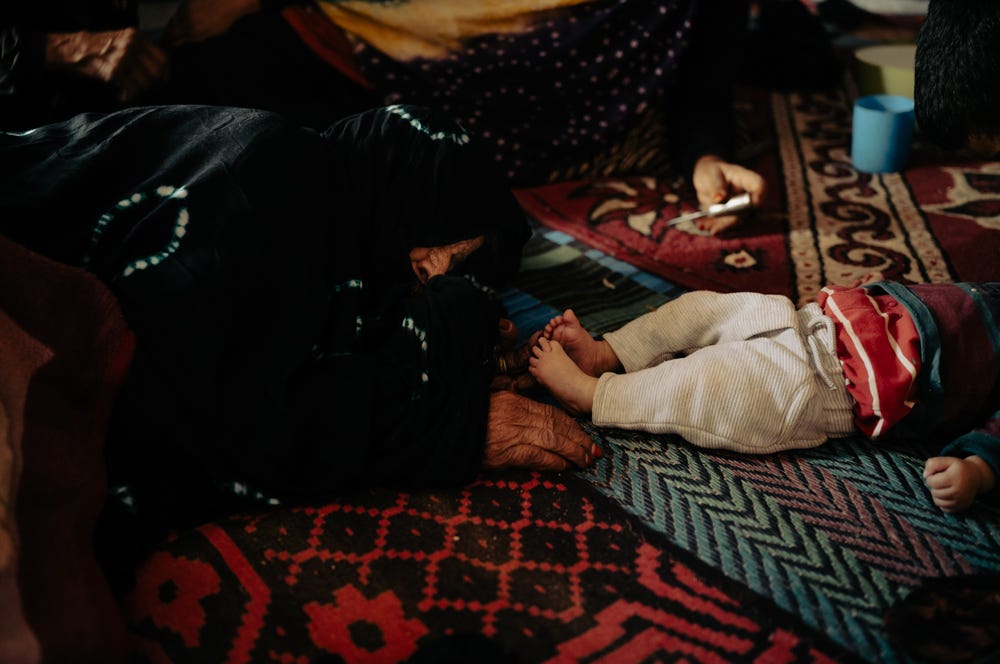
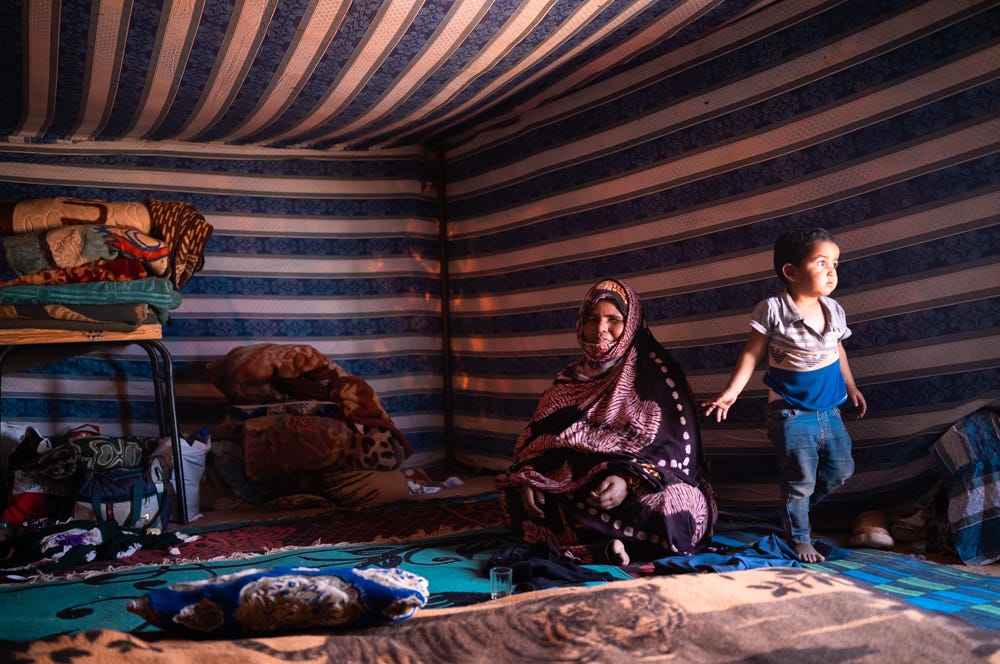
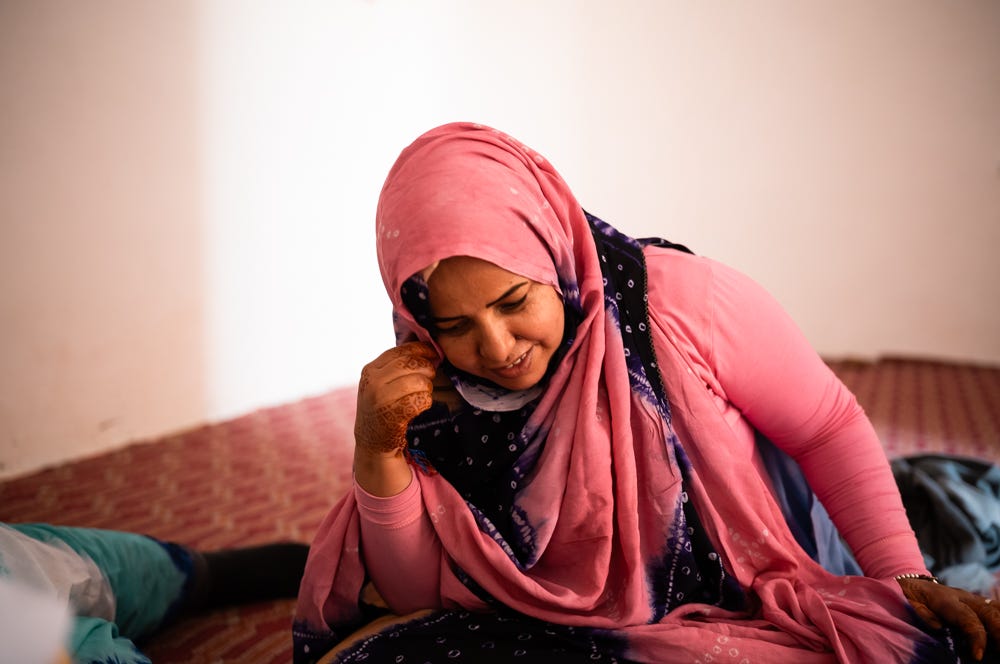
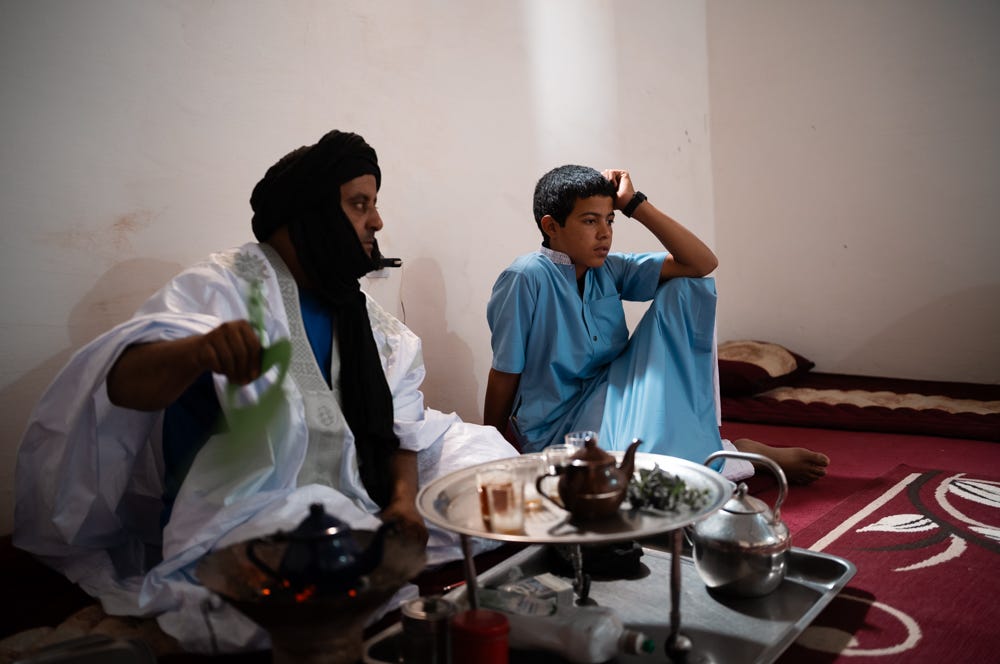
©Liz Loh-Taylor. I met many Sahrawis during my time in the refugee camps, and their message was clear: Western Sahara is their homeland, and they will never give up their fight to return.
I know people in these camps. Their lives cannot be reduced to statistics about refugees, humanitarian aid or summer temperatures. They have families, ambitions, relationships and responsibilities, just like anyone else. Many younger Sahrawis were born in the camps. They have never lived in the homeland their parents and grandparents were forced to leave. Some have never seen Western Sahara.
I have.
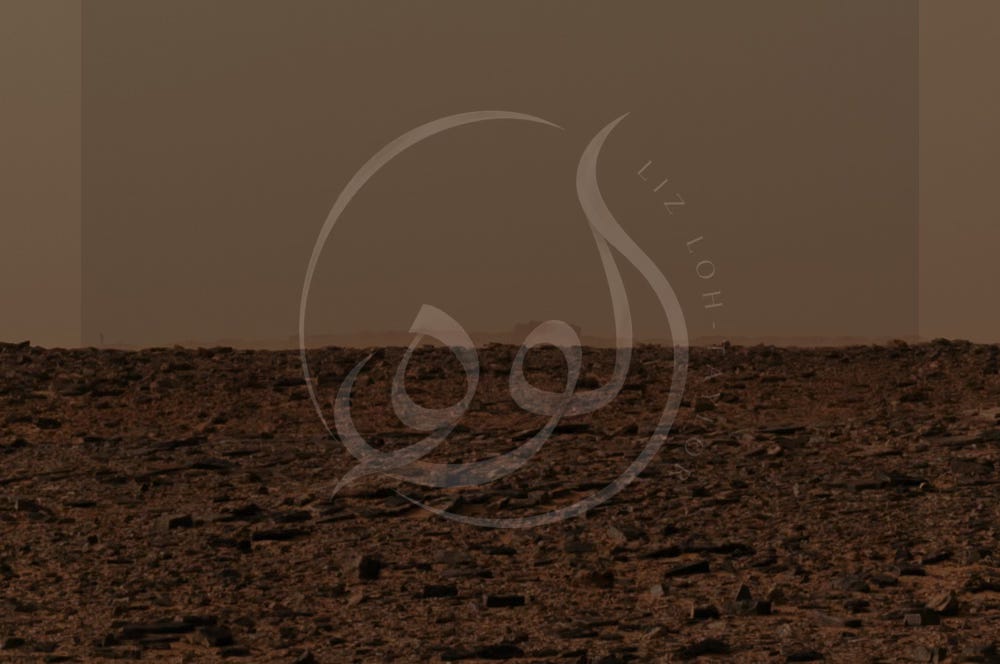
Earlier this year, I set foot in Western Sahara, in the liberated territories controlled by Polisario. Getting there was dangerous. We had to wait for a sandstorm to provide enough cover so Moroccan military positions could not spot us.
I was warned that I might come home in a box.
That was the reality of entering a homeland that so many Sahrawis have never been able to return to. I was able to set foot on their land, while people I met in the refugee camps told me they would give their lives for the chance to do the same.
This is what fifty years of displacement means. Children become adults. Adults grow old. Entire generations spend their lives waiting for a political settlement that never arrives. The international community continues to provide humanitarian assistance, but that assistance does not address the reason these people are refugees in the first place.
The Sahrawis should not have been forced to spend half a century living in a neighbouring country while Morocco controls most of their homeland. Food aid cannot replace land. Water deliveries cannot replace independence. The fact that Sahrawis have managed to build communities in exile does not mean their displacement has become acceptable.
Building a future in Western Sahara, not Algeria
There is something else the world needs to understand about the Sahrawi people.
They have not spent fifty years in the refugee camps simply waiting to be rescued or accepting Algeria as their new home.
They have been preparing to return to Western Sahara.
Education has been a major priority for the Polisario Front and the Sahrawi Arab Democratic Republic since the camps were established.
Children attend school. Young people pursue university education and professional training, often abroad. Adults who missed out on education have also been given opportunities to learn.
Women have played a central role in building Sahrawi society in exile. They established schools, health services and community institutions, developed local rules and systems of governance, and helped organise and administer the refugee camps.
Over the decades, Sahrawis have trained as doctors, dentists, engineers, teachers, nurses and other professionals. This is not a population without the knowledge or skills to build a country.
When I visited the camps earlier this year, I was told repeatedly that the Sahrawis were ready to return home and rebuild. They spoke of the education, professional skills and institutions they have developed over the past fifty years. They see these as the foundations of a future independent Western Sahara.
Their refugee camps were never intended to replace their homeland. They have spent generations preparing the people who could build and run their country when they return.
The Sahrawis are not asking the world to build their future for them. They have spent fifty years preparing to build it themselves. What they are demanding is the right to do so on their own land.
We have seen this before in Palestine
There are clear parallels between what has happened in Western Sahara and what has happened in Palestine. Both involve people who have been displaced from their land and denied full control over their political future. Both involve territorial control supported by powerful outside governments. In both cases, decades have passed while the occupying power has continued changing the situation on the ground.
In Palestine, Israel has expanded settlements, taken control of land and restricted Palestinian movement, while continuing to argue that security concerns justify its policies. In Western Sahara, Morocco has spent decades occupying and developing Sahrawi land while blocking the referendum that would lead to independence.
Morocco’s occupation is not limited to the territory it controls. Moroccan forces have also carried out drone strikes in the Polisario-controlled areas, killing and injuring civilians. When I was there earlier this year, I spoke with nomadic Sahrawi families who described living under the constant threat of these attacks. They told me how they could be sitting together drinking tea one moment, only to come under drone attack the next. One family I met had lost several relatives. Both the father and daughter had lost their eyesight, while other family members had been killed.
These are not isolated allegations. Moroccan drone attacks on civilians have been documented for years, yet the suffering of nomadic families in the liberated territories receives little international media attention. Morocco is not simply occupying the land it already controls. Its military is also carrying out drone strikes inside the liberated territories controlled by the Polisario Front, killing and injuring Sahrawi civilians. These are areas outside Morocco’s control, yet Moroccan forces continue to strike into them, threatening the lives of Sahrawis living on their own land and forcing them to retreat back into neighbouring Algeria.
Occupation does not become lawful simply because it has lasted a long time.
In July 2024, the International Court of Justice found Israel’s continued presence in the Occupied Palestinian Territory unlawful. Western Sahara has its own legal history. In 1975, the ICJ found that Morocco’s historical claims did not override the Sahrawi right to self-determination. In both cases, international courts have recognised legal rights that have not been enforced.
Both situations show the importance of American support. For decades, Washington has provided Israel with military assistance, diplomatic protection and political backing. In Western Sahara, Washington has recognised Moroccan sovereignty and attempted to make Morocco’s autonomy proposal the basis for UN negotiations. Israel is also helping strengthen Morocco’s military capabilities through defence cooperation.
The specific histories differ, but the consequences of prolonged control are clear. People lose access to their land. Communities are displaced. Resources are developed or extracted under another government’s authority. The occupying power becomes more established while the displaced population is told to keep waiting or die. Over time, political proposals shift away from restoring the people’s full rights towards accepting the situation created by occupation. As we are all witnessing now with both Palestine and Western Sahara.
This is why Western Sahara matters beyond North Africa. It raises the same question we should be asking about Palestine. If international law recognises a people’s right to determine their own future, why can another country occupy their land for decades? Why are powerful nations allowed to manipulate international law to legitimise that occupation and deny people their right to reclaim their homeland?
Africa’s last colony
November 2026. Fifty years of Moroccan occupation.
Sahrawis remain displaced. Their land remains occupied. Their resources continue to be extracted and sold. Their right to independence remains denied.
The United States recognised Morocco’s sovereignty in 2020. In October 2026, Washington tried to turn that recognition into UN policy.
MINURSO is gone. The promised referendum never happened. And Morocco now wants Western Sahara removed from the UN’s decolonisation agenda altogether.
Fifty years of UN missions, negotiations, resolutions and humanitarian aid. Fifty years without decolonisation.
International law is not the problem.
The refusal to enforce it against powerful states and their allies is.
The mission has ended. Sahrawi sovereignty remains legally unresolved.
Fifty years of occupation do not make Western Sahara Moroccan. American recognition does not replace Sahrawi consent. And closing a UN mission does not erase a people’s right to independence.
We have seen this in Palestine.
Occupation backed by powerful governments. Land seized. People displaced. Civilians killed. International law invoked when convenient and breached when it stands in the way.
This is imperial domination.
This is colonialism.
And it continues because powerful governments enable it.
It is 2026. Are we really going to allow another people’s homeland to be taken simply because the occupying power has the right allies?
Liz Loh-Taylor
In solidarity.
This work is independently produced, funded by readers who believe these stories must be told from the ground. If you want to see more of it, support it.
We are a fully subscriber-supported publication. We feature citizen journalists unapologetically. Help us grow and fuel honest, citizen journalism by becoming a paid member.
We read your comments, so come and share your opinions with us and our subscribers.
Related Articles by Liz
Discussion about this post