


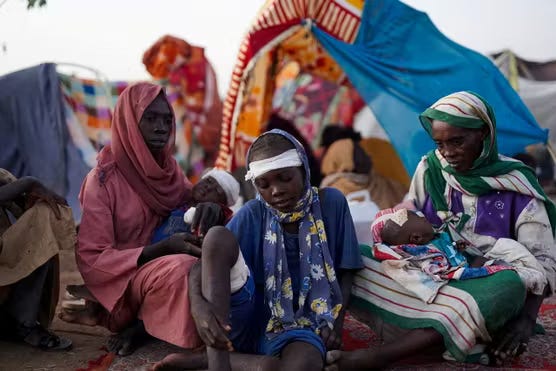
NEW EVIDENCE Links UAE Weapons to RSF Forces
A new investigation places Emirati-backed mercenaries at the scene of one of the war’s worst massacres — the opening case in a series about who arms the Rapid Support Forces, and why Washington keeps looking away.
When the paramilitary Rapid Support Forces overran El Fasher in late October 2025, they closed one of the longest sieges of Sudan’s civil war and opened one of its darkest chapters. This new series begins there and it will keep returning to one uncomfortable question: not only what the RSF did, but who made it possible — and what the United States, which formally calls the RSF’s conduct genocide while still arming the RSF’s principal alleged backer, has chosen to do about it.
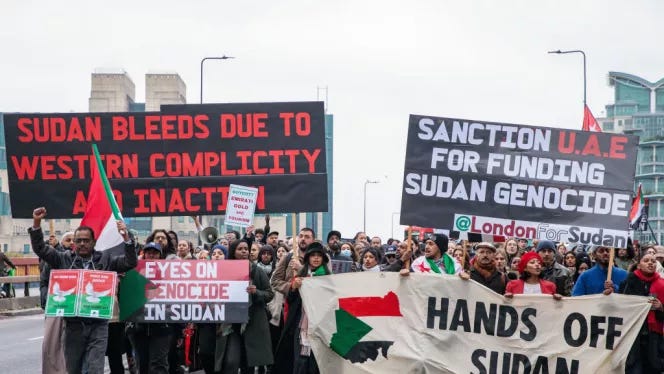
What happened at El Fasher
El Fasher, the capital of North Darfur, was the last major city in the region outside RSF control. The RSF captured El Fasher, the capital of North Darfur and the last major city under government control, on October 27 after an eighteen-month siege. Its final days were catastrophic: on 26 October 2025, the RSF waged its final offensive on El Fasher. When civilians attempted to flee, they encountered a 57km network of berms. A massacre followed: hundreds were executed, and many others were tortured or detained.
The killing was, by multiple accounts, ethnically targeted. In February 2026, the UN’s Independent International Fact-Finding Mission for the Sudan found the assault bore the “hallmarks of genocide.” A later UN fact-finding mission found that the RSF’s conduct in and around El Fasher amounted to strong indicators of genocide against protected non-Arab communities, particularly the Zaghawa and Fur. The mission concluded that the 18-month siege deliberately created life-threatening conditions through starvation, denial of humanitarian aid, destruction of medical care, restrictions on movement, and attacks on civilian infrastructure. Amnesty International reached a parallel conclusion in July 2026, finding that the Rapid Support Forces committed crimes against humanity and ethnic cleansing during its campaign to seize El Fasher. The death toll remains contested and difficult to verify independently.1 What is not disputed is that the killing was mass in scale, and that Amnesty International interviewed 26 survivors of sexual violence, including 20 female survivors of rape, among them three girls under the age of 18.
The new evidence
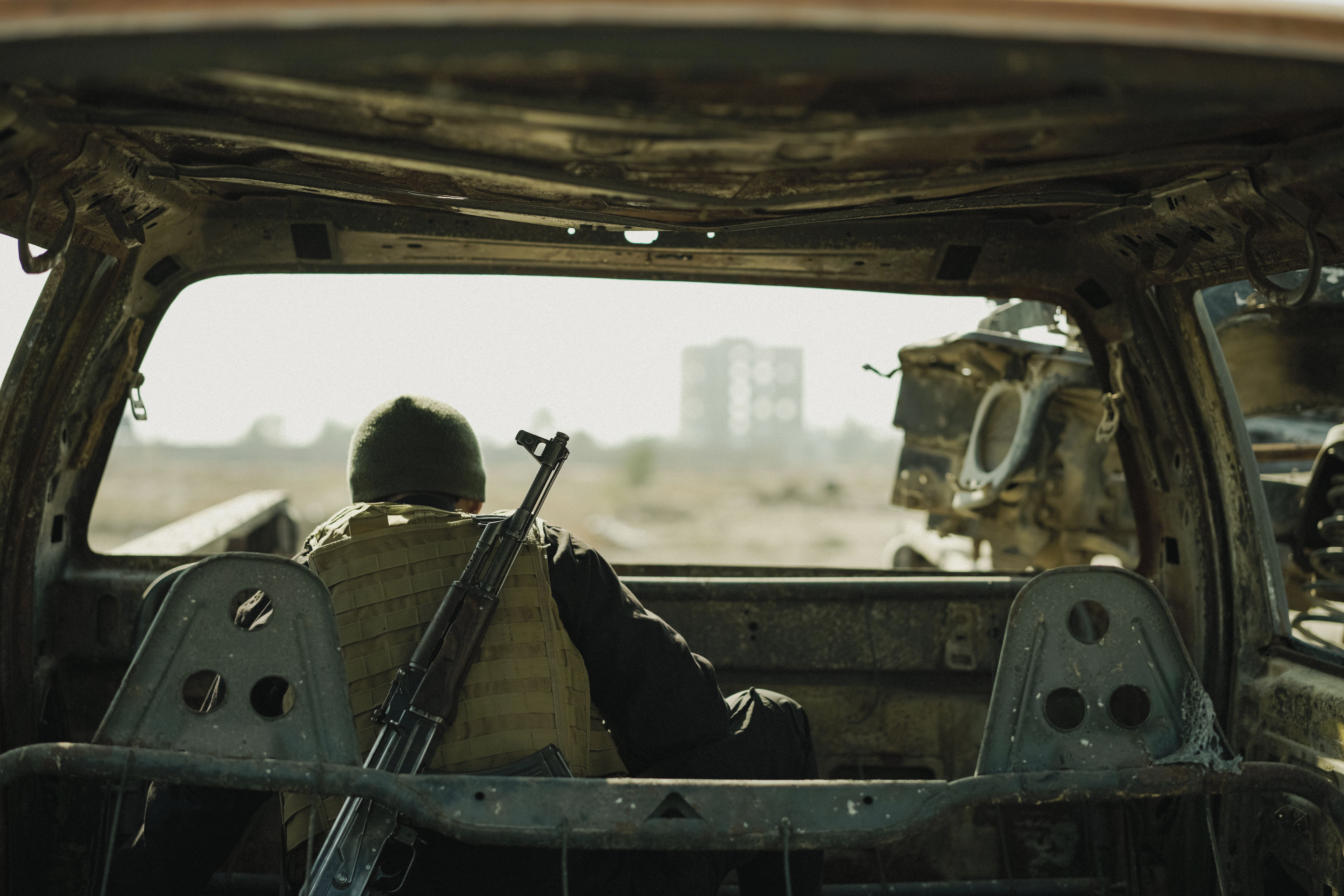
The charge that the United Arab Emirates arms and finances the RSF is old, and the UAE has always denied it. What is new is an April 2026 investigation by the Conflict Insights Group (CIG), a security-analysis organization, that its authors present as the most direct evidentiary link yet. "Libya, UAE fueled Sudan war with Colombian mercenaries. The CIG used commercially available data to track 50 devices used by Colombian fighters in Sudan between April 2025 and January 2026. The organization found evidence of the mercenaries’ presence at various staging points across the region, including at a military training facility in Abu Dhabi. The Colombian fighters reportedly operated as part of the “Desert Wolves” brigade and served as drone pilots, artillerymen, and instructors, including “training child soldiers.” Crucially, the group says it placed those fighters at the atrocity itself: CIG identified multiple devices associated with Colombian mercenaries present in El-Fasher during the RSF’s October takeover, details that were confirmed by the United States Treasury Department.
CIG’s director put it in categorical terms — “This is the first research where we can prove UAE involvement with certainty,” CIG director Justin Lynch told the BBC.
That is the investigators’ characterization, and the UAE rejects it.
But the work does not stand alone: an independent Human Rights Watch investigation in May 2026 traced the same Colombian pipeline and reported that six El Fasher residents told Human Rights Watch they saw people they believed were Colombian in the city in October 2025, when mass killings were taking place.
Refugees International, which helped support the CIG report, quoted its conclusion that UAE support, including through foreign mercenaries, enabled horrific mass atrocities in El Fasher, and that “without this assistance, the siege, takeover, and resulting atrocities would likely not have occurred.” (For more information, see “Sudan: RSF atrocities in El Fasher ‘a stain on the conscience of humanity’ – new report.” Amnesty International, July 2026.)
A pattern, and Washington’s contradiction
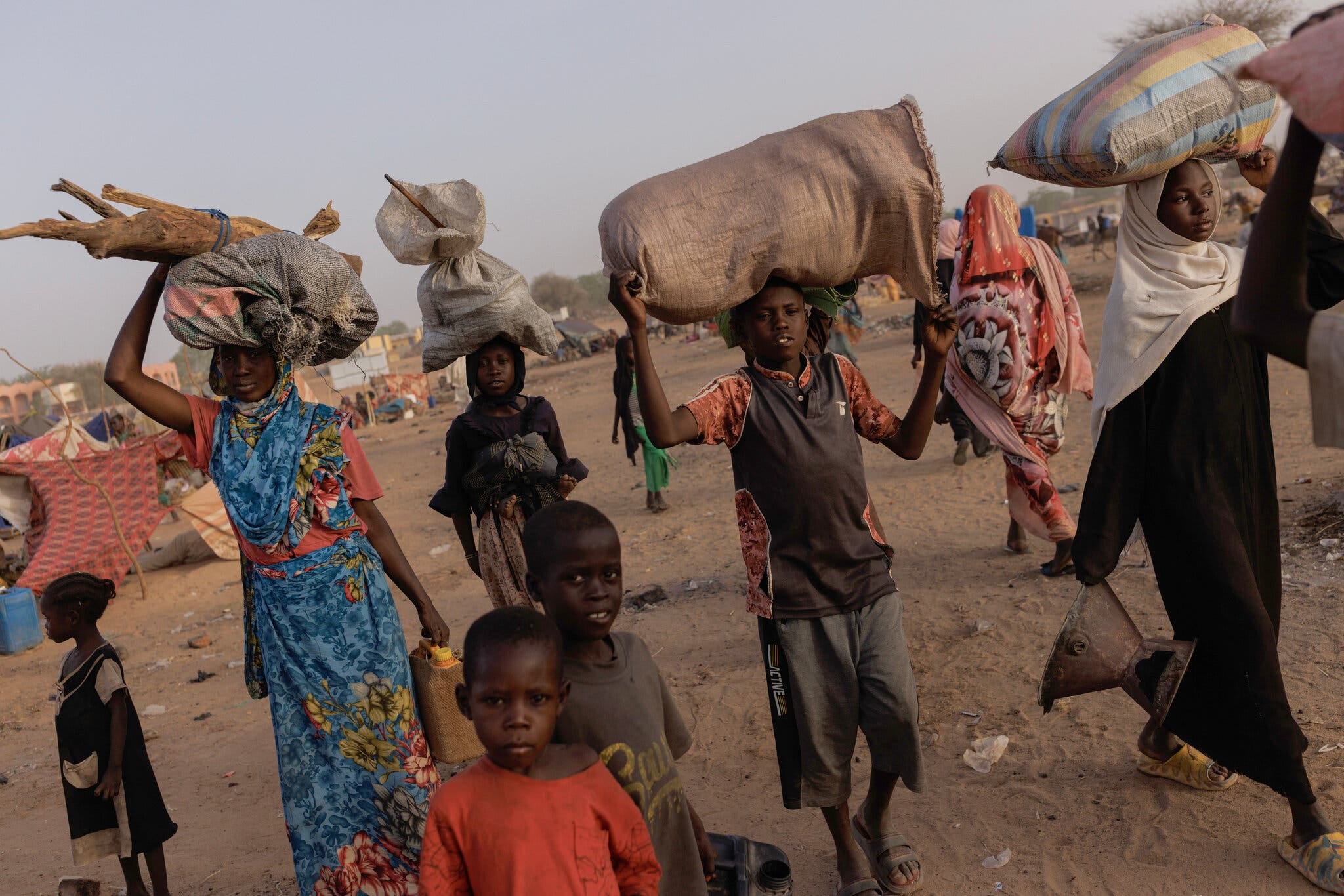
The El Fasher findings sit atop years of documentation. The UN panel tasked with monitoring compliance with the Darfur arms embargo wrote that it had identified an RSF supply route running from the Abu Dhabi International Airport to eastern Chad before entering western Sudan. A September 2024 New York Times investigation concluded that the UAE was secretly “expanding its covert campaign to back a winner in Sudan, funneling money, weapons and, now, powerful drones.” In November 2024, an Amnesty International investigation identified that the RSF used Emirati-made armored personnel carriers containing French technology. Through all of it, Abu Dhabi’s position has not moved. Sudan has accused the UAE of arming the paramilitary Rapid Support Forces (RSF) which have been fighting the Sudanese army in the civil war that broke out in April 2023 — a charge the UAE denies but U.N. experts and U.S. lawmakers have found credible. When Sudan took the question to court, it lost on a technicality: on Monday, May 5, the ICJ dismissed the case in a 9–7 vote, stating that it does not have jurisdiction — because when the UAE signed the treaty in 2005, it opted out of a clause that allows countries to sue each other at the ICJ. The court took no position on whether the allegations were true.2
This is where the United States enters.
On January 7, 2025, then-Secretary of State Antony Blinken said, “I have now concluded that members of the RSF and allied militias have committed genocide in Sudan,” pairing the finding with sanctions on RSF leader Mohamed Hamdan Dagalo — Hemedti — and seven RSF-owned companies located in the United Arab Emirates and one individual for their roles in procuring weapons for the RSF.
And yet the weapons kept flowing to the alleged patron.
Over congressional objection, the administration bypassed a congressional hold in May to approve a $1.4 billion arms sale to the UAE, which included helicopter and F-16 fighter jet parts. Legislation by Senator Chris Van Hollen and Representative Sara Jacobs to prohibit U.S. arms sales to the United Arab Emirates until the UAE is no longer providing material support to the Rapid Support Forces in Sudan went nowhere; weeks after El Fasher fell, Senate Republican Joni Ernst blocked an attempt to pass a bill aimed at using U.S.’s leverage to bring an end to the genocide in Sudan by suspending arms shipments to the United Arab Emirates. Advocates counter that the absence of American rifles in Darfur misses the point: while U.S. weapons might not be found in Sudan, sales to the UAE could allow the Gulf nation to displace older stockpiles to the conflict zone, Human Rights Watch’s Nicole Widdersheim told Congress. Meanwhile the money moved on its own track: on February 3, 2026, the United Arab Emirates pledged to donate $500 million to a U.N. fund for humanitarian aid for Sudan, amid a U.S. push to renew efforts towards a truce. Refugees International called it money that is needed largely because of its history of enabling RSF atrocities — a characterization the UAE, which casts itself as a leading donor and denies any role in the fighting, rejects.
Closing
El Fasher is not the end of this story; it is the case that makes the pattern legible.
A UN mission has found the hallmarks of genocide.
Two of the world’s most rigorous human-rights organizations have independently documented an Emirati-linked mercenary pipeline running into the killing.
And the United States, which put the word “genocide” in writing, keeps selling weapons to the government most credibly accused of sustaining it.
Repeat: the United States, which put the word ‘genocide’ in writing, keeps selling weapons to the government most credibly accused of sustaining it.
Those facts sit uneasily together, and they are meant to. This series exposes foreign enablers in the Sudanese genocide. The UAE denies wrongdoing, and no court has ruled on the merits. That is precisely why the evidence, and the identification of who provided what, matters so much now.
This series is important to fully understand the currents underneath much of today’s events in the Middle East and the Global South. Please support this work at Manufacturing Dissent and my home base at Shadows of Empire; subscribing at both — free or paid — keeps the next installment coming. If you’d like to fund the sourcing and verification behind work like this directly, you can buy me a coffee. And share this with someone who still thinks Sudan is a story without a paper trail. This is where the uncovering begins.
by Dede Bell