


Iran’s strategy is built on cost discipline, not theatrics
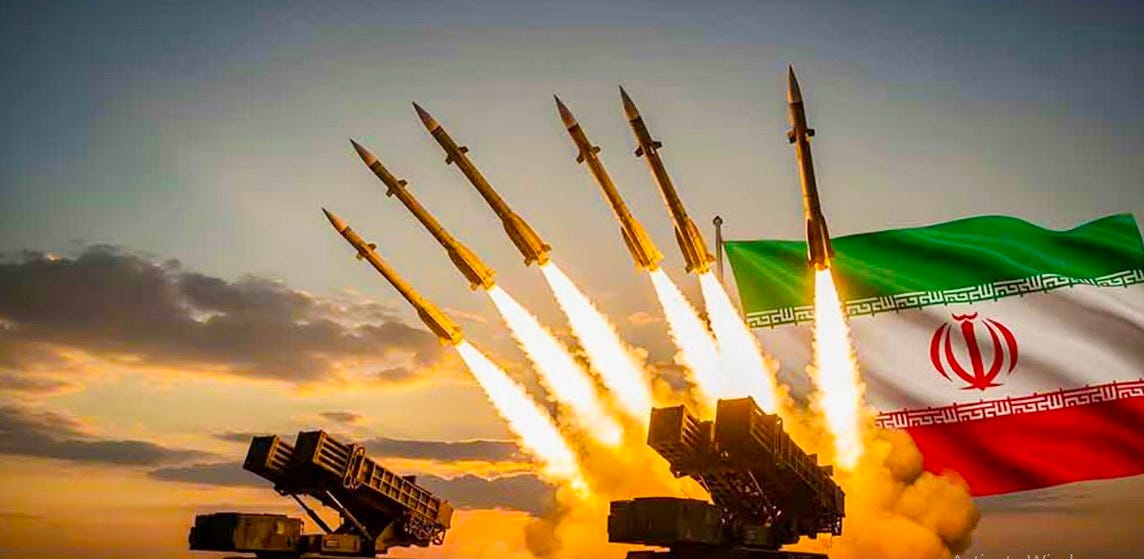
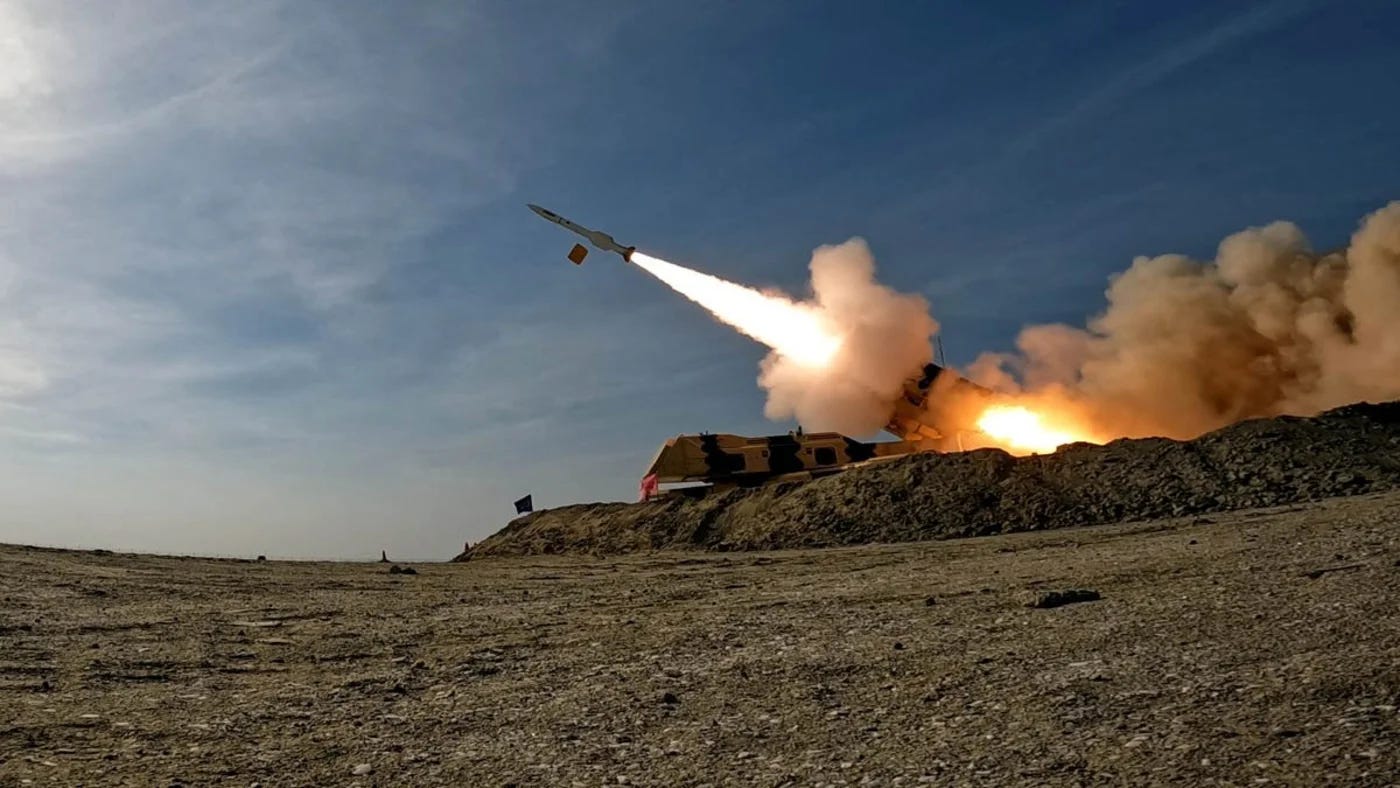
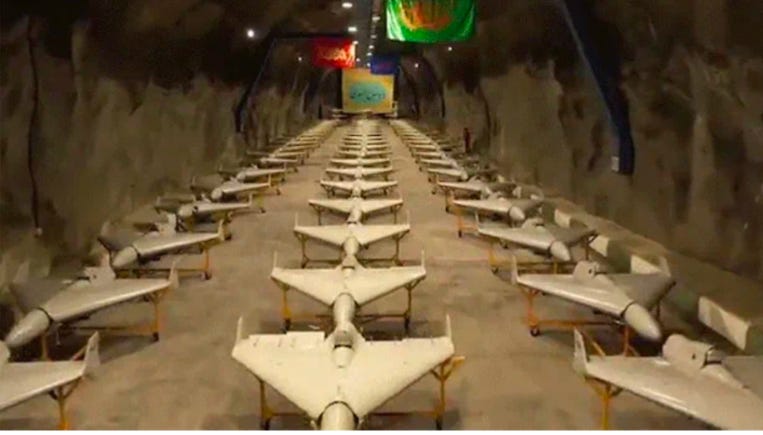
Iran didn’t stumble into this advantage. It engineered it. Over two decades, it built a missile and drone programme designed around volume, affordability, and domestic production. Western intelligence assessments routinely estimate:
more than 3,000 ballistic missiles
thousands of cruise missiles
tens of thousands of Shahed drones costing $20,000–$50,000 each
These systems aren’t meant to be flawless. They’re meant to be cheap, repeatable, and strategically exhausting for anyone trying to defend against them. Iran understood early that modern warfare rewards the side that can impose higher costs on its opponent, not the side with the flashiest hardware.
And that’s exactly what they built: a system where every launch forces the other side to bleed money.
The Epstein Regime response is financially upside‑down
When Iran fires a missile costing roughly $250,000–$500,000, the US–Israeli policy establishment responds with:
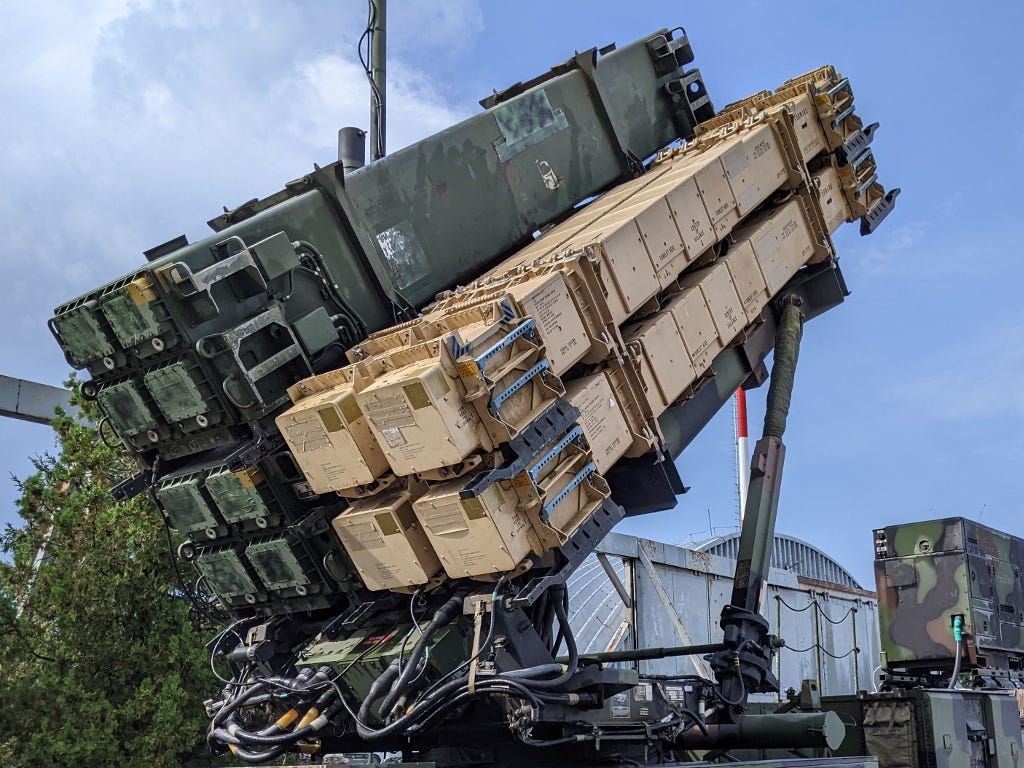
Patriot PAC‑3 MSE interceptors at $3.5M–$5M
David’s Sling interceptors at $1M–$1.5M
Arrow‑3 interceptors at $2M–$3M
So when eleven interceptors are launched to stop one Iranian missile, the math is not rocket science:
Iranian cost: ~$250K
US–Israeli cost: ~$40M
A40:1 cost ratio.
A “successful interception” that is, in reality, a strategic loss. This isn’t a one-off. It’s the model—more money than brains.
Iran’s advantage is structural
Iran’s doctrine rests on three pillars:
Mass production of low‑cost weapons
Domestic manufacturing that bypasses sanctions
A strategy designed to force adversaries to overspend
This is why Iran can fire missiles without blinking. The cost is low. The supply is large. The production lines are local.
Meanwhile, the Epstein Regime’s policy establishment relies on:
High‑cost interceptors
Limited stockpiles
Slow replacement cycles
The assumption that budgets are infinite
It’s not that the technology is bad. It’s that the economics are suicidal.
Stockpiles tell the real story
Patriot batteries can be depleted in days under sustained fire. Iron Dome has already shown its limits during heavy rocket barrages. David’s Sling and Arrow systems are even more expensive to replenish.
Iran, on the other hand, can produce:
Shahed drones for the price of a used car
Short‑range missiles for the price of a suburban home
Medium-range missiles for less than a single US interceptor
This is why Iran’s strategy works. It’s not mystical. It’s arithmetic.
Public, Inside the Pentagon: the anxiety is real
According to reporting summarised by Gulf News, the Washington Post has documented growing alarm inside the Pentagon over depleted weapons stockpiles and the risks of any sustained confrontation with Iran. Senior military officials have warned that U.S. munitions shortages and operational constraints could significantly raise the risks of a prolonged campaign.
This aligns with what the cost math already makes obvious: the stockpiles are not built for a long fight, the interceptors are too expensive to replace quickly, and a multi-week exchange would stretch U.S. capacity far beyond what policymakers publicly acknowledge.
Estimated Cost of Iran’s 48‑Hour Strike
Iran’s Islamic Revolutionary Guard Corps (IRGC) reported that over the past 48 hours, it carried out a coordinated, multi‑domain strike hitting 60 strategic targets across multiple theatres. The operation involved more than 700 drones and hundreds of ballistic and cruise missiles, making it one of the largest concentrated strike packages Iran has executed in a two‑day window.
Drone costs
Iran manufactures Shahed‑series drones domestically. Verified cost ranges place the Shahed‑136 at $10,000–$50,000 per unit for Iran’s own use.
Low estimate: 700 × $10,000 = $7 million
High estimate: 700 × $50,000 = $35 million
Missile costs
Open‑source defense analysis places Iranian missile costs in these ranges:
Short‑range ballistic missiles (SRBMs): $100,000–$250,000
Medium‑range ballistic missiles (MRBMs): $250,000–$500,000
Cruise missiles: $100,000–$200,000
If “hundreds” = 200–300 missiles, then:
Low estimate: 200 × $100,000 = $20 million
High estimate: 300 × $500,000 = $150 million
Combined cost of the 48‑hour operation
Low-end total: ~$27 million
High-end total: ~$185 million
Most realistic midpoint: $60–$100 million
Strategic meaning of the cost
Iran executed a 60‑target, multi‑domain strike for under $200 million.
Defending against it required U.S. and Israeli interceptors costing millions per shot, often two or three per incoming missile, pushing the defensive bill into the billions.
This cost asymmetry is central to understanding why Iran’s approach is strategically effective: it can sustain operations at a fraction of what it costs its adversaries to respond.
The geopolitical consequences are already unfolding
Every time a $250K missile forces a $40M response, the region sees the same message:
Iran can afford this. The US and Israel can’t.
Saudi Arabia, the UAE, Qatar, Turkey, Iraq, Hezbollah, Ansarallah—everyone is watching the cost ratio, not the explosions. They see:
Iran can sustain high‑volume attacks for weeks or months.
The US and Israel can sustain high‑volume interceptions for days.
The financial burden falls all on Washington.
This shifts how states calculate risk and how they negotiate, how they hedge. Power doesn’t shift through dramatic battles. It shifts through economic attrition disguised as military engagement.
Iran understood that first. The US–Israeli policy establishment still behaves like cost doesn’t matter.
The US loses credibility when it bleeds money faster than it projects power
Washington spent decades selling the idea that it could outspend its adversary. That was true when adversaries were using Soviet leftovers. It’s not true when the adversary is using cheap, domestically produced weapons designed to drain your wallet.
Responding to a mid‑range missile with a $40M fireworks display doesn’t project strength. It projects fragility. It shows the US is locked into a defensive architecture that is:
too expensive
too slow to replenish
too dependent on contractors
too vulnerable to saturation
That’s not deterrence. That’s a liability.
Israel’s strategic position becomes more precarious
Israel’s security model depends on technological superiority and rapid interception. But that model assumes the attacker is using expensive, limited weapons. Iran flipped that assumption.
If Iran can force Israel to burn through interceptors at this rate, the long‑term consequences are obvious:
stockpiles shrink faster than they can be replaced
US resupply becomes a permanent requirement
Iran’s allies gain confidence
Israel’s deterrence erodes
This isn’t about whether Israel can stop a missile today.
It’s about whether it can stop hundreds tomorrow without bankrupting itself or Washington.
The uncomfortable conclusion
Iran has built a system where every launch forces its adversaries to bleed money. The US and Israel have built systems where every interception drains stockpiles and budgets.
One side is playing a long, disciplined economic game. The other is reacting with the most expensive tools available, as if cost doesn’t matter. The brilliance isn’t in the missile. It’s in the math, which the US sanctions for 47 years have taught Iran.

And who pays for all this
This is what happens when the Epstein Regime policy establishment drives decisions that put American resources and American lives on the line for priorities that don’t originate with the American public.
Not the policymakers. Not the contractors. Not the think‑tank crowd writing white papers about “regional stability.” Americans. Regular Americans. People who never voted for this. Never asked for this. Can’t afford this. People who voted for the opposite.
They’re the ones footing the bill for a $40M response to a $250K missile. They’re the ones subsidizing a strategy that collapses under basic arithmetic. They’re the ones paying for a foreign‑policy machine that treats their tax dollars like pocket change.
Who’s really funding this spectacle? You already know. The American taxpayer. Always the American taxpayer.
It’s staggering how much of the U.S. budget is poured into the machinery of death.
It costs $2.5M per day to operate the SS Abraham at idle
Practically $1B per year
This is clever. I like it. Hit ‘em in the pocket book