


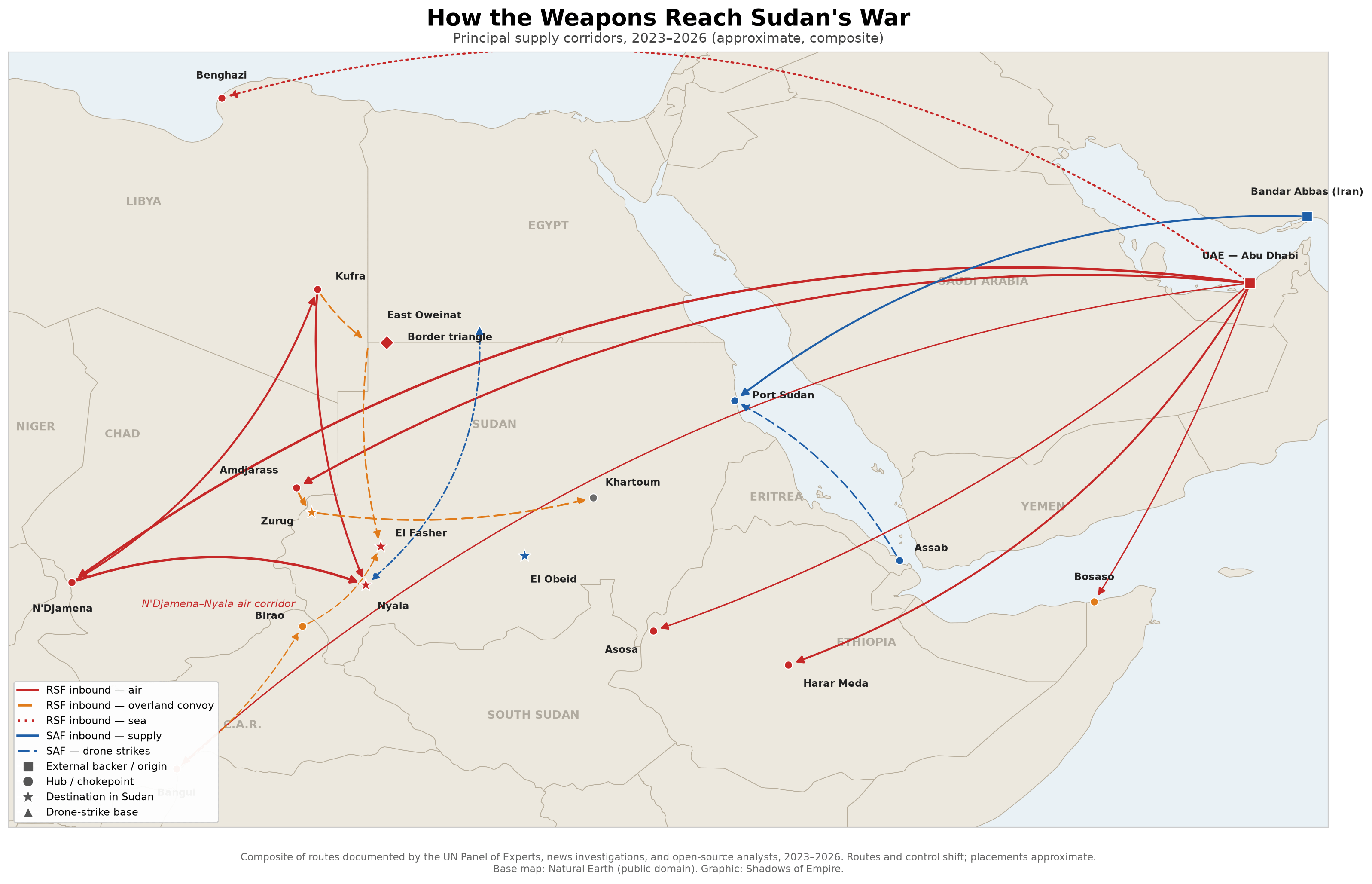
In Sudan, weapons move along a physical network of airstrips, border towns, and desert crossings. Follow the corridors, and you can see exactly why an arms embargo two decades old has failed to stop any of it.
Every horror this series has documented rests on a mundane precondition: someone has to move the guns.
Manufacturing Dissent is a reader-supported publication. To receive new posts and support our work, consider becoming a free or paid subscriber.
The fall of El Fasher, the gold laundered through Dubai, the sexual violence used as a weapon of war — none of it happens without a supply chain. Weapons, ammunition, fuel, and fighters travel into Sudan along a physical logistics network — much of it deliberately hidden, some of it now mapped in remarkable detail by UN investigators, human-rights researchers, and news organizations.
Earlier installments traced who keeps the war supplied — the United Arab Emirates and the enablers behind the Rapid Support Forces, and on the other side, the foreign hands behind Sudan’s army.
This one is about how.
In the newest reporting, following the corridors leads somewhere uncomfortable: to a network of aircraft linked to an American government contractor.
EXPOSED: THE U.S.-CONTRACTOR AIR BRIDGE
The plane with no flight plan
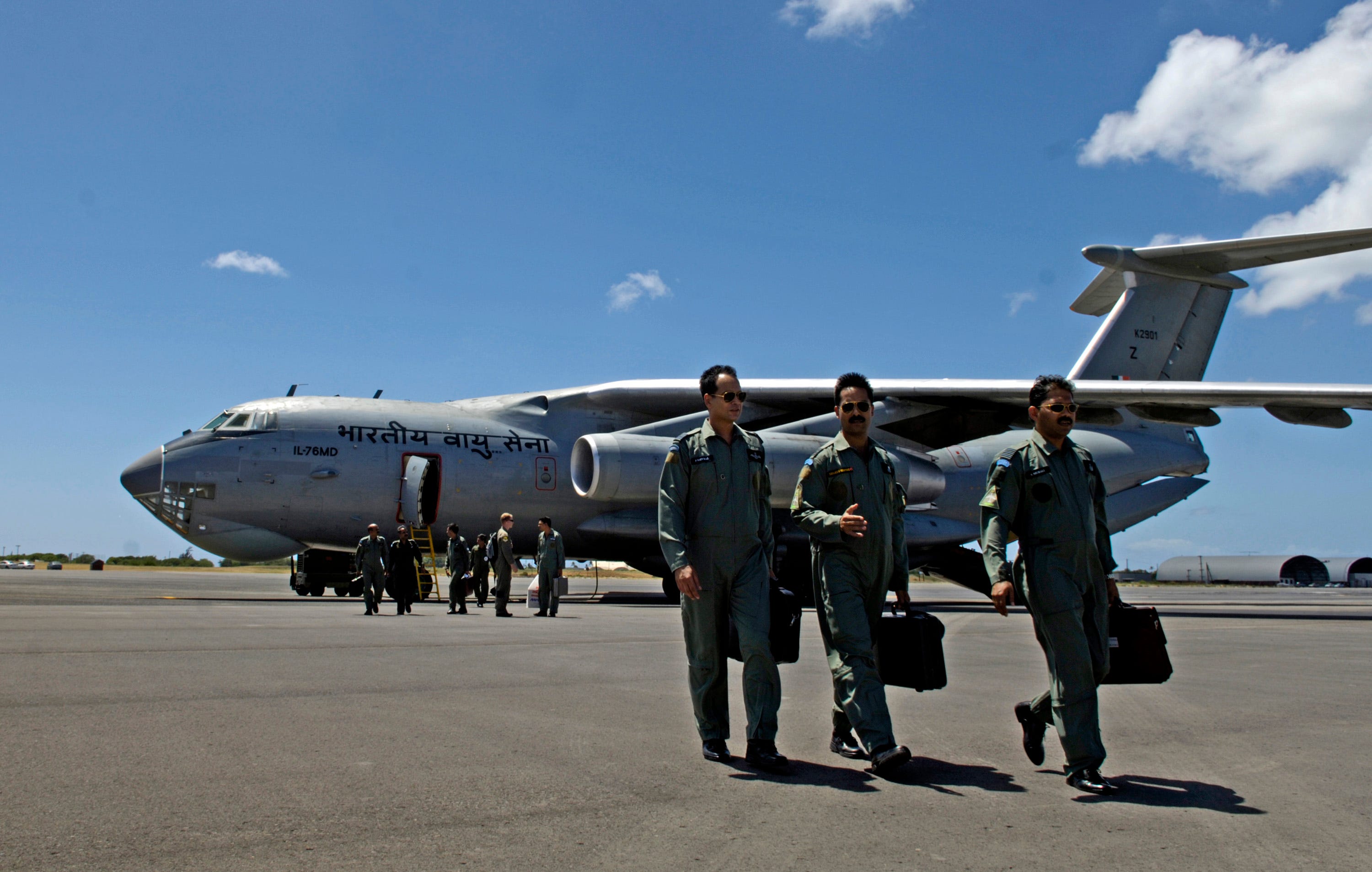
On July 15, Reuters published an investigation that traced three aging Boeing aircraft — operated by companies linked to Steven Shaulis, whom the agency described as a former US Army Special Forces soldier and longtime US government contractor — from an airport in Chad to logistics hubs used by the RSF in Sudan, Libya, and Somalia. Two weeks later, Reuters reported that a draft report by the UN Panel of Experts on Sudan — the Security Council body that monitors the Darfur arms embargo, due to publish in September — had reached corroborating conclusions.
According to that reporting, three Boeing 727s — two acquired from Michigan-based Kalitta Charters II, one sold in Brazil to a Shaulis-linked company — appeared in Chad from November 2024 and operated out of the military apron of N’Djamena’s airport.
“The RSF utilised the N’Djamena–Nyala air corridor to transport fighters, foreign mercenaries, and military equipment, including drones and weapons, into Darfur,” the UN report stated. The panel said it had received “reliable information from four sources,” including two eyewitnesses in Nyala — the RSF’s main logistics hub in Darfur — that the aircraft carried fighters, mercenaries, drones, and weapons.
The flights were built to disappear.
Between January and July 2026, the report said, multiple Boeing 727s and some Ilyushin Il-76 transport planes landed in Nyala at night.
Reuters tracked their movements from N’Djamena to RSF hubs using satellite imagery, cell-phone data, and open-source video — but found no record of the flights on the independent trackers that monitor the signals aircraft normally broadcast in flight.
The planes, the panel suspected, were taking “deliberate steps to avoid detection while in flight.”
One earlier aircraft in the same network, a Boeing 737, was destroyed at Nyala airport in May 2025;
a source told Reuters that 51 of the 54 people killed were RSF personnel, and that the crew and a ground engineer aboard worked for Occidental Support Services, a UAE-registered company linked to Shaulis.
His Singapore-based firm, CADG, has — by Reuters’ accounting — earned more than $419 million from US taxpayers, building infrastructure for American forces in Afghanistan and doing airfield work for the Defense Department in Kenya, among other contracts.¹
Caution:
A slight caution here.
Reuters found no evidence that Shaulis or his companies had been sanctioned or accused of wrongdoing by any authority.
Those findings come from a UN panel and a news investigation — not a court. Shaulis has not been charged, and the reporting is only weeks old. The absence of a legal finding is not exoneration; neither is it proof of guilt.
Shaulis did not respond to questions. His business partner Craig Munro, co-owner of the South African firm Contractor Airways, previously told Reuters the company “had never had any connection to the RSF,” and called the findings that its planes had landed in Nyala and Kufra “to the best of our knowledge, false.”
Kalitta’s attorney said the company ran a full sanctions and know-your-customer check before selling the aircraft and found no violations.
Chad’s Civil Aviation Authority said none of the Boeings had authorization to operate from Chad, and that it neither manages military aviation nor tracks such flights; the foreign minister said questions about the planes were subject to “defense secrecy,” and that Chad’s only role in the war was “diplomatic efforts to restore peace.”
And a necessary clarification: these are decades-old planes flown by third parties. Boeing, the manufacturer, is not implicated in any of this.
What makes the airbridge matter for this series is the collision it exposes.
Washington determined in early 2025 that the RSF had committed genocide.²
Yet here, in the most detailed reporting to date, is a network of planes tied to an American contractor threaded through the RSF’s supply chain — the physical machinery of a war its own government has labeled genocidal.
The western corridor: Chad and Amdjarass
The airbridge is only the newest layer on a route investigators have been documenting since the war’s first year. In January 2024, the UN Panel of Experts presented the Security Council with what it called credible reports of newly established RSF supply lines through neighboring countries. A 2024 assessment by the US State Department–affiliated Conflict Observatory described regular cargo-plane deliveries of weapons to the RSF via Amdjarass, in eastern Chad — and to the army via Port Sudan.
The scale is striking. A Reuters analysis of flight data identified around 170 flights headed for the Amdjarass airstrip since the war began, at least 86 of them verified as originating at UAE airports; roughly half were operated by four carriers a UN panel had previously accused of ferrying Emirati weapons to Khalifa Haftar in Libya in 2019–2020.³
The UAE acknowledged sending 122 flights to Amdjarass but said they were humanitarian — supplying a field hospital where, it said, the Emirates Red Crescent has treated more than 18,000 refugees. Flight-tracking specialists have openly doubted that a field hospital requires that many heavy-cargo flights.
The UN Panel’s account of what happened on the ground is specific: weapons were offloaded at Amdjarass, loaded onto trucks, driven into Darfur in small convoys, and handed to the RSF, which moved them to a base at Zuruk in North Darfur before pushing most onward toward Khartoum along desert roads.
The materiel, the panel wrote, ranged “from small and light weapons to UCAVs [drones], anti-aircraft missiles, mortars and various types of ammunition.” By engaging in those transfers, the panel concluded, the UAE violated the arms embargo imposed on Darfur in 2004. In its formal reply, the UAE did not specifically deny supplying weapons; it reaffirmed its commitment to the sanctions regime and detailed its humanitarian shipments. Abu Dhabi has consistently and categorically denied arming the RSF.
By 2025 the Chad route had grown politically fraught. Chadian security officials reportedly criticized President Mahamat Idriss Déby for allowing the transit, and Chad scaled back its cooperation — pushing the UAE to lean harder on Libya, according to the American Enterprise Institute’s Critical Threats project. Tensions turned lethal in January 2026, when the RSF attacked Chadian forces near the border, killing seven soldiers; the RSF called it accidental, Chad called it “premeditated.” Even so, an Egyptian military source told Middle East Eye this summer that the UAE maintained a military “operations room” inside Amdjarass airport to coordinate with the RSF — an allegation the UAE denies.
The Libyan pivot: Kufra, Haftar, and the border triangle
As Chad tightened, the center of gravity shifted north. In June 2025, RSF fighters and militias allied with Haftar’s Libyan Arab Armed Forces seized the Sudanese portion of the remote triangle where Libya, Egypt, and Sudan meet — and, according to Middle East Eye, the supply lines that opening created “directly contributed” to the RSF’s capture of El Fasher four months later, after a siege of more than 550 days.
The Libyan corridor runs on fuel as much as arms. A November 2025 investigation by The Sentry identified the Haftar coalition as a strategic fuel supplier to the RSF, naming Saddam Haftar — the field marshal’s son and deputy — as personally directing the diversion of subsidized fuel through Kufra at the UAE’s behest. A joint investigation published in mid-2026 by Lighthouse Reports, Der Spiegel, Sudan War Monitor, and the research group Evident went further, identifying several RSF camps inside Libya — including one known as “Camp 17” — where, defectors said, fighters were trained and equipped with materiel that was, in one defector’s words, “all Emirati.” Amnesty International has documented Chinese-made GB50A guided bombs and AH-4 howitzers in RSF hands that it assessed were “almost certainly re-exported by the UAE.” Haftar’s LAAF denies supporting the RSF; the UAE denies supplying the weapons.
The Libyan route has not been frictionless. Beginning in November 2025, Egyptian and Turkish forces started striking RSF convoys moving out of southeastern Libya, and the Kufra airbase briefly closed. Egypt and Saudi Arabia have leaned on Saddam Haftar to stop; he has, by multiple accounts, remained undecided even as flows continued. And in March 2026, two Libyan sources involved in the supply network told Mada Masr that Emirati arms shipments had “declined markedly” — a slowdown they tied partly to the US-Israeli war on Iran and Tehran’s retaliatory strikes on the Gulf, which battered the UAE, and partly to intensified surveillance of the desert routes. In one three-week stretch, they said, only a single convoy — 83 Toyota pickups — crossed into Sudan. The fuel, they added, kept flowing.
New branches: Ethiopia and the Central African Republic
Pressure on the old routes has opened new ones. Over the winter, Middle East Eye tracked an Antonov An-124 — one of the world’s largest cargo aircraft, operated by the Emirati carrier Maximus Air — making repeated runs between Abu Dhabi and Harar Meda, the main base of the Ethiopian Air Force.
Maximus is part of a corporate group majority-owned by an Abu Dhabi state investment fund, and a UN panel accused it of violating the Libya arms embargo back in 2021. A Le Monde investigation, meanwhile, documented a Burkina Faso–registered airline, Batot Air, flying Ilyushin Il-76s between the UAE and Ethiopia dozens of times since late 2025 — sometimes, it reported, ferrying RSF leader Mohamed Hamdan Dagalo and his brother, with transponders switched off over the Red Sea.
In February 2026, Reuters reported that the UAE was funding an RSF training camp with an adjacent drone base in Ethiopia’s Benishangul-Gumuz region — what it called the first direct evidence of Ethiopian involvement in the war. Ethiopia denies any role; by May, Sudan had recalled its ambassador from Addis Ababa.
A parallel branch runs through the Central African Republic, where Le Monde and others tracked cargo aircraft — transponders dark — moving between the UAE and the region, with weapons reportedly routed overland through Bangui and the northern town of Birao toward RSF territory.
The other side of the map: how the army resupplies
The RSF’s corridors are the most heavily scrutinized, but they are not the only ones. Sudan’s army has its own suppliers and its own routes — a point this series has made before, and one we must keep in mind as we investigate both sides of the weapons and supply lines.
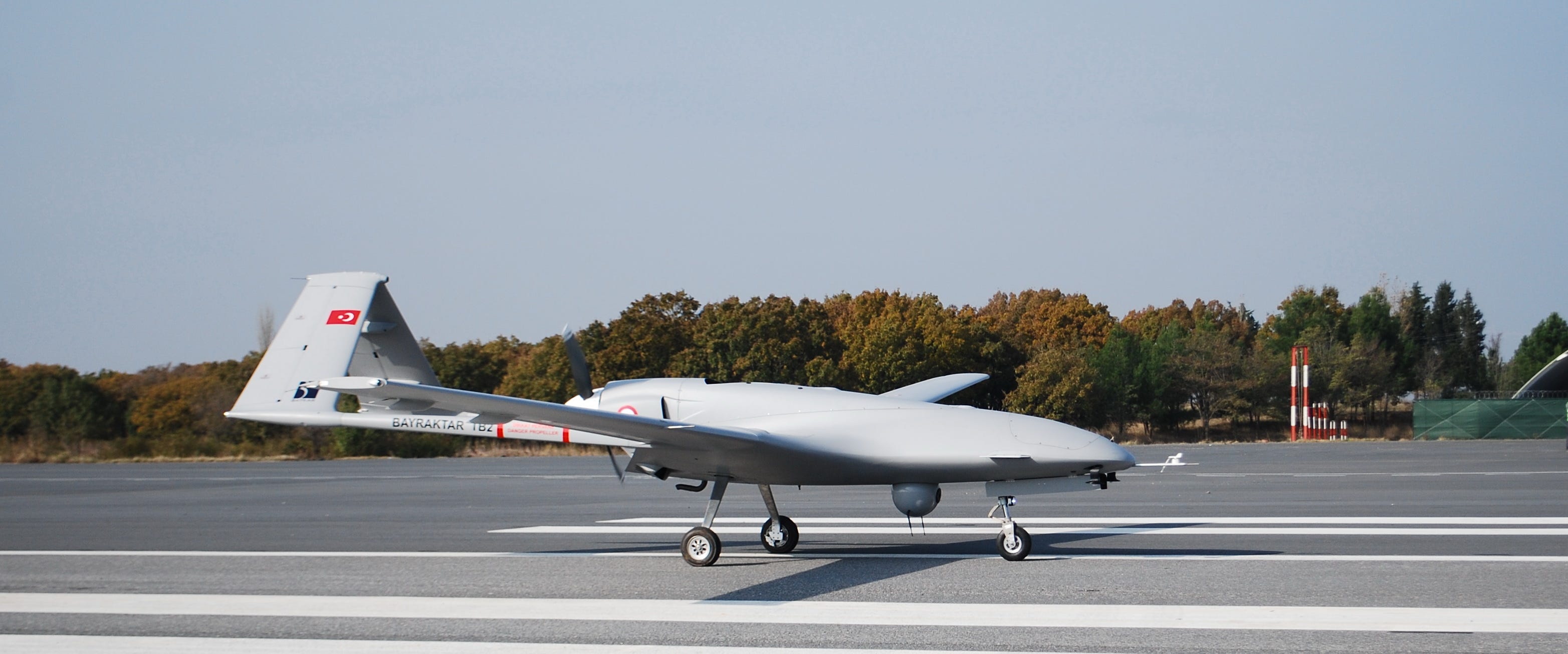
Analysts at Critical Threats and elsewhere describe the SAF drawing drones and support from Egypt, Russia, Iran, and Turkey, often transiting Eritrea into Port Sudan. Reuters has reported that Iran supplied the army with Mohajer-6 drones — built by Qods Aviation Industries, a firm under US sanction since 2013 — arriving by cargo flight at Port Sudan; in June 2026, the Foundation for Defense of Democracies reported that the SAF was trying to distance itself from Iranian weapons in hopes of courting Washington. The New York Times, citing satellite imagery and officials, reported in February 2026 that Turkish-made Akinci drones had been operating for months from a covert base at East Oweinat, in Egypt’s Western Desert, striking RSF targets inside Sudan — Cairo’s posture hardening after El Fasher fell.
Russia, having spent the war’s early phase backing the RSF through the Wagner Group, switched to the army in 2024 in pursuit of a long-sought naval foothold on the Red Sea. Saudi Arabia and Qatar have backed the SAF politically; Riyadh agreed to finance, then withdrew from, a $1.5 billion drone-and-jet deal with Pakistan that collapsed in April 2026.
None of this makes the army’s hands clean. UN human-rights chief Volker Türk has warned repeatedly about SAF air and drone strikes on civilians, including strikes in February 2026 that he said killed at least 57 people, among them 15 children.
The corridors feed a war in which both sides kill civilians; the question of who supplies whom does not resolve into a story of good guns and bad ones.
The embargo is a paper wall, a dead letter.
Step back, and the pattern is clear: the corridors endure because the rules meant to close them were built to fail.
The UN arms embargo covers only Darfur — not all of Sudan — and has since 2004; the Security Council most recently extended it, (unchanged in that essential respect), through October 2026.
There is nothing illegal, under that regime, about flying arms into Chad, Libya, or Ethiopia.
The violation occurs only at the last step, across a desert border no monitor is watching — and by then the paper trail has passed through a shell company, a repainted aircraft, a “humanitarian” manifest, a transponder switched off over open water.
That is why a Panel of Experts can document a route in granular detail and change nothing on the ground: it can name violations, but it cannot enforce.
US lawmakers have noticed. A pending Senate resolution calls on the Security Council to extend the embargo to all of Sudan, add dual-use equipment, and build a real enforcement mechanism. Analysts argue that whatever leverage exists is concentrated at a few chokepoints and with a few actors — a handful of airstrips, carriers, and states — and at the financial networks behind them.
The corridors are narrow.
The will to close them is what’s missing.
The cost at the far end
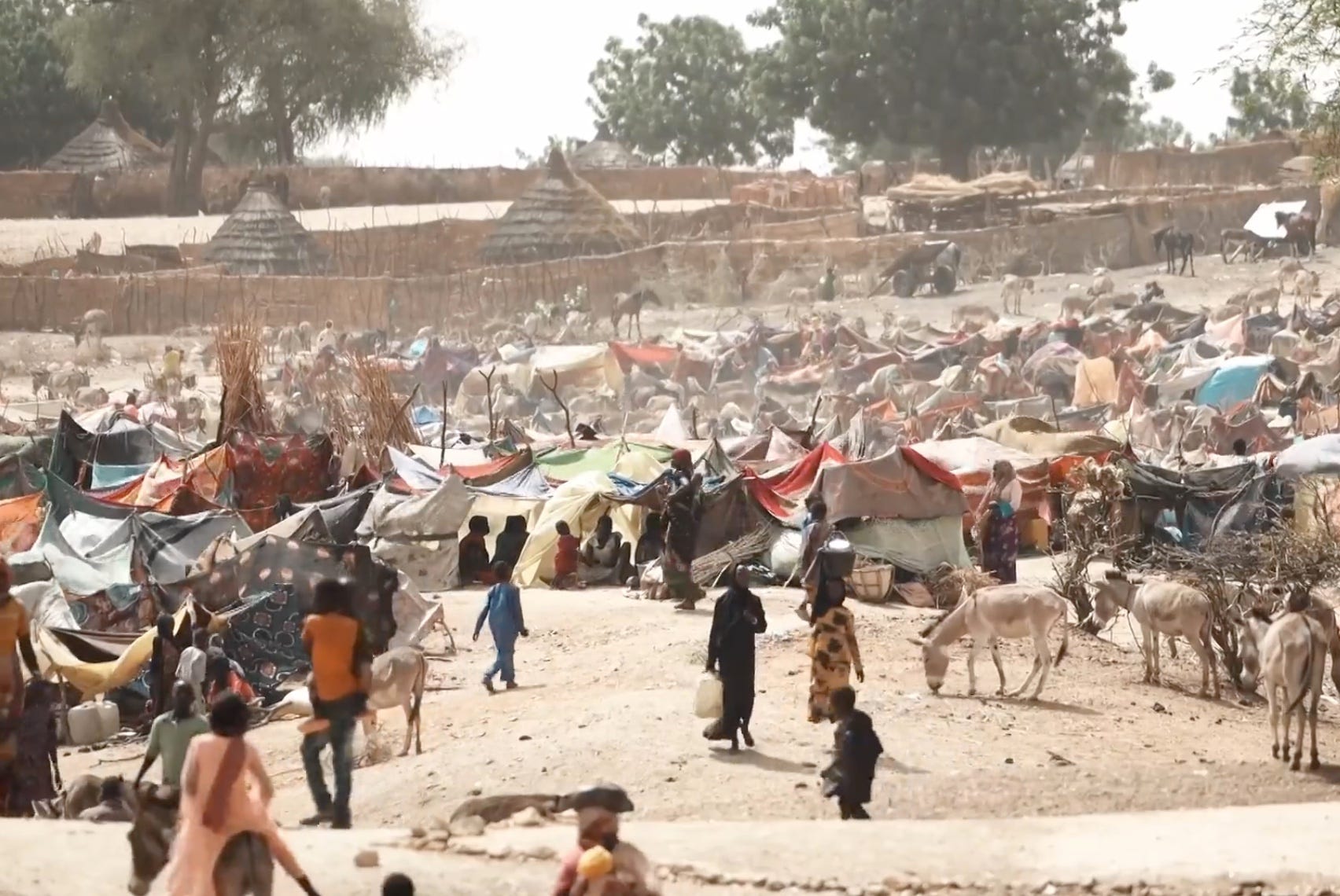
None of this is abstract.
Every crate that clears Amdjarass or Kufra becomes something at the other end of the corridor: a drone over El Obeid, where RSF strikes killed more than 60 civilians in June 2026; a shell over a displacement camp; a weapon in the hands of men at a checkpoint.
“We have seen this playbook before,” Türk said that month. “We cannot allow the repeat of the preventable atrocities we documented in al-Fasher last year.”
The corridors are how the playbook keeps getting run.
As long as the planes land at night and the convoys cross at dawn, the war has everything it needs to continue — and some of that machinery, the newest reporting reminds us, runs straight through the West’s own contractors and allies.
This series will keep following the war in Sudan and the powers that arm it — the money, the weapons, and the human cost.
Like this series? The most valuable thing you can do is help it travel: read and share it at Manufacturing Dissent
and at Shadows of Empire,
where this series is also published.
The sourcing behind each installment takes time. Independent work like this runs on its readers; if you’re able and inclined, you can help keep it going by tipping this work on my Ko-fi.
Every share and every contribution helps keep the corridors — and the people who profit from them — in the light.
by Dede Bell