


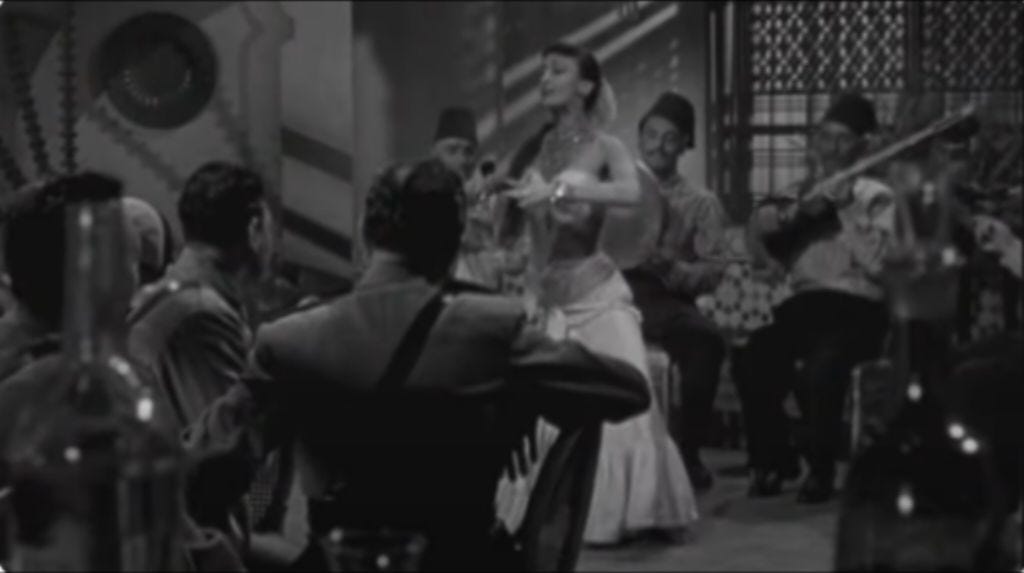
Hollywood is not just entertainment. It is a global propaganda engine that manufactures emotions, shapes who we fear, who we mourn, who we see as fully human, and who is treated as disposable. For Arabs and Muslims, Hollywood has functioned as a hundred-year smear campaign. The Arab or Muslim on screen is overwhelmingly a terrorist, fanatic, oil-hoarding sheikh, oppressed woman, refugee burden, or background extra whose main purpose is to die so that white, usually American or Israeli, protagonists can complete their moral journey.¹

This did not emerge out of nowhere. It sits at the intersection of Europe’s long history of Orientalism and anti-Arab racism, U.S. empire and the Pentagon’s public relations needs, Zionist efforts to normalize Israel and demonize Palestinians, and a profit-driven studio system that sells fear very well.² The result is a pipeline: Israel and the United States manufacture enemies, Hollywood supplies the imagery, and the public absorbs it as common sense.³
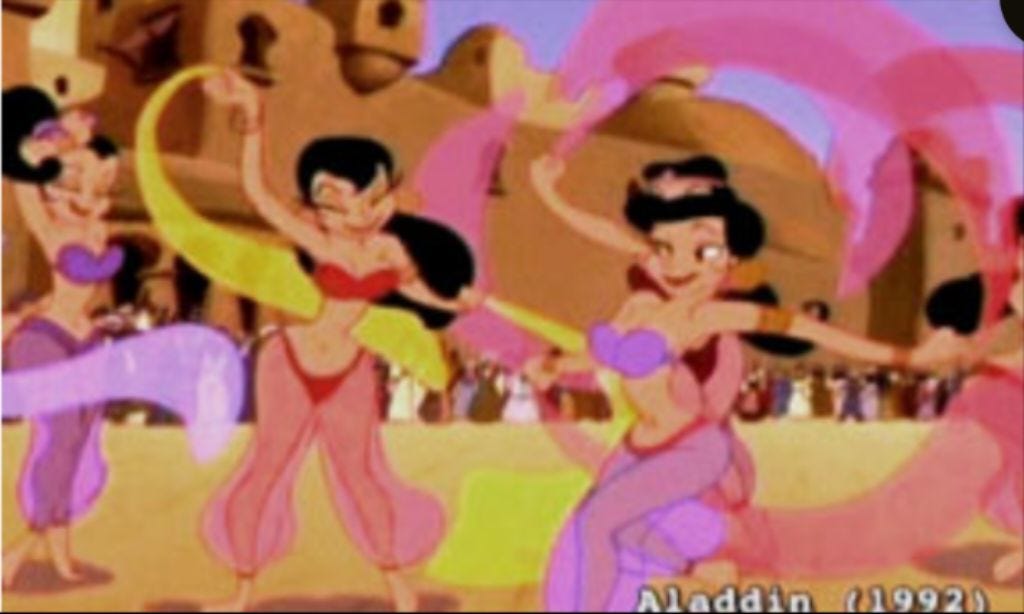
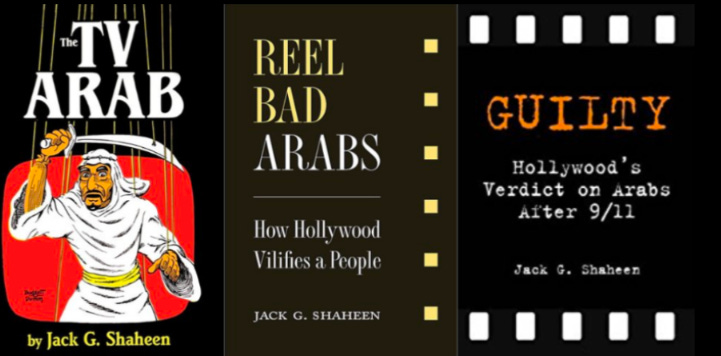
Jack Shaheen spent decades cataloguing this system. In Reel Bad Arabs, he analyzed more than one thousand films and found that the vast majority depicted Arabs as villains, buffoons, or threats, with almost no fully human, ordinary Arab lives represented at all.⁴ Edward Said provided the theoretical framework for understanding why. The Orient had to be perceived as inferior, backward, and menacing so that Western domination could be narrated as benevolent and necessary.⁵
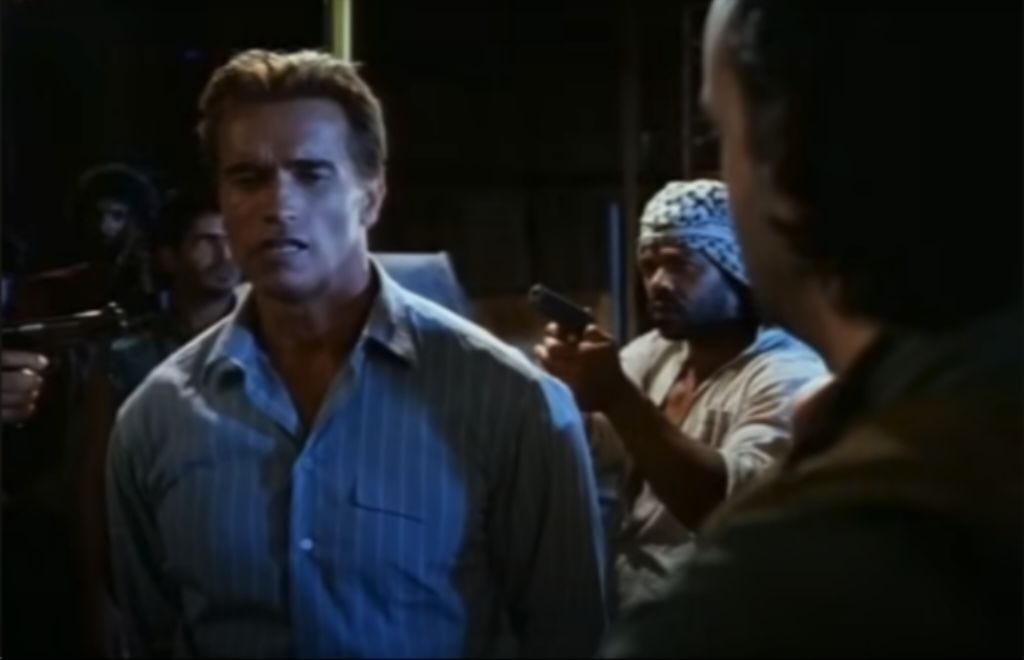
Zionism fits neatly into this older Western script. If Palestinians and Arabs are already coded as barbaric, then the Zionist project can present itself as the enlightened West’s outpost, what Israeli leaders have called a “villa in the jungle.” Hollywood then becomes the cartographer of that jungle.⁶
How the West Learned to Hate Arabs: Orientalism Before Zionism
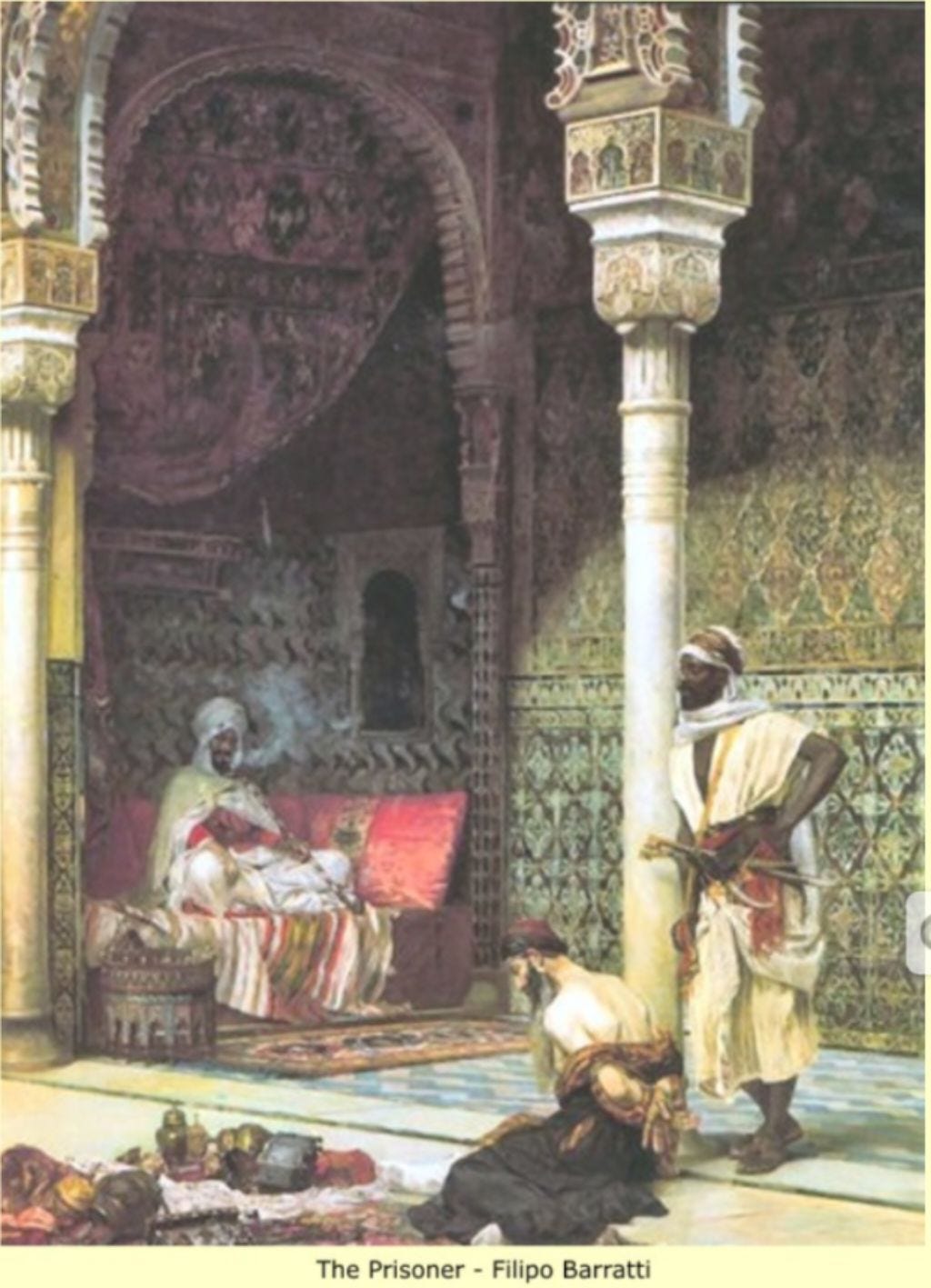
Europe was producing Islamophobic and anti-Arab fantasies long before Herzl dreamed of a Jewish state in Palestine. Orientalist paintings, travelogues, novels, and early colonial photography portrayed Arabs and Muslims as irrational, hypersexual, cruel, and incapable of self-rule.⁷ Said showed that these portrayals were not random prejudice. They were embedded in imperial policy. The Orient was constructed as everything Europe was not: lazy versus industrious, despotic versus democratic, fanatical versus rational. Colonization could then be cast as charity rather than theft.⁸
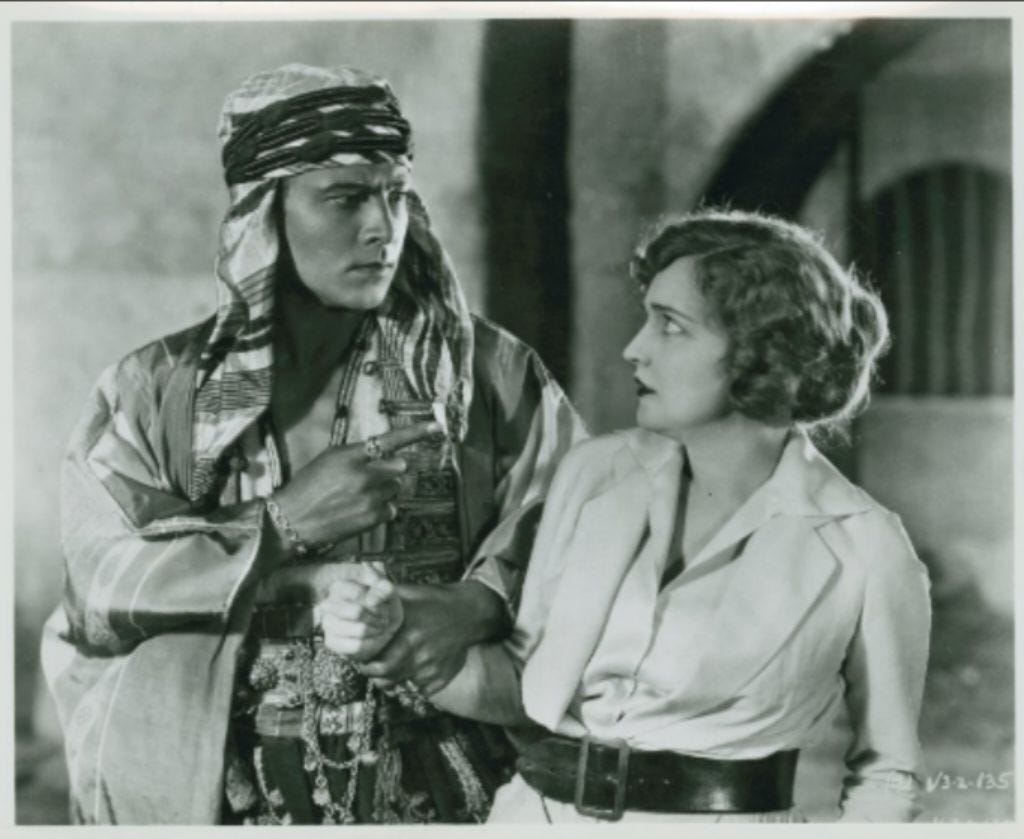
Early cinema inherited this visual language. Silent films such as The Sheik (1921) leaned into Orientalist fantasy by portraying Arab men as dangerous seducers, Arab lands as exotic playgrounds for Western adventure, and Arab women as either passive victims or erotic objects.⁹ The Arab was already marked as other before Zionism appeared on screen.
Zionism then weaponized this preexisting racism. If Arabs are uncivilized and naturally prone to violence, then Palestinian resistance to colonization can be framed as irrational hatred rather than a predictable response to dispossession.¹⁰ Hollywood did not invent that logic. It amplified it and wrapped it in Technicolor.
Zionism Arrives in Hollywood: Writing Israel into the American Myth
Once Israel was founded on the ruins of Palestine in 1948, Zionist organizations quickly recognized Hollywood’s value. Americans needed to see Israel not as a colonial project but as a plucky little democracy surrounded by irrational Arab hordes. The easiest way to do that was to merge Israel’s story with America’s own myths of pioneers, frontier, and “making the desert bloom.” Settler recognizes settler.¹¹
Historical work on Hollywood-Israel relations shows that by the mid-twentieth century, Zionist activists and communal organizations were cultivating relationships with studio heads, writers, and stars. Israeli officials were directly involved in shaping certain film projects. Palestinian presence, whether historical or contemporary, was almost completely erased from mainstream cinematic narratives about Israel.¹²
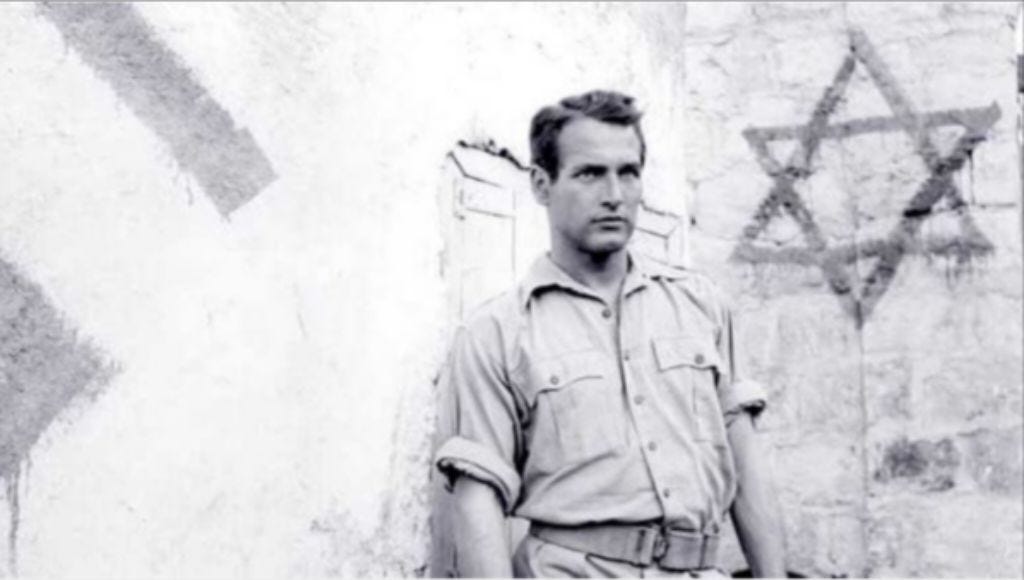
The film that crystallizes this process is Exodus (1960). Based on Leon Uris’s novel, it presents Zionist militias as noble freedom fighters and Palestinians as either invisible or reduced to a faceless Arab menace. Research into “Operation Exodus” shows direct Israeli government involvement in the film’s production, including cooperation with the Israeli military and coordination over messaging.¹³ As Hazem Fahmy argues, Exodus did not merely tell a story. It rewrote the story of Israel for American audiences, aligning Israeli state mythology with U.S. frontier myths about civilizing a land portrayed as if it were magically uninhabited.¹⁴
From there, a pattern emerges. Israeli Jews are shown as brave, conflicted, and morally serious. Arabs, including Palestinians, appear as angry mobs, saboteurs, or background noise. The Nakba is never mentioned. Israeli violence is framed as self-defense, while Palestinian resistance is framed as terror. That is how Zionism was written into Hollywood’s DNA.
The Hasbara Machine: Direct Israeli Influence on Hollywood
Israel does not even pretend that this is a neutral cultural exchange. It openly treats pop culture as a front in its information war.¹⁵ Reports document a long pattern in which Israeli ministries coordinate with studios and producers to ensure “balanced,” meaning pro-Israel, content. U.S.-based Zionist groups such as AIPAC and allied organizations sponsor educational trips to Israel for actors, writers, and influencers. Oscar swag bags have even included luxury trips to Israel, marketed as rewards for A-list stars.¹⁶
These trips are not tourism. They are curated propaganda tours. Participants are taken to Yad Vashem and high-tech companies, given carefully controlled encounters with handpicked Palestinian citizens of Israel, and shielded from checkpoints, refugee camps, and bombed-out neighborhoods in Gaza.¹⁷
The same network that sells Israel’s image also polices dissent. Since Israel’s genocide in Gaza, a new blacklist has formed in real time. Melissa Barrera was fired from Scream after posting basic pro-Palestine statements. Other actors and writers were dropped by agents or quietly disinvited from projects for condemning Israeli atrocities. Studio executives and producers made it clear that “controversial politics” means anything that challenges Israel, not anything that advocates genocidal violence against Palestinians.¹⁸ Middle East Eye, Left Voice, and others have described this as a new Hollywood McCarthyism. Careers are being threatened not for communism this time but for refusing to cheerlead for apartheid and ethnic cleansing.¹⁹
When an industry punishes people for opposing the mass killing of Palestinian children while rewarding those who fundraise for the Israeli military, that is not complexity. It is political discipline.
Jack Shaheen and the Archive of Hate
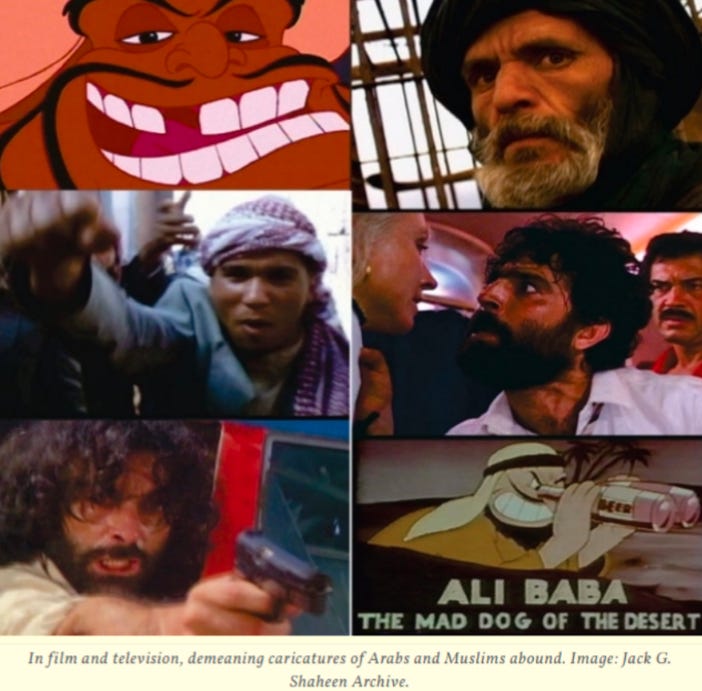
Jack Shaheen did what Hollywood refused to do. He counted. In Reel Bad Arabs, he examined more than one thousand films, from silent pictures to late twentieth-century blockbusters, and showed that Arabs were almost always portrayed negatively as terrorists, lecherous sheikhs, primitive tribesmen, misogynists, or buffoons.²⁰ In a later article on Arab women, he showed how Arab and Muslim women are reduced to veiled victims, exotic dancers, or invisible wives, rarely portrayed as actual complex people with jobs, opinions, or interior lives.²¹
After 9/11, Shaheen published Guilty: Hollywood’s Verdict on Arabs After 9/11, documenting how Islamophobic tropes did not merely persist but intensified.²² The Arab terrorist became Hollywood’s default villain. Entire shows and movie franchises were built on the assumption that Muslim life is a legitimate target.
Among the stereotypes Shaheen catalogued were the terrorist who screams “Allahu Akbar” while trying to kill Americans or Israelis, the greedy oil sheikh, the oppressed woman who exists to be rescued by Western men or secular elites, and the “good Arab” who assists Americans or Israelis in killing other Arabs or denounces his own people.²³ Shaheen’s work proves that Arabs are not just occasionally maligned. They are Hollywood’s default villain.²⁴
The Pentagon-Hollywood Axis and the War on Terror
Hollywood’s Islamophobia does not simply reflect Zionist narratives. It dovetails perfectly with U.S. military propaganda. The U.S. Department of Defense and intelligence agencies have long provided production support to films and television series, including access to bases, ships, helicopters, equipment, and technical advice, on the condition that scripts reinforce certain narratives. Researchers and journalists have shown that the Pentagon frequently requests script changes in exchange for support, particularly in films about war, terrorism, and covert operations.²⁵
So when Hollywood makes films about Iraq and Afghanistan, Islamic terror, or counterterrorism operations, there is often an invisible co-writer: the Pentagon.²⁶ This matters because films that question U.S. foreign policy or depict Muslims sympathetically often struggle to secure military support and backing from major studios, while films that portray Arab and Muslim bodies as legitimate targets for American violence are showered with resources.²⁷
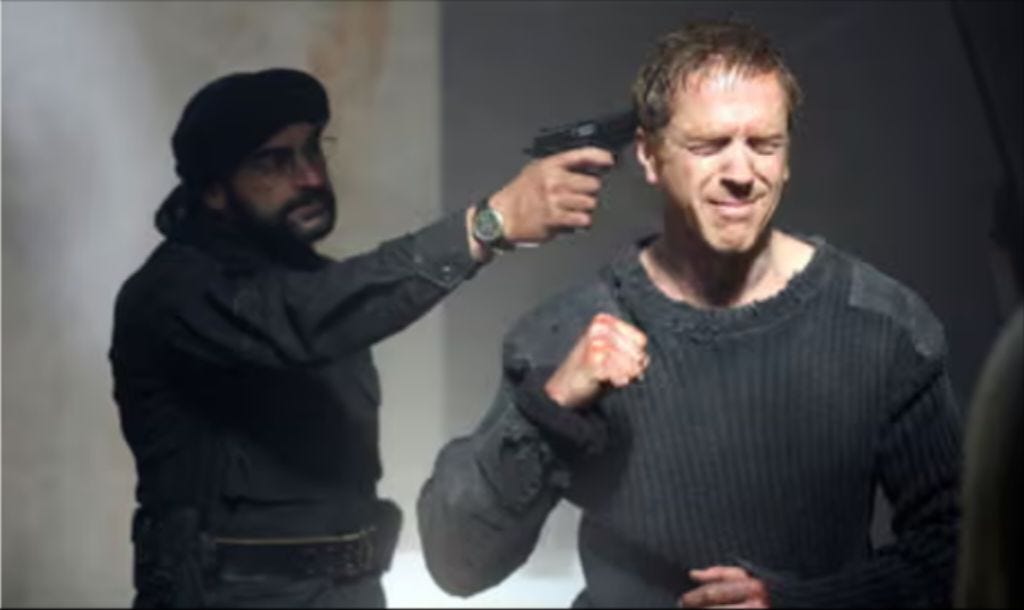
This aligns seamlessly with Israeli interests. If Hollywood trains audiences to accept the War on Terror as a noble fight against savage and irrational enemies, then Israel’s decades-long war on Palestinians can be folded into the same civilization versus barbarism narrative.²⁸ Shows such as Homeland and films such as Zero Dark Thirty normalize a world in which Muslim lives are expendable, surveillance and torture are treated as minor ethical issues, and the United States and Israel are righteous victims defending themselves.²⁹
Post-9/11: Zionism and U.S. Militarism Merge into One Story
The attacks of September 11, 2001 became the excuse for everything Washington and Tel Aviv already wanted to do. Israeli officials immediately began framing Israel as the front line in the same war America was now fighting, and U.S. politicians eagerly repeated that line.³⁰ Hollywood responded with a wave of post-9/11 films and television shows that dramatized the War on Terror as a necessary and endless global campaign, centered American and sometimes Israeli suffering while rendering Muslim pain invisible, and turned Arab cities into anonymous backdrops for raids, drone strikes, and heroic special-operations missions.
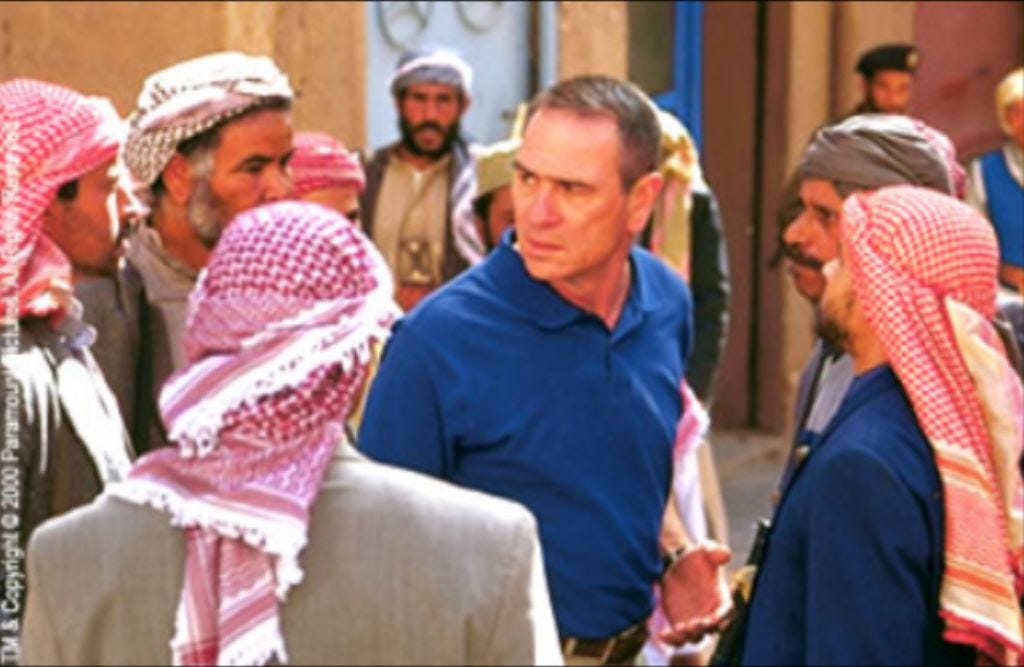
Ayesha Qamar and colleagues’ 2024 study on Islamophobia in Hollywood movies found that explicitly Islamophobic portrayals increased in both frequency and intensity after 9/11. Muslim characters were more likely to be linked to violence, fanaticism, or suspicion after 9/11 than before.³¹ At the same time, Maytha Alhassen’s Haqq and Hollywood traced a century-long evolution of Muslim portrayals on screen, showing how older Orientalist tropes were simply recycled into post-9/11 security narratives.³²
USC Annenberg’s 2021 Missing and Maligned study found that Muslims made up only 1.6 percent of 8,965 speaking characters in two hundred top-grossing films from 2017 to 2019, and many of those roles were tied to violence or extremism.³³ A later report on television found similarly low representation and heavy reliance on stereotypes.³⁴ Muslims are barely present, and when they are present, they are framed as the problem. That is not an accident. It is narrative engineering.
Case Study: American Sniper and the Industrial Production of Muslim Targets

If one wanted a distilled example of Hollywood’s Islamophobia, American Sniper would be a strong candidate. Based on the memoir of U.S. sniper Chris Kyle, the film portrays Iraqis almost entirely as savages trying to kill Americans for no reason, cowards hiding behind women and children, or legitimate targets to be gunned down from a distance.
Coverage by Al Jazeera pointed out how the movie revives age-old racist roles for Arabs, portraying them as dehumanized and voiceless people existing purely as threats to be eliminated.³⁵ The invasion of Iraq, which was based on lies, goes almost unquestioned. The destruction of Iraqi society is reduced to background noise. Viewers are invited to identify emotionally with Kyle’s trauma, while the Iraqi dead often do not even receive names.
This is exactly how Zionism wants audiences to see Palestinians: as an anonymous crowd, inherently violent, whose resistance is pure hatred, and whose killing is merely protection. When audiences internalize the idea that Arab life is cheap and that Western or Israeli snipers are heroic defenders, it becomes much easier to sell the bombing of Gaza or the siege of Jenin as regrettable but necessary.³⁶
Zionist Cancel Culture: Punishing Hollywood’s Dissenters
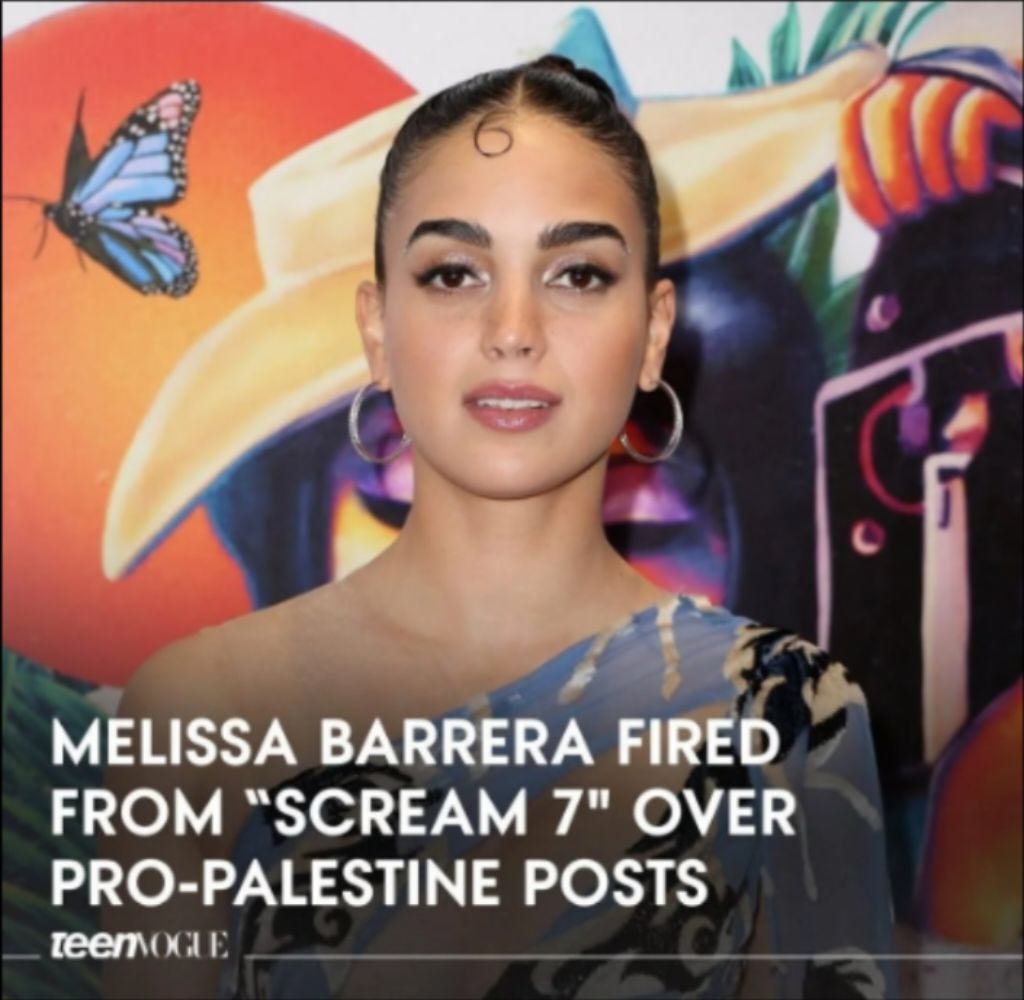
Hollywood likes to present itself as liberal and edgy until Israel is mentioned. Then the industry moves quickly to crush dissent. Since October 2023, this has happened in plain view. Melissa Barrera was fired from Scream VII after posting ordinary human rights language about Palestinians on Instagram. TIME and other outlets documented how quickly she was dropped despite no history of hateful speech.³⁷ Some actors and writers who signed ceasefire letters reported being quietly uninvited from projects, removed from consideration, or warned by agents to stay silent.³⁸ Meanwhile, those who cheer for the Israeli army, donate to organizations supporting its operations, or repeat genocidal talking points face no comparable professional consequences.³⁹
As Al Jazeera put it, the truth about Palestine is not coming to a theater near you, in part because those who try to tell it risk their livelihoods.⁴⁰ This is not a level playing field. It is a system where pro-Israel messaging is rewarded and anti-Zionist or even basic pro-Palestinian humanitarian concern is punished.⁴¹
Celebrity Propaganda: Israel’s Star-Studded PR Regime

Zionist organizations and the Israeli state have systematically used celebrity culture as a weapon. This includes fundraisers in Hollywood and New York that raise millions for Israeli soldiers, curated celebrity trips to Israel often co-sponsored by AIPAC or allied groups, and Brand Israel campaigns that associate the country with technology, LGBTQ rights, or wellness culture while washing away the reality of occupation and settler violence.⁴²
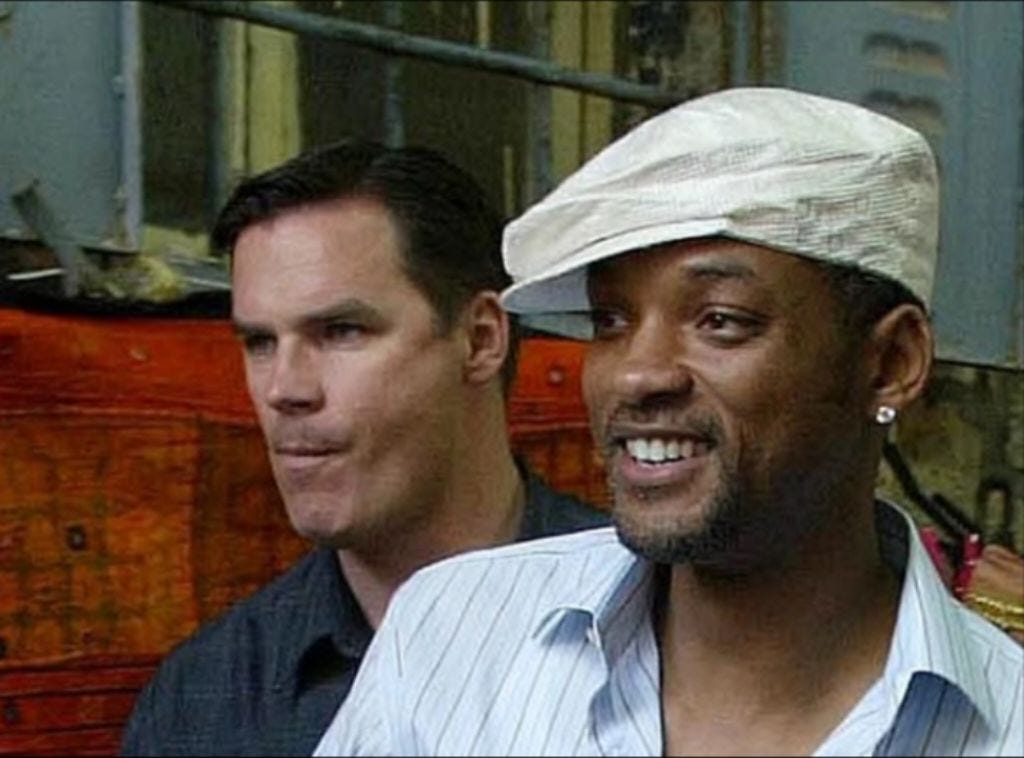
Israel’s cultural propagandists understand something very well. It does not matter how many United Nations resolutions condemn them if they can still get a favorite actor to smile for photographs in Tel Aviv and praise the food. Hollywood is not neutral terrain where this merely happens. It is actively recruited into the campaign.⁴³
From Exodus to Marvel: Justifying Israeli War Crimes One Blockbuster at a Time
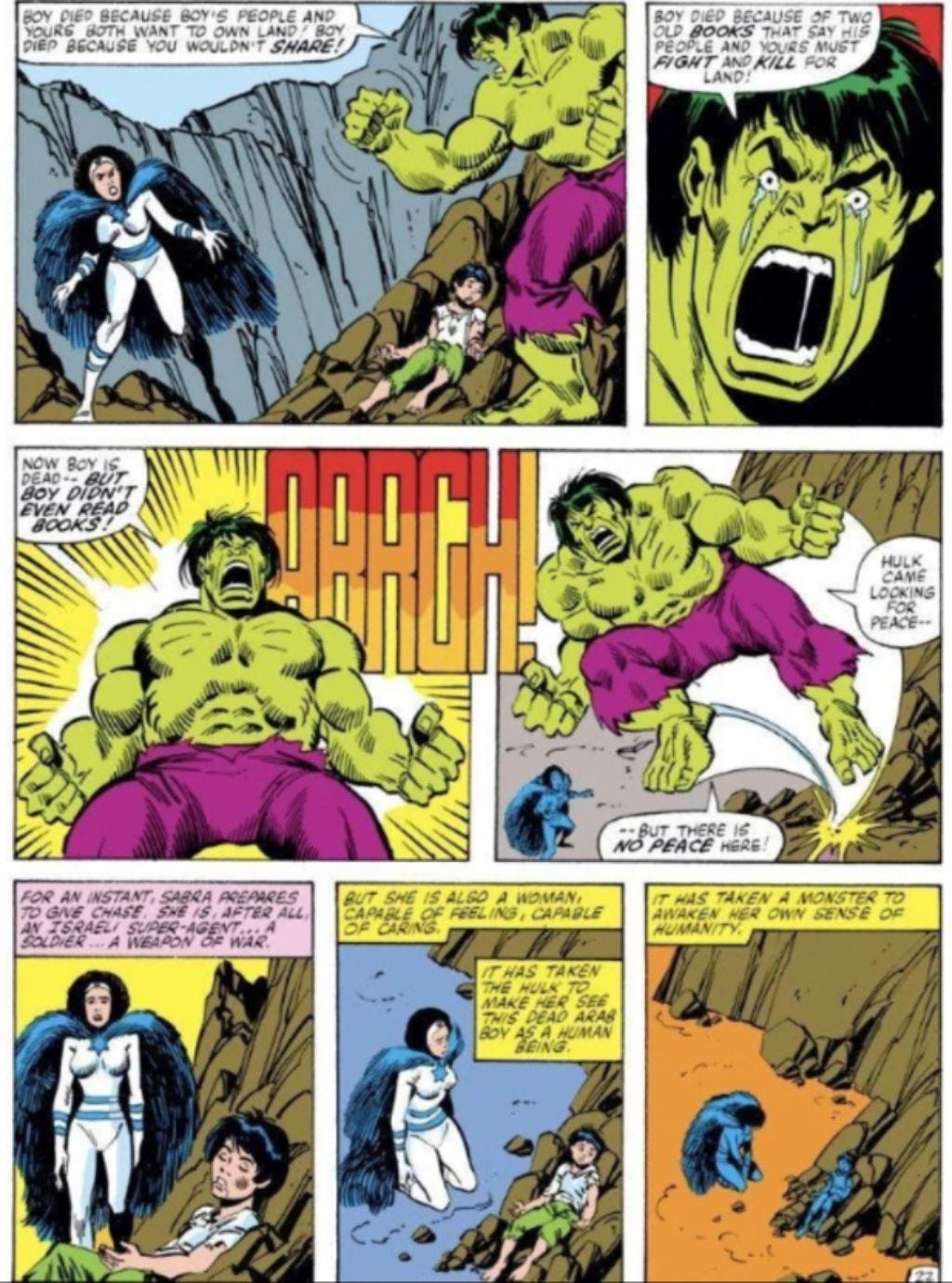
From Exodus in 1960 to Marvel’s effort to introduce Sabra, an Israeli superhero linked to Mossad, the pattern is remarkably consistent: normalize the Israeli security state and dehumanize its enemies. Ramzy Baroud’s “From Exodus to Marvel” traces how early films romanticized Zionist militias and erased Palestinian existence, while later films presented Israeli airstrikes and invasions as difficult but necessary decisions made by anguished and enlightened leaders. Sabra is simply the latest chapter in that story.⁴⁴
Meanwhile, Palestinians remain either invisible or reduced to terrorist caricatures. There is no equivalent Marvel hero who is a Palestinian journalist, doctor, or freedom fighter. Mondoweiss’s “Zombie Hasbara” noted how World War Z relocates its apocalypse to a walled Jerusalem and portrays Israel’s apartheid wall as a rational lifesaving measure until savages storm it.⁴⁵ Hollywood repeatedly takes real apparatuses of oppression such as walls, checkpoints, and bombing campaigns and recasts them as defensive or even noble.⁴⁶
Mossad in Hollywood: Arnon Milchan and the Spy-Producer Era
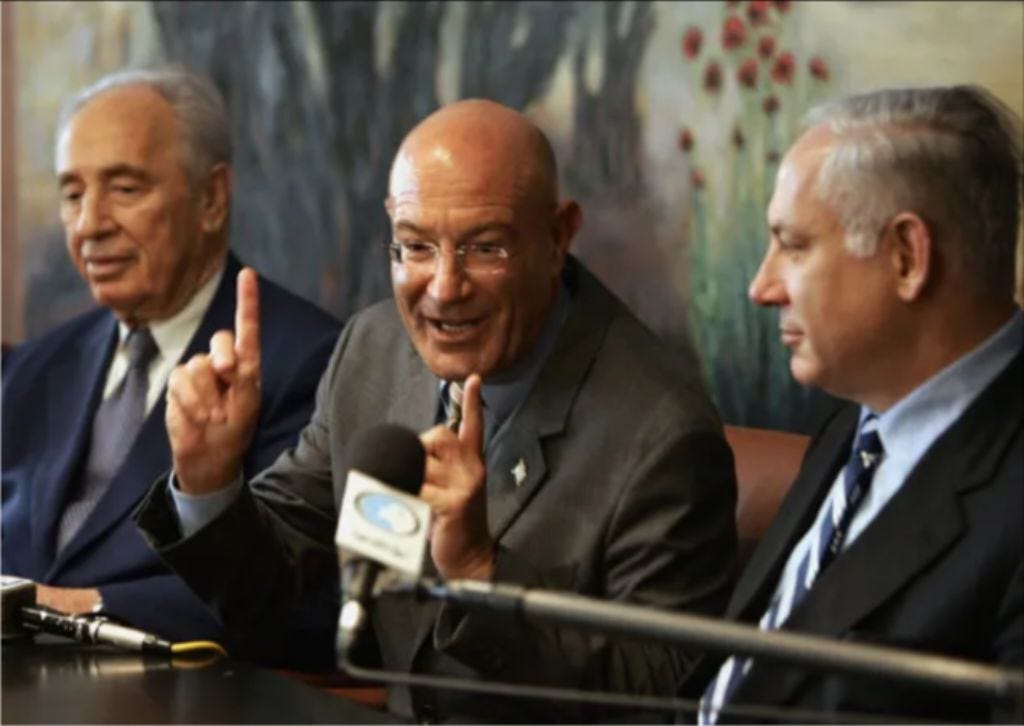
If this sounds conspiratorial, consider Arnon Milchan. Milchan is a billionaire Hollywood producer behind films such as Pretty Woman, Fight Club, L.A. Confidential, 12 Years a Slave, and Birdman. He has openly admitted that he spent years working as an Israeli intelligence operative and arms dealer, helping secure technology and materials for Israel’s nuclear program while simultaneously building a Hollywood empire.⁴⁷
Investigations and biographies have shown that Milchan’s business network was intertwined with Israeli intelligence, that he used international companies and contacts to acquire sensitive technology for Israel, and that his friendships with powerful Hollywood figures gave him extraordinary soft power.⁴⁸ He is not the only person to bridge these worlds, but he is the most public. His existence destroys the comforting myth that there is a clean line between Hollywood and Zionist state operations. Sometimes that line walks the red carpet.⁴⁹
Streaming Platforms and Digital Hasbara
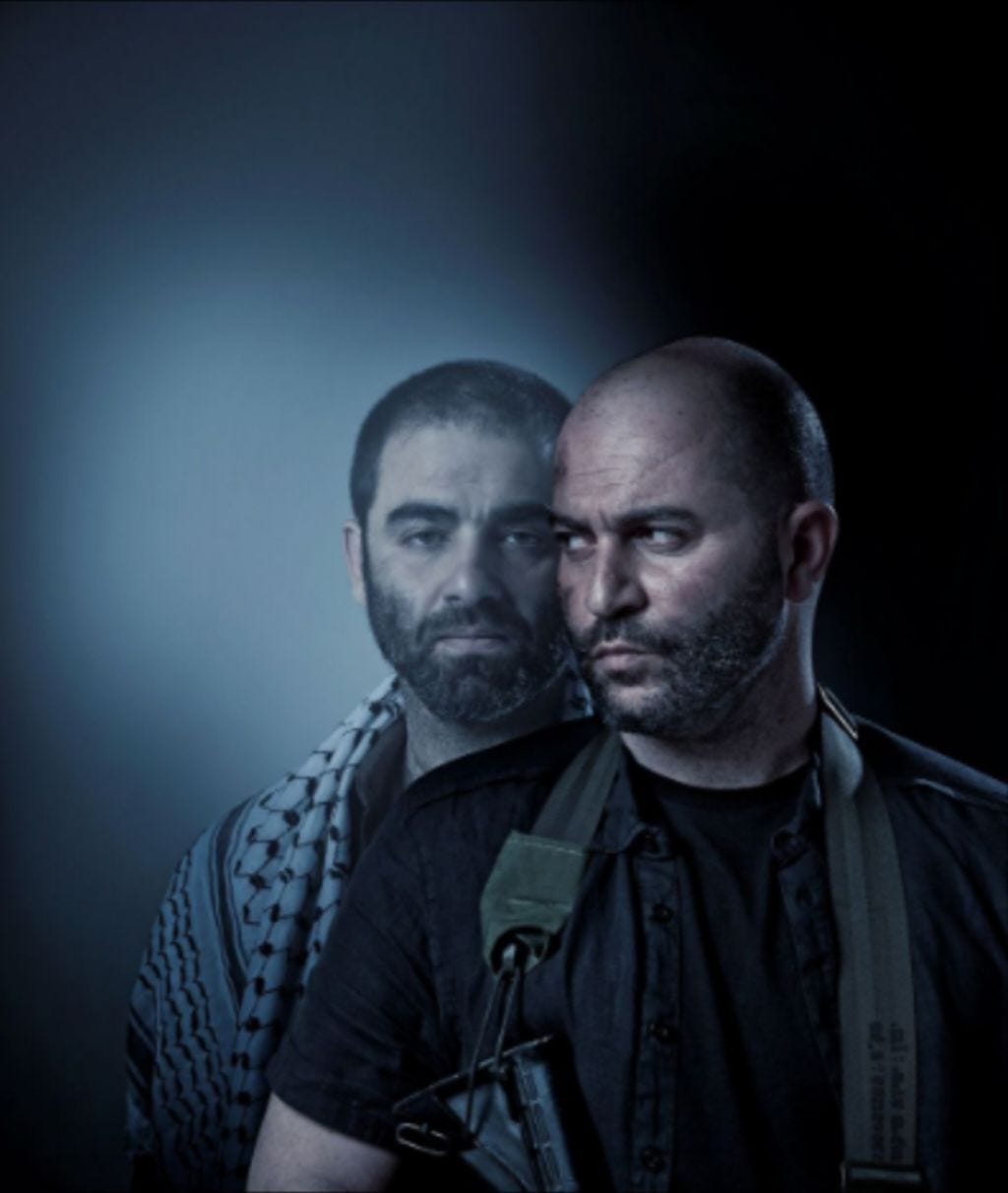
Cinema and cable are no longer the only battlegrounds. Streaming platforms such as Netflix, Amazon, and Disney+ have become major vehicles for normalizing Zionist narratives. One example is Fauda, an Israeli series on Netflix that follows Israeli undercover units hunting Palestinian militants. The show humanizes Israeli agents while depicting Palestinians largely as unstable, fanatical, or duplicitous. Critics have described it as clumsy hasbara wrapped in the aesthetics of prestige television.⁵⁰
This fits into a broader pattern that some scholars and activists call the Israelification of Western media: the spread of Israeli security logic, including walls, surveillance, and preemptive violence, as common-sense solutions, with Arabs and Muslims cast as permanent suspects.⁵¹
Real-World Damage: When Tropes Become Policy
All of this would be just movies if movies did not shape public opinion, policy support, and everyday violence. But they do. USC Annenberg’s data shows that Muslims are almost absent on screen and, when present, are disproportionately associated with conflict and extremism.⁵² Alhassen’s Haqq and Hollywood synthesizes scholarship showing that decades of negative portrayal help shape public perceptions of Muslims as dangerous, foreign, and less deserving of civil rights.⁵³ Leah Balter’s “A Violent Reality” directly connects Islamophobic attacks and hate crimes to cultural conditioning, arguing that people primed to see Muslims as threats are more likely to tolerate or commit violence against them.⁵⁴
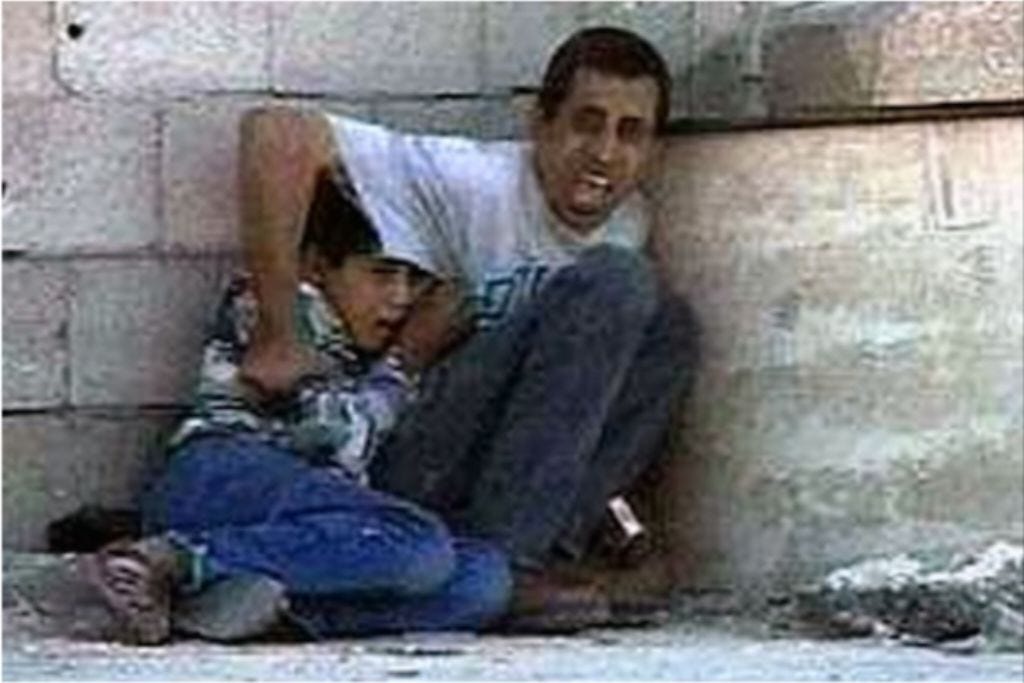
These tropes also appear in policy debates. Surveillance programs targeting Muslim communities are framed as common sense. Wars against Muslim-majority countries are marketed as humanitarian or defensive. Palestinians are treated as inherently suspect, which makes their testimony about Israeli atrocities easier to dismiss as “Pallywood.”⁵⁵ When Israel bombs Gaza, the average Western viewer has already consumed thousands of films and shows in which Arabs are villains and Israeli or American soldiers are noble heroes. It should not surprise us that many people’s first instinct is to assume the dead Palestinians must have brought it on themselves.⁵⁶ Hollywood did not drop the bombs, but it helped prepare audiences to accept them.
Hollywood’s Reckoning
Hollywood loves redemption arcs. It is long past time it wrote one for itself. The industry has spent a century turning Arabs and Muslims into monsters, props, or invisible extras. It has recycled Orientalist fantasy, adopted Zionist talking points as plotlines, collaborated with the Pentagon to glorify imperial wars, and punished those who speak out for Palestinians while protecting those who cheer on their slaughter.⁵⁷ This is not random bias or merely the market at work. It is the product of deliberate lobbying, ideological alignment with empire, and the willingness of studios and stars to look away while Israel uses their platforms to launder apartheid.⁵⁸
A real reckoning would require ending collaboration with state propaganda machines, whether Pentagon script approvals or Israeli government hasbara. It would require funding Arab and Muslim creators with genuine creative control over stories about their own communities, including Palestinians. It would require reversing the blacklist, apologizing, and restoring those punished for supporting Palestinian rights. And it would require accountability structures so that films and shows that dehumanize entire peoples are not treated as harmless entertainment but as interventions in real lives.⁵⁹
Until then, Hollywood will keep producing stories that make it easier to bomb, occupy, and starve Arabs and Muslims while congratulating itself for providing content.
My son is an Adam Sandler fan and wanted to watch You Don't Mess with the Zohan. I was shocked by naked IDF propaganda masquerading as a 'comedy'.
Thanks for this brilliant and well written analysis.
This piece should be required reading for every young actor, film director, cinematographer, and editor with aspirations of one day working within the vile Hollywood system that requires you to wash your hands, grab your ankles, and check your soul at the door.