


This article is contributed by Just Jenny. Please support and subscribe.

When most people picture money laundering, they imagine suitcases full of cash, shady back rooms, and criminals feeding money through a suspicious business.
Sometimes it does look like that.

But large-scale money laundering often looks far more respectable.
It can look like a property sale, a consulting payment, an international business deal, a company loan, an investment profit, or a painting purchased through an intermediary.
The goal is not literally to clean the money.
The goal is to give it a believable history.

Someone who steals $20 million already possesses the money. Their problem is explaining where it came from.
They cannot simply deposit the entire amount into a personal account, buy a mansion, and expect the bank, tax authorities, or investigators not to ask questions.
So the money is moved, divided, converted, and surrounded with paperwork until it appears to have come from legitimate activity.
The money stays the same.
The story changes.
The three stages of money laundering
Money laundering is commonly explained through three stages:
Placement: introducing illegal money into a financial or commercial system.
Layering: moving it through enough transactions, companies, people, and assets to obscure where it began.
Integration: returning it to the owner as apparently legitimate wealth.
In simple terms:
Dirty money enters the system, gets buried under complexity, and comes back with a respectable explanation.
To understand how this works, imagine someone has stolen $20 million.
We will call him Adrian.
The money may have come from fraud, corruption, embezzlement, bribery, trafficking, or another crime. Adrian’s immediate problem is not possessing the money. It is using it without exposing the crime that produced it.
Step One: Break the money apart
Adrian does not keep the $20 million together.
He divides it.
Some of it is moved through companies. Some goes into property. Some enters a real business. Some purchases valuable assets. Some is transferred abroad. Some may be passed through other people.
A single unexplained $20 million transaction is easy to notice.
Dozens of smaller transactions with different explanations are harder to understand.
This is the beginning of layering.
Step Two: Hide behind companies
Adrian creates or acquires several companies.
One supposedly provides consulting services.
Another owns property.
Another imports and exports goods.
One may be a genuine operating business with employees and customers.
Some may be shell companies: legal companies that exist mostly on paper and conduct little real business.
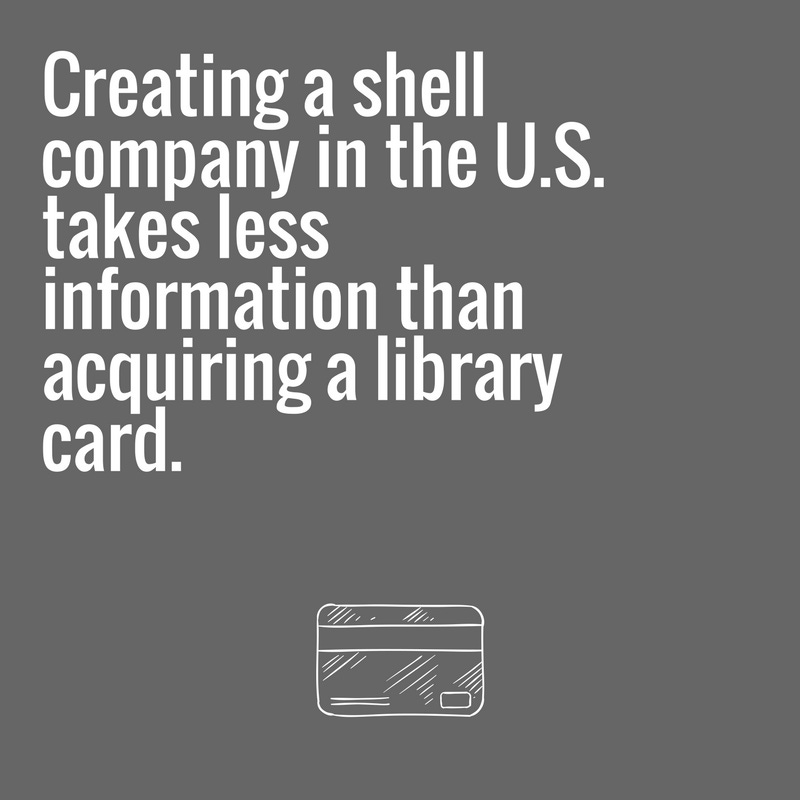
Shell companies are not automatically illegal. Businesses use them for many legitimate purposes.
The problem begins when they are used to conceal the real owner, fabricate business activity, or disguise criminal money.
Adrian may also avoid placing his own name on the companies. A nominee director, associate, relative, lawyer, or another company may appear in the records instead.
This creates a difference between the person listed on paper and the person who actually controls and benefits from the company.
That hidden person is the beneficial owner.
When one company owns another company, which is held by a trust in another country, determining the true owner can become extremely difficult.
On paper, Adrian may appear to own nothing.
In reality, he controls everything.
Step Three: Turn transfers into “business income”
One of Adrian’s companies sends another company a $3 million bill for “strategic consulting.”
Was any consulting actually performed?
Perhaps.
But vague services such as consulting, management, licensing, marketing, or advisory work can be difficult for outsiders to value.
A real consultant should be able to show contracts, correspondence, employees, research, reports, and evidence of work.
A fake consultancy may have little more than an invoice.
Once the payment is recorded, the receiving company can call the money revenue.
The question is no longer simply:
“Where did this stolen money come from?”
It becomes:
“Was this consulting work real?”
The money has acquired its first cover story.
Step Four: Make the money look like a loan
Another portion of the money returns through a company loan.
A company secretly controlled by Adrian lends money to another company or directly to Adrian.

He can now say:
“This is not unexplained money. I borrowed it.”
But he may secretly control the lender or may have supplied the original money himself.
The money left one part of the network and returned wearing a different label.
It entered as criminal proceeds.
It came back as financing.
Step Five: Mix it into a real business
Adrian also owns several restaurants.
The restaurants are real. They have workers, customers, suppliers, and legitimate sales.
That is what makes them useful.
Suppose one restaurant genuinely earns $40,000 during a particular period but reports $60,000.
The extra $20,000 can be presented as customer revenue.
This is called commingling: mixing illegal money with legitimate business income.
Cash-heavy businesses can be vulnerable because it may be difficult to determine exactly how many customers were served or how much money was collected.
The business does not need to be entirely fake.
In fact, a partially legitimate business may provide better cover because real and illegal money are flowing through the same accounts.
Once mixed together, separating them becomes much harder.
Step Six: Move value through international trade
Adrian wants to move part of the money into another country without making it look like a straightforward transfer.
One of his companies ships goods worth $200,000 to another company.
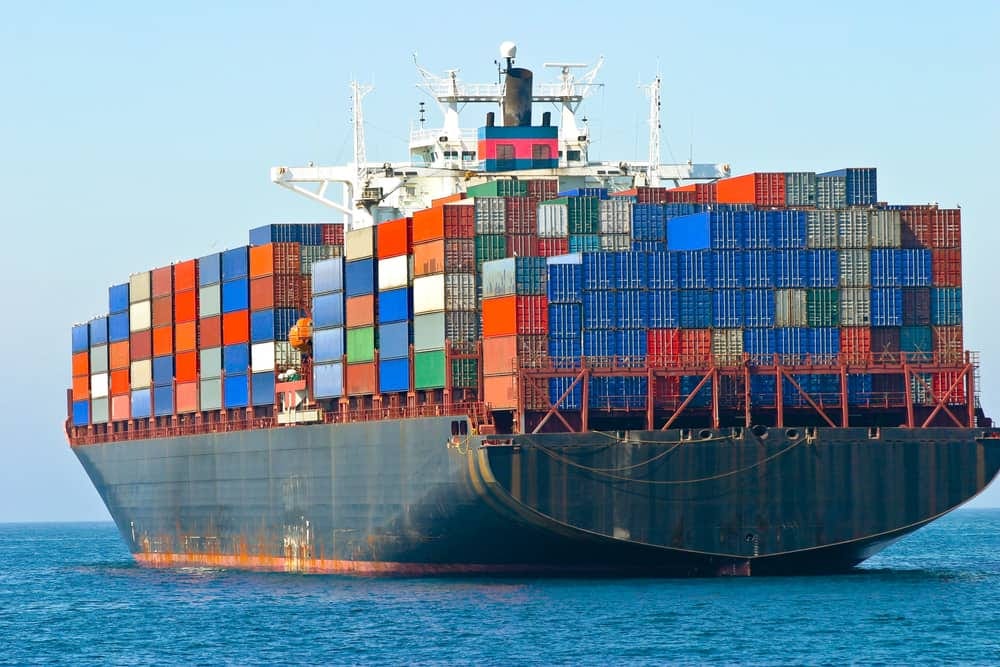
The invoice says the goods are worth $1 million.
The receiving company pays $1 million.
On paper, the payment appears to be for imported products.
In reality, $800,000 of extra value has been transferred under cover of the inflated invoice.
This is known as trade-based money laundering.
It can involve:
overpricing goods,
underpricing goods,
billing twice for one shipment,
misrepresenting the quantity or quality,
or inventing shipments that never happened.
Trade is useful for laundering because money does not always need to cross a border as money.
Value can move through electronics, textiles, machinery, food, vehicles, gold, or other goods.
Step Seven: Turn money into property
Adrian’s company purchases a luxury apartment.
The property is not listed under Adrian’s personal name. It belongs to a company or trust.
Real estate can absorb millions of dollars in a single transaction. It can also rise in value, produce rental income, be renovated, refinanced, or later sold.
Imagine Adrian’s company buys a property for $4 million, spends money renovating it, and eventually sells it for $6 million.
The final proceeds now appear to come from a property sale.
Adrian can point to the deed, renovation invoices, and sale documents.
The original theft is several layers behind the money.
The property did not erase the crime.
It gave the money a new history.
Step Eight: Store wealth in valuable assets
Adrian may also purchase art, gold, jewelry, diamonds, luxury watches, collectible cars, or other expensive assets.
These markets can be attractive because some transactions are private and values are not always objective.
A publicly traded stock has a visible market price.
A painting may be worth whatever one buyer agrees to pay.

An item purchased for $500,000 may later be sold for $1 million, creating what appears to be a legitimate profit.
These assets may also be portable, privately transferred, or used as collateral.
Again, purchasing art or gold does not prove criminal activity.
The concern arises when the buyer is hidden, the price is implausible, the source of funds is unclear, or the asset is quickly resold between connected parties.
Step Nine: Route money through investments
Another portion of the $20 million enters investment accounts, companies, or private funds.
Later, the money returns as:
dividends,
interest,
investment gains,
business profits,
or proceeds from selling an ownership stake.
This creates one of the strongest cover stories in modern society:
“He made his money through investments.”
That sentence sounds like an explanation even when almost nothing has actually been explained.
Investment markets can be abused through secretly related buyers and sellers, fake profits, manipulated transactions, shell-company accounts, or private investments whose true owners are obscured.
Once the money appears as an investment return, it begins to resemble ordinary wealth.
Step Ten: Use intermediaries and professionals
Adrian probably does not build this network by himself.
Large laundering operations may involve:
lawyers,
accountants,
bankers,
brokers,
real estate agents,
company-formation services,
investment managers,
art dealers,
and trust administrators.
Most professionals do not knowingly assist criminals, and many are legally required to investigate clients and report suspicious activity.
But professional involvement can take several forms.
One adviser may be deceived.
Another may avoid asking uncomfortable questions.
Another may notice warning signs but choose not to look too closely.
Another may knowingly design the structure.
This is one of the biggest differences between street-level laundering and elite laundering.
A poor criminal may attempt to hide money from the financial system.
A wealthy or connected criminal may hire experts who know how to move through it.
Where the fictional $20 million ends up
After several years, Adrian’s money might look something like this:
$3 million appears as consulting revenue.
$2 million is mixed into legitimate business sales.
$4 million purchases real estate.
$2 million moves through international trade.
$3 million enters investments and private businesses.
$1 million purchases art, gold, watches, or other valuable assets.
$2 million returns as company loans.
$1 million passes through other people or third-party accounts.
$2 million is lost to taxes, commissions, professional fees, and transaction costs.
Adrian does not need to recover every dollar.
He may willingly lose part of the money if what remains becomes easier to use.
He is purchasing legitimacy.
At the end of the process, the stolen money no longer appears as one suspicious fortune.
It appears as business income, property profits, investment returns, loans, and asset sales.
The money has been divided into believable explanations.
Why wealthy people have more opportunities to hide money
Wealthy people do not use an entirely different financial system.
They have greater access to its most complicated parts.
A person who already owns businesses, properties, trusts, investment accounts, and international assets can move large sums without every transaction appearing unusual.
Wealth also provides access to:
private banks,
international advisers,
holding companies,
complex trusts,
specialized tax planning,
private investment funds,
and multiple legal jurisdictions.
These tools have legitimate purposes.
But the same structures used to manage lawful wealth can also conceal unlawful wealth.
A complicated company structure is not proof of laundering.
An offshore account is not proof of laundering.
A trust is not proof of laundering.
The relevant questions are:
Where did the money originally come from?
Who actually controls it?
Is the stated transaction real?
Was the ownership properly disclosed?
Does the explanation match the evidence?
Money laundering is not the same as avoiding taxes
These concepts often overlap, but they are not identical.
Tax avoidance generally means arranging finances legally to reduce taxes.
Tax evasion means illegally hiding income or assets to avoid taxes.
Money laundering means disguising money connected to a crime.
Sanctions evasion means hiding transactions to bypass legal restrictions.
A person may commit several of these offenses at once.
For example, someone may accept a bribe, hide it through companies, fail to report it for taxes, and purchase property through a nominee.
But someone can also legally own offshore companies, trusts, property, or foreign bank accounts.
The structure itself is not the crime.
The source, purpose, disclosure, and use of the money determine whether the activity is lawful.
Laundering does not make money impossible to trace
Money laundering is not magic.
It makes the trail longer and more difficult to follow.
Investigators can examine:
bank transfers,
property records,
company documents,
customs forms,
tax returns,
contracts,
emails,
phone records,
invoices,
and cryptocurrency transactions.
They can ask whether a consulting company had employees.
They can determine who supplied a loan.
They can compare an invoice with the goods actually shipped.
They can investigate who lived in a home supposedly owned by an unrelated company.
Every layer creates confusion.
But every layer may also create documents, witnesses, and evidence.
The launderer builds a maze.
Investigators attempt to map it.
The real goal is plausible deniability
Money laundering does not always need to create one perfect explanation.
It may be enough to create several possible explanations.
Perhaps the money came from the business.
Perhaps it came from the property.
Perhaps it was a loan.
Perhaps it was an investment profit.
Perhaps the accountant arranged it.
Perhaps the company director was responsible.
Perhaps the owner did not know.
Complexity allows responsibility to be divided among many people.
The lawyer created the company.
The accountant recorded the revenue.
The banker processed the payment.
The broker purchased the property.
The director signed the contract.
Each person saw one part.
Everyone can claim they did not see the whole.
The real product being manufactured is not simply clean money.
It is doubt.
Why this matters to everyone
Money laundering is not merely a private financial crime.
It allows the original crime to remain profitable.
Money stolen through corruption may have been taken from schools, hospitals, public infrastructure, or humanitarian programs.
Money from fraud may represent thousands of victims’ life savings.
Money from trafficking, exploitation, environmental crime, or sanctions violations can be converted into homes, businesses, political influence, and social status.
Laundered money can also enter housing markets, purchase legitimate companies, and place honest competitors at a disadvantage.
Without laundering, stolen money can be difficult to enjoy.
Every major purchase risks exposing its source.
Laundering transforms criminal power into economic and social power.
At the beginning, Adrian has $20 million that threatens to reveal his crime.
At the end, he appears to own successful businesses, profitable investments, valuable property, and international assets.
The money has not become morally clean.
It has become socially acceptable.
That is the final stage of laundering.
The criminal proceeds acquire paperwork, professional signatures, respectable institutions, and a believable explanation.
The money enters the room before the truth does.
And because it is wearing a suit, most people never think to ask where it came from.
Thanks so much for this article. The last part is important: these financial crimes impact us all. But the general public has little to no idea how these fraudsters and scammers game the system. Yet, these laundered funds produce phenomena like gentrification. And these crimes are almost never prosecuted because of plausible deniability and complexity - except in the most extreme cases, while DAs prosecute petty theft and minor vandalism. This is what lies underneath the system. Thanks for exposing it.
Thorough and very well researched article. Thank you Jenny