


Introduction
In the midst of Gaza’s ongoing siege, firsthand testimonies have become some of the only surviving records of what civilians endure. This long‑form account documents the experience of a survivor who lived through the raid on Al‑Helou Hospital — an assault marked by mass killings, forced stripping, and sexual violence. His story, told in his own words, offers a rare and harrowing window into the brutality inflicted on civilians and the conditions that forced him to hide inside a garbage container for seven days.
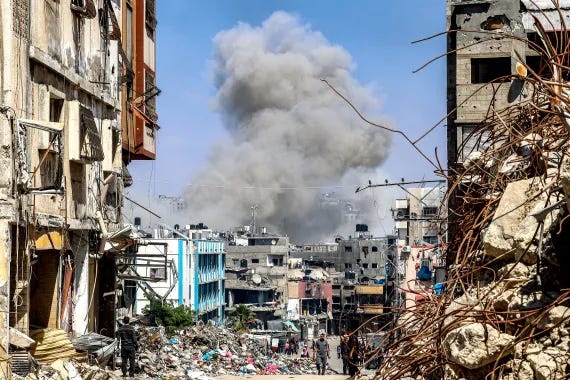
Life Before the Raid
“I want to speak honestly, and I swear to God I am telling this with complete truth. I wasn’t like this before the war,” he begins. Hunger, once unimaginable, has become a defining feature of daily life. “Fate has decreed that we now crave food, and we can’t afford to buy it. Our lives in Gaza are a living hell.”
He describes a system of control and deprivation: “The Jews are practicing the most brutal and despicable policies imaginable. Anyone who tries to help the people in Gaza is killed. We live in a closed prison. We are denied food, and they won’t allow us medical treatment. They won’t even allow us to speak or address the media. Anyone who tries to make our voices heard is assassinated.”
This is the environment in which the events at Al‑Helou Hospital unfolded.
The Raid on Al‑Helou Hospital
He recounts the moment the assault began: “I was near the hospital, hiding — may God forgive me for mentioning it — in a garbage container when the occupation forces stormed the area. People fled, not knowing where to escape. Everyone who was there was killed, and no one had a place to hide.”
With no shelter available, he climbed into a garbage container and covered himself with refuse. “They didn’t notice me, because if they had, they would have killed me.”
From inside that container, he witnessed atrocities that no human being should ever see.
Forced Stripping and Sexual Violence
“They forced all the women and children to undress, and those who refused were killed,” he says. “Some women did undress, and then the officer and the devilish soldiers came and raped them.”
He describes watching a woman scream for help: “I saw a woman screaming, ‘Help me!’ but no one came to her aid. The soldiers beat her, and she fell to the ground. Five soldiers raped her, and the officer in charge said, ‘This is the fate of anyone who disobeys our orders.’”
These accounts align with broader patterns reported by survivors across multiple assault sites.
Seven Days in the Garbage
His own survival depended on absolute stillness. “My heart was trembling with anguish. I wanted to do something, but I couldn’t. If they saw me, they would kill me immediately.”
He remained inside the garbage container for seven days.
“I lived in that garbage dump for seven days without food or sleep, living among the refuse. I ate garbage so I wouldn’t die.”
This period reflects both the intensity of the military presence and the impossibility of movement for civilians trapped in active assault zones.
Aftermath
“After the army withdrew, I was one of the first to witness the horrific scenes,” he says. Bodies, destruction, and silence marked the landscape. The psychological impact remains profound: “By God, that scene has never left my mind.”
Conclusion
“This is just one story — one of the many we saw during the war. I want people to know what we saw.”
His testimony stands as both evidence and warning — a record of what civilians endured and a plea for the world to acknowledge the scale of suffering inflicted on Gaza’s population.
Kill the witnesses, starve the rest! #Gaza #Ceasefire #WarCrimes https://austinsikora.substack.com/p/kill-the-witnesses-starve-the-rest?utm_source=share&utm_medium=android&r=32cg97