


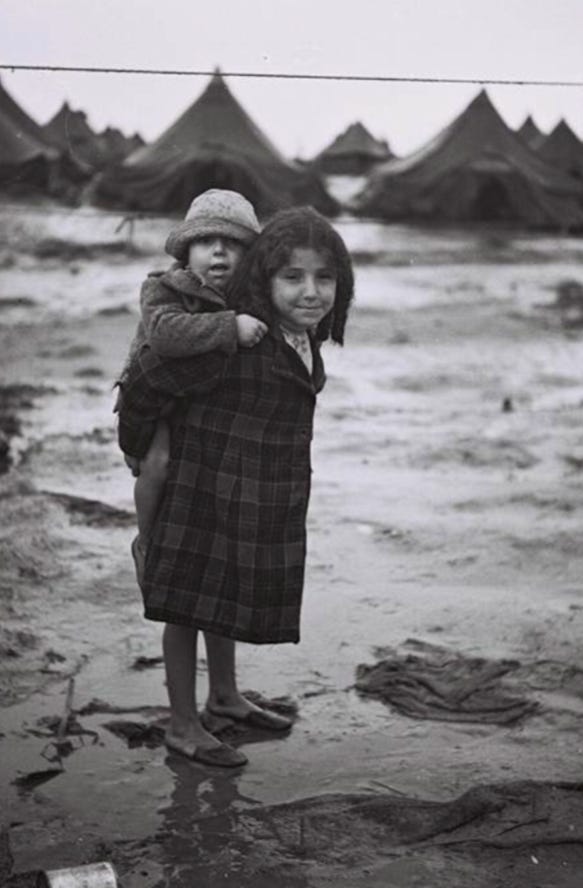
This history is not abstract to the people who lived it. Families still carry the scars of lost children, erased language, and forced assimilation.
People often pretend that Arab, Mizrahi, Sephardi, and Ethiopian Jews were treated as equals in Israel, but the historical record shows otherwise.
From its earliest decades, Zionism fused Jewish supremacy with European racial hierarchy. Arab and Mizrahi Jews were not embraced as equals. They were treated as useful for labor, population growth, and settlement, while their language, culture, and identity were viewed as obstacles to the Ashkenazi-led state. The only group treated even more brutally were the Palestinians, who have faced mass dispossession, occupation, and atrocity at the hands of Zionists across racial lines. If there is one thing Zionists of many backgrounds have historically agreed on, it is hostility toward Palestinians.
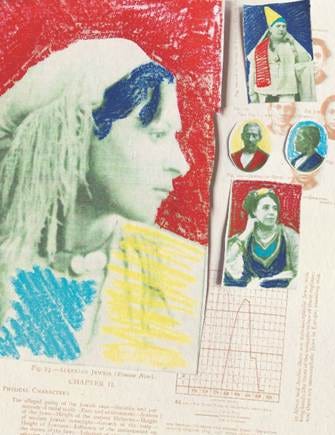
Racist Ideology Among Zionist Founders
“Arab and Mizrahi Jews were treated not as equal citizens, but as demographic tools and labor for state-building.”
Zionists did not simply “rescue” Arab and Mizrahi Jews. They manipulated them, exploited them, and often described them in openly contemptuous terms. They used pressure, fear, propaganda, and in some cases violence to drive Jewish communities from Arab countries into Israel. Families were robbed in transit. Thousands of children disappeared. Languages and traditions were suppressed under the banner of national unification. The leadership of the new state was not subtle about its motives. Arab and Mizrahi Jews were described as demographic assets, labor reserves, and raw human material for a state built on Ashkenazi norms. These are not outside interpretations imposed afterward. They come from Zionist leaders’ own words and from the institutions they built.¹
“The founders did not hide their hierarchy. They wrote it down, spoke it publicly, and built institutions around it.”
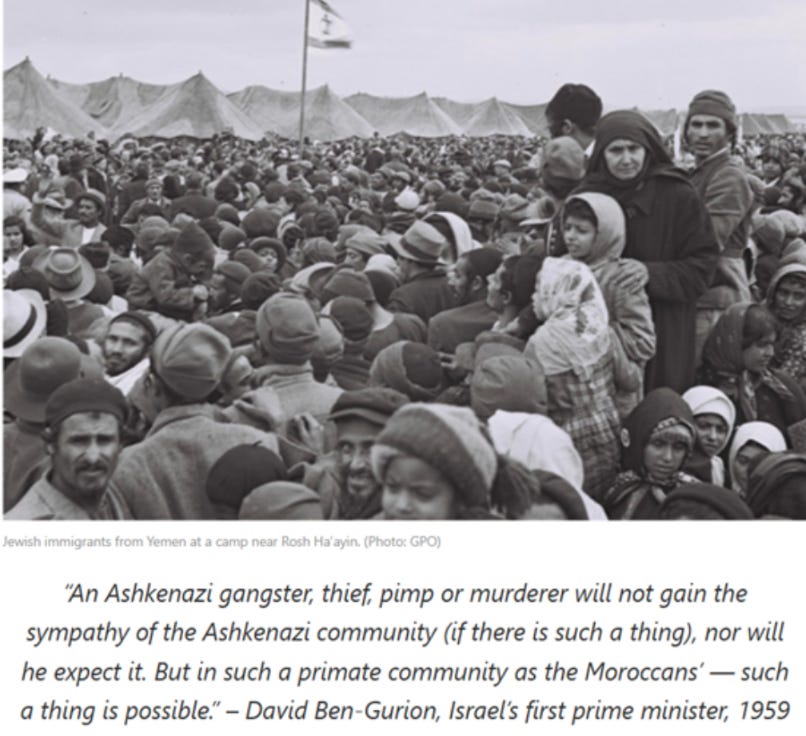
The founders of the state were often explicit in their racism toward Mizrahi and Arab Jews. David Ben-Gurion declared, “We do not want the Israelis to become Arabs. We are bound by duty to fight against the spirit of the Levant, which corrupts individuals and societies.”² Golda Meir reportedly described the Jews she encountered in Israel as “Oriental Jews” who had “no education.”³ Ze’ev Jabotinsky wrote, “We Jews have nothing in common with what is called the Orient, thank God,” and insisted that the “uneducated masses” among Mizrahi Jews had to be “weaned away” from those traditions.⁴ Chaim Sheba, the first director general of Israel’s Health Ministry, argued that Jews from Arab countries needed to be cleaned, educated, and upgraded because their condition was dangerous to Israeli society.⁵ Yehuda Dominitz, a senior Jewish Agency official, similarly insisted that “Oriental Jews” must not be allowed to preserve their culture because it was primitive and had no place in the State of Israel.⁶
These were not isolated remarks. Ben-Gurion also described North African immigrants in language that stripped them of dignity, calling them people who “look like a savage” and portraying them as lacking books, prayer, and civilization even while grudgingly acknowledging a deeper heritage behind them.⁷ He went further in other comments, arguing that the Jews of Europe had led the Jewish nation “in both quantity and quality,” while “the ancient spirit left the Jews of the East.”⁸ In another deeply revealing statement about Yemenite immigrants, he wrote that they were “two thousand years behind us,” lacked the most basic concepts of civilization, and needed all their human values changed “from the ground up.”⁹ Arye Gelblum of Haaretz described North African Jews as primitively backward, barely more advanced than Arabs, Blacks, and Berbers, and claimed they brought crime, laziness, and incapacity for work with them.¹⁰ H. Tsivleli, a Jewish Agency emissary in Libya, complained that he found it hard to distinguish some Jews from what he called “the good quality Arab type.”¹¹ Shoshana Parsits, a member of the Knesset, stated that “we do not have a common language with them,” and that their way of life was medieval.¹² Even Abba Eban warned in 1957 that the goal had to be to instill a Western spirit in Mizrahi immigrants and not allow them to drag Israel into an “unnatural Orient.”¹³
Mizrahi Jews as Cheap Labor and Demographic Tools
The leadership also stated openly that Arab and Mizrahi Jews were needed as cheap labor. Yigal Allon admitted that “Oriental Jews” were needed for demographic reasons and for labor, while insisting that they must not influence the country’s cultural values.¹⁴ Ben-Gurion likewise wrote that the arrival of “Oriental Jews” was essential for the labor force the state required.¹⁵ Levi Eshkol insisted that “Oriental immigrants” must be settled where labor was needed, not where they wanted to live.¹⁶ Berl Locker, chairman of the Jewish Agency executive, told Henry Morgenthau in October 1948 that Sephardi and Yemenite Jews would play a considerable part in building the country and had to be brought over not only to save them but also to provide the “human material” needed to build it.¹⁷ Itzhak Refael, after visiting a transit camp for immigrants, remarked that the “human material” in Germany was better than he had expected, especially after seeing North Africans in Marseilles.¹⁸ Decades later, Aryeh Deri bluntly acknowledged what had long been obvious, stating that the establishment brought the Mizrahim to do the work Ashkenazim did not want to do.¹⁹
Institutional Discrimination and Cultural Erasure
Israeli institutions translated these attitudes into policy. A 1950s Ministry of Labor memo stated that “Oriental Jews” were suitable for the physical labor needed to build the state and that their cultural development was low.²⁰ An Education Ministry internal report similarly argued that these immigrants came from countries where the level of culture was low and that their children had to be prevented from continuing in that way.²¹ Those assumptions were reflected in the funneling of Mizrahi children into vocational tracks and special education. Later reporting continued to document that vocational schools disproportionately enrolled Mizrahi and Arab students, while Ashkenazi students remained overrepresented in the formal matriculation system.²² The curriculum also erased Mizrahi history, as students learned extensively about European immigration, pogroms, and the Holocaust while learning almost nothing about the communities that came from Arab and Muslim countries.²³ Employment discrimination followed the same lines. A 2013 study by Israel’s Ministry of Economy found that applicants with Ashkenazi-sounding last names were more likely to be invited to job interviews than those with Mizrahi-sounding names.²⁴
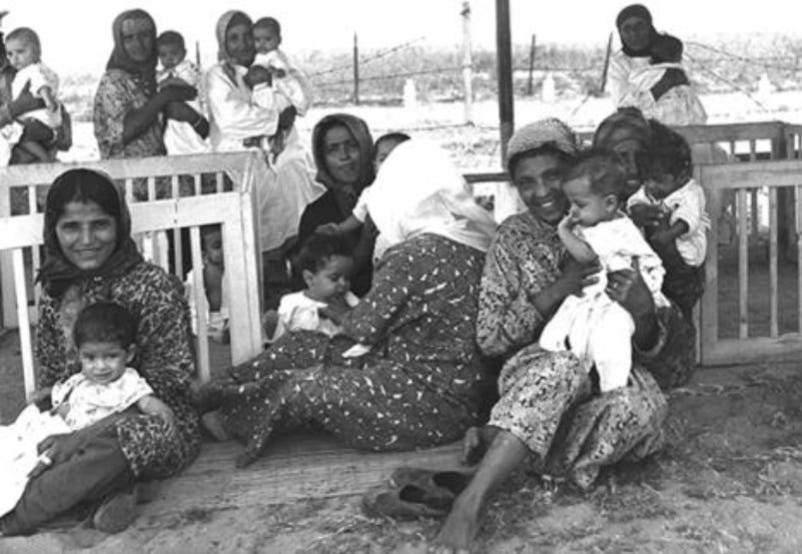
The Yemenite Children Affair and Medical Abuses
“Children disappeared, languages were erased, and entire cultures were dismantled under the banner of nation-building.”
One of the most horrifying chapters in this history is the kidnapping of Yemenite and other Mizrahi children. For years families said that children had disappeared in hospitals and transit camps after officials told parents the children had died. Activists and historians documented the stories long before Israeli officials admitted any wrongdoing. In 2016 Tzachi Hanegbi, a Likud minister, finally acknowledged that “there were kidnappings” and that hundreds of children were taken.²⁵ Reporting on the Yemenite Children Affair has described how mostly Yemenite immigrant babies and children were taken from their parents and given up for adoption to Ashkenazi families.²⁶ Historian Rafi Shubeli has argued that officials often viewed Yemenite parents as backward and unfit, which helped justify the removals in their own minds.²⁷ This was racial paternalism at best and eugenic logic at worst.
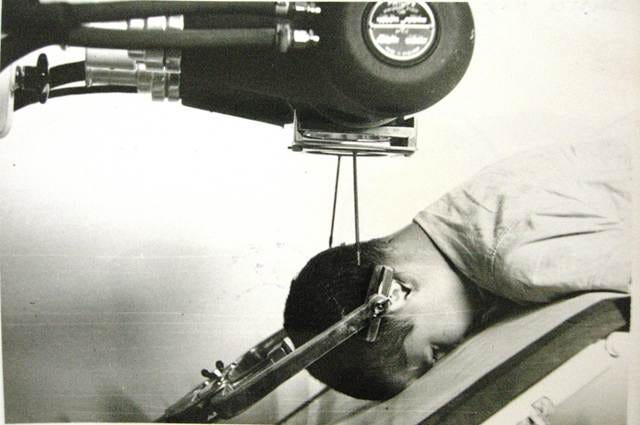
Medical abuse accompanied these practices. During the early years of the state, large numbers of mostly Mizrahi immigrant children were subjected to ringworm irradiation. Scholars Nadav Davidovich and Rakefet Zalashik show that this campaign disproportionately targeted Jews emigrating from Muslim countries and was embedded in the intersection of health policy, race, and nation-building.²⁸ The treatment increased long-term risks of tumors and other serious harms, as later studies confirmed.²⁹ Mizrahi activists have long viewed the ringworm affair as one of the clearest examples of the negligence, paternalism, and structural contempt that characterized the state’s treatment of immigrant communities.³⁰ Some accounts and documentaries have gone even further, alleging enormous radiation doses and thousands of deaths, although those claims remain contested in parts of the literature.³¹ What is not contested is that immigrant children from North Africa and the Middle East bore the burden of a dangerous medical regime imposed by institutions that already viewed them as inferior.
Assimilation, Development Towns, and Social Marginalization
The so-called melting pot was another form of coercion. Ben-Gurion defined the melting pot as the elimination of the “remnants of exile.”³² In practice, that meant the elimination of Mizrahi identity, language, and tradition under Ashkenazi definitions of Israeli modernity. Arabic and Judeo-Arabic were treated as embarrassing or backward. Children were punished or shamed for speaking them.³³ Mizrahi culture was suppressed, while Ashkenazi elites simultaneously erased the diversity of their own Eastern European past in favor of a homogenized nationalist ideal.³⁴ Susan Abulhawa has argued that even the very category “Mizrahim” was an invention meant to strip Arab Jews of their distinct histories and sever them from the Arab world.³⁵ Ariella Aïsha Azoulay similarly argues that Zionism and allied colonial structures remade Iraqi Jews, Algerian Jews, and others into an undifferentiated national subject called “the Jewish people,” flattening prior affiliations and identities.³⁶
Development towns and transit camps were central mechanisms of this exploitation. Mizrahi immigrants were placed in border towns, poor peripheral areas, isolated settlements, and depopulated Palestinian villages because Ashkenazim often refused to live there and because the state needed population buffers, laborers, and families tied to militarized frontier zones.³⁷ In 1951, roughly a quarter of a million people were living in ma'abarot, and 80 percent of them came from Islamic lands.³⁸ These camps and settlements warehoused people on the geographic and social margins of the country. Later protest movements grew directly from these conditions. The Wadi Salib riots in 1959 erupted after police shot a Moroccan Jewish immigrant, and demonstrators denounced ethnic discrimination against Mizrahi Jews.³⁹ In the 1970s, Israel’s Sephardic Black Panthers condemned the Labor establishment for decades of abandonment, poverty, and racism directed at Jews from North Africa and the Arab world.⁴⁰
Migration, Pressure, and Coercion in Arab Countries
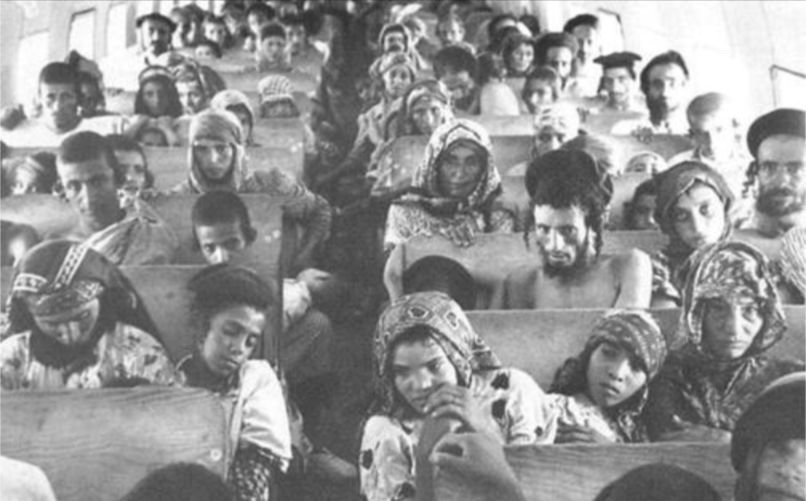
The migration of Arab Jews to Israel was also far more complicated than the propaganda claim that uniformly antisemitic Arab societies simply expelled them. In Yemen, the imam allowed Jews to leave as early as February 1949, with the help of Zionist emissaries and Israeli bribes to provincial rulers, according to Tom Segev.⁴¹ Joseph Massad argues that roughly 50,000 Yemeni Jews were removed to Israel in 1949 and 1950, where they then faced institutionalized Ashkenazi discrimination.⁴² Shlomo Schmidt, the Jewish emissary in Aden, even sought permission to propose that Yemeni authorities expel those Jews who preferred to stay, though Yemeni authorities refused.⁴³ Along the way, luggage, jewelry, embroidered garments, and ancient Torah scrolls disappeared and later surfaced in antique and souvenir shops in Israel.⁴⁴ Yemenite patriarchs were not allowed to bring their tools, and many families lost jewelry and trade equipment during the journey, contributing to their impoverishment upon arrival and pushing them into agriculture and construction instead of the skilled professions they had practiced before.⁴⁵
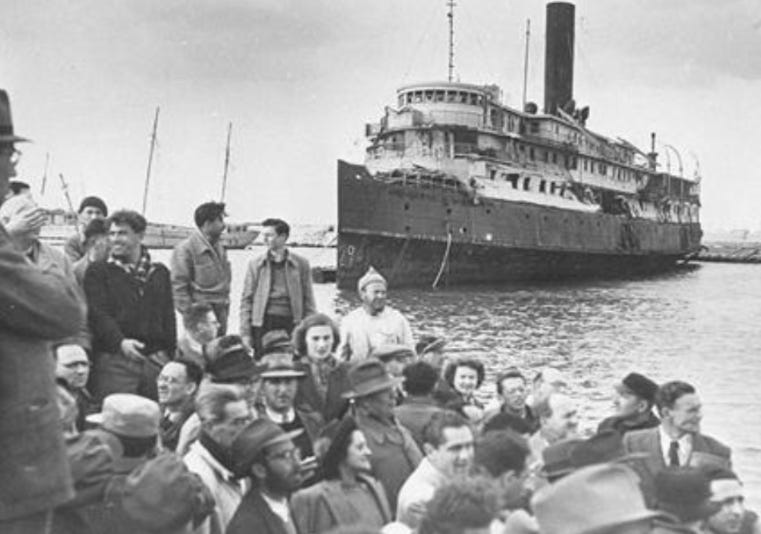
In Morocco, Zionist organizations worked with French colonial authorities to facilitate mass emigration.⁴⁶ Some emigrants endured horrific conditions on ships to Israel, and by the account of one Jewish Agency emissary, some had to be taken aboard “by force.”⁴⁷ Reports also describe rumors spread to provoke fear, including stories of kidnapping and rape, to encourage flight.⁴⁸ Ben-Gurion’s own contemptuous language about immigrants as “human dust lacking language, education, roots, tradition or national dreams” sits uncomfortably beside these campaigns.⁴⁹ Ella Shohat’s landmark essay, “Sephardim in Israel: Zionism from the Standpoint of Its Jewish Victims,” remains one of the foundational analyses of how Zionism subordinated the Jews of Arab and Muslim lands while simultaneously claiming to redeem them.⁵⁰
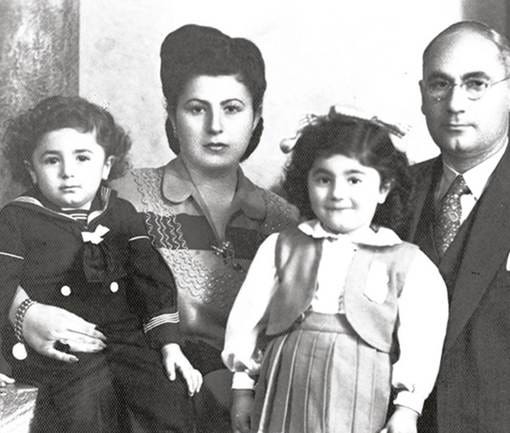
The Iraqi case is especially revealing. The government of Nuri al-Said was portrayed in Israeli propaganda as persecuting Jews, but evidence shows a different story. Zionist agents had been active in Iraq before the mass exodus, smuggling Jews through Iran to Israel, which led Iraqi authorities to prosecute some of them.⁵¹ During 1950 and 1951, bombs struck Jewish targets, including the Masuda Shemtov synagogue in Baghdad. Iraqi authorities accused and executed two Zionist underground activists.⁵² Naeim Giladi, himself an Iraqi Jew and later a sharp critic of Zionism, wrote that Jews from Islamic lands did not emigrate willingly and that “to force them to leave, Jews killed Jews.”⁵³ Avi Shlaim has likewise written that evidence strongly suggests members of the Zionist underground planted bombs in Baghdad to terrify the Jewish population into emigrating.⁵⁴ Shlaim’s memoir describes how his own prosperous Baghdadi family left a comfortable life and fell into a diminished existence after the bombings and the exodus.⁵⁵ He argues that Zionism dealt a severe blow to the ancient pluralism, cosmopolitanism, and coexistence of Jewish life in Arab lands while deepening the divide between Arabs and Jews, Israelis and Palestinians, and Hebrew and Arabic.⁵⁶ Tom Suarez has also drawn attention to the role of Near East Air Transport and Israel’s efforts to maintain a monopoly over the transport of Iraqi Jews, suggesting that the state sought both hard currency and control over the destination of this “human cargo.”⁵⁷ Iraqi sources even note that the government later ran ads asking Jews to come back.⁵⁸
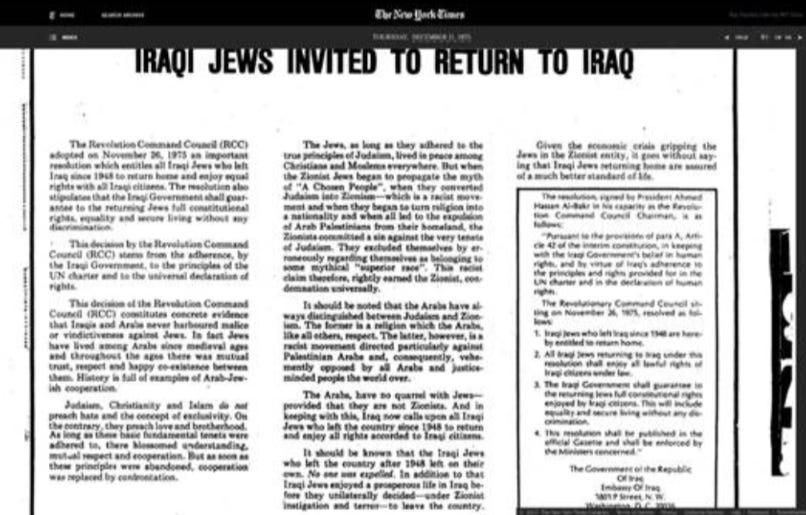
Egypt presents another case in which the standard Zionist narrative collapses under scrutiny. Egypt’s Jewish community was small, internally diverse, and not composed primarily of Ashkenazim.⁵⁹ Many upper-class Egyptian Jews who left after 1948 went to France rather than Israel.⁶⁰ The community remained largely intact until Israel’s intelligence services recruited Egyptian Jews into a sabotage network that carried out the Lavon Affair, also known as Operation Susannah, in 1954.⁶¹ The plan involved bombing American and British targets in Egypt and blaming Egyptian actors in order to damage U.S.-Egyptian relations and preserve British influence in the Canal Zone.⁶² The operation was exposed when one agent’s device ignited prematurely, leading to arrests and an Israeli political crisis.⁶³ This episode is well documented in declassified Senate materials, later Israeli disclosures, and multiple journalistic and historical accounts.⁶⁴ Richard Curtiss described it as a case in which Israel firebombed U.S. installations in Egypt, while Haaretz later published the long-secret correspondence surrounding the affair.⁶⁵ Whatever one calls it, it was a false flag terror plot in which Jewish lives in the Arab world were treated as expendable in service of Zionist state interests.


The histories of Algeria and Lebanon further complicate the myth that Jews simply had no place in Arab societies after 1948. Ariella Aïsha Azoulay argues that the creation of Israel declared identities such as Algerian Jew or Iraqi Jew either nonexistent or illegitimate, replacing them with a totalizing national category aligned with the state.⁶⁶ In Lebanon, the Jewish community remained physically safe through earlier unrest and began to decline primarily through the cumulative effects of civil strife, the 1967 war, and later the 1982 Israeli invasion and occupation.⁶⁷ Scholars and journalists note that Lebanese Jews were not initially fleeing antisemitic persecution in the simple way Zionist mythology assumes.⁶⁸ Indeed, many observers barely knew a thriving Jewish community had persisted in Lebanon at all because the lack of severe persecution kept it out of global attention.⁶⁹
Ending the Myth
“Zionism did not just erase Palestinians. It reshaped and erased Arab Jewish identity as well.”
All of this points to a larger truth. Zionist leaders did not hide their racism toward Arab and Mizrahi Jews. They wrote it down, repeated it in speeches and interviews, and encoded it into ministries, schools, labor systems, health campaigns, and settlement policy. Arab and Mizrahi Jews were not treated as equals in the state built by European Zionism. They were manipulated, pressured into migration, sometimes terrorized, stripped of their property, culturally erased, subjected to abuse and segregation, used as cheap labor, and in many cases had their children stolen. They were routinely described as primitive, dangerous, medieval, or backward.⁷⁰
That history matters because the myth of seamless Jewish unity inside Zionism remains one of the ideology’s most effective shields. It allows defenders of the state to pretend that racial hierarchy only operated between Jews and Palestinians, when in fact it also structured relations among Jews themselves. Ashkenazi elites built a state in which Arab and Mizrahi Jews were useful but inferior, necessary but despised, counted for demographic and military purposes while denied equality in culture, status, and power. Palestinians suffered the most catastrophic violence of all, but the state’s treatment of Arab and Mizrahi Jews reveals how deeply Zionism internalized the logic of European hierarchy. Anyone defending Zionism should begin by confronting what its founders actually said and what its institutions actually did.
You are very welcome. I find it helps prove to people that zionism is racism when I can show how the original Ashkenazi Zionists treat other kinds of jews. They never did anything with the goal of protecting jews. Everything they did was for power, money and land.
As a Jew growing up in the South - Tampa, Florida to be exact - I and my own activist parents noticed that Jews - even Holocaust survivors - had no problem with segregation/apartheid and racial intolerance. This was eye-opening for me in my formative years and informs my understanding of Israel and its inhumane actions both towards its own people, its genocide of the Palestinians and now - as has been ongoing - with the Lebanese.