


Seventeen-year-old Sumaya has lived most of her life with a dangerous vascular tumor growing inside her left leg. It began when she was five, a bluish mark that slowly expanded until it reshaped her childhood.
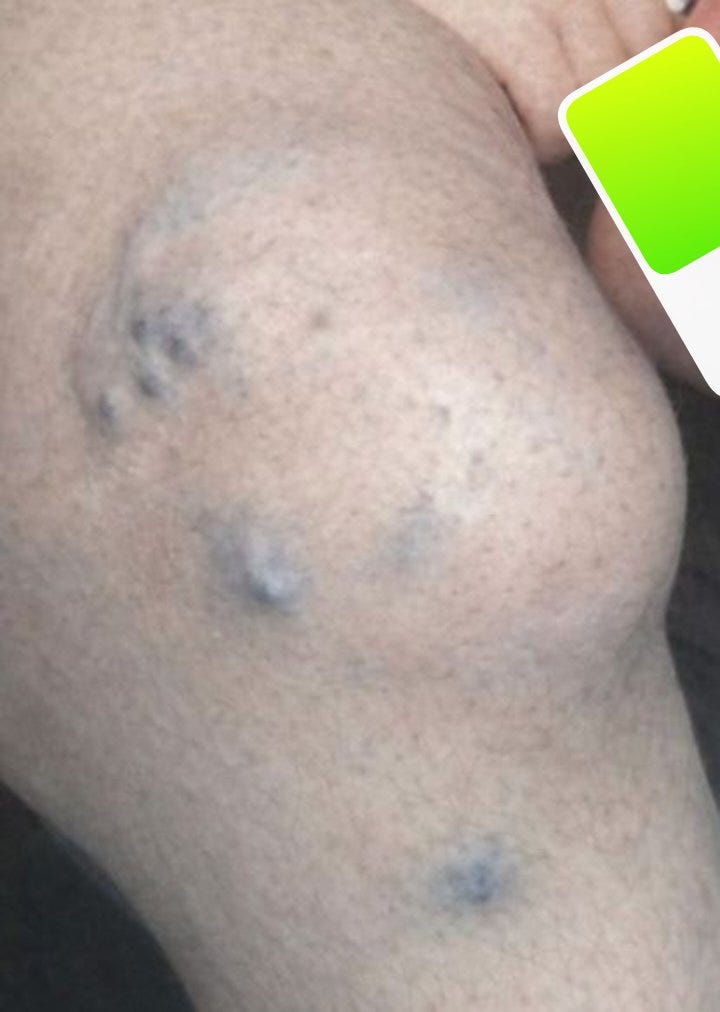
“She used to run everywhere,” her mother, Ansam, says. “Then the pain started coming every few months. She couldn’t jump, couldn’t stand for long. She tried to hide it from her siblings.”
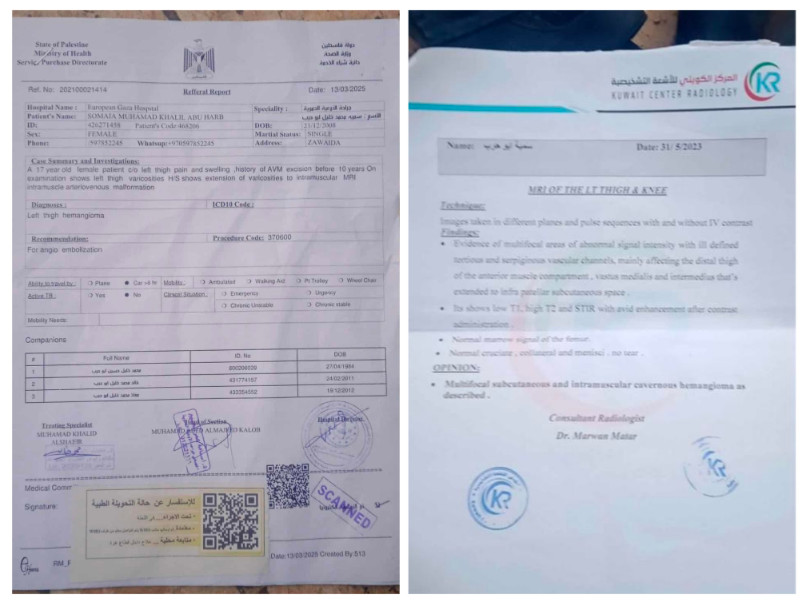
Before the current genocide, the family managed to get her to Jerusalem for surgery. Doctors removed part of her thigh muscle and urged annual CT angiography to monitor the tumor. But once she returned to Gaza, the pain worsened. And when Israel’s assault began, even the most basic medical care disappeared. Painkillers, imaging, follow-ups, functioning hospitals, safe roads to reach them, all of it collapsed under bombardment.
Now the tumor is growing again. And it is growing fast.
“Look at Sumaya,” Ansam says. “The tumor in her leg is getting bigger every day. It threatens her life. Her condition is deteriorating, and time is running out.”
Sumaya understands the danger.
“My dream was to study medicine,” she says. “I wanted to become a vascular surgeon. I wanted to help people like me.”
Her voice carries the quiet determination of a girl who has learned to live with pain but refuses to surrender her future.
A Plea That Goes Beyond Food and Shelter
Most families in Gaza who reach out to the world are asking for food, tents, or a safe place to sleep. Ansam’s family needs all of that too, but their plea is different. They are asking for something that requires preparation, timing, and money at the exact moment the opportunity appears: a medical evacuation.
And that opportunity is controlled entirely by Israel.
Israel decides who leaves Gaza, who gets medical evacuation, who is allowed to cross, and who is left behind. Every name on the list is approved or denied by the same state that has bombed hospitals, destroyed clinics, and turned Gaza’s health system into rubble. Families wait for months, knowing that when their turn comes, they must be ready. If they are not, the chance disappears.
For Sumaya, missing that chance could be FATAL.
“My daughter has mangioma, a serious vascular disease,” Ansam explains. “If left untreated, her heart could suddenly stop.”
The family is trying to raise 5,000 euros to cover new passports, travel costs, and the surgery she urgently needs. It is a modest amount compared to the stakes. It is the difference between being prepared when Israel finally allows her name through or watching the opportunity vanish while her condition worsens.
A Family Asking for Solidarity, Not Pity
Ansam is not asking the world to fix Gaza. She is asking for something smaller and more intimate: help to save her daughter’s life.
“Your support can save her from death,” she says. “Let’s all unite to save Sumaya.”
For anyone who wants to reach the family directly, Ansam shares updates and messages through her Twitter account at AnsamHarb2061.
Donations to support Sumaya’s evacuation and treatment can be made through their GoFundMe page: https://www.gofundme.com/f/support-me-in-my-lovely-daughters-recovery-journey.
In a place where survival is often measured in hours, this family is fighting for something bigger, a future for a girl who still dreams of studying, healing, and living without pain.
If there is a God let Bibi die in excruciating pain pain